Introduction: A Smarter Way to Export Goods from China to the USA
For many importers, distributors, construction companies, e-commerce sellers, and industrial buyers in the United States, a shipping container is no longer just a transportation box. It has become a complete cross-border commerce tool: it can carry cargo from a Chinese factory, move through international ocean freight, clear U.S. customs, deliver goods inland, and then continue working as a secure storage unit at the customer’s warehouse, job site, farm, retail yard, or distribution center.
When exporting from China to the United States, many buyers choose to purchase a new or cargo-worthy container directly in China, load their products inside, ship the loaded container by sea, and keep the container after arrival for long-term storage. This model is especially useful for customers importing building materials, aluminum fences, steel products, machinery, plastic tarps, sound barrier panels, tools, auto parts, retail inventory, and industrial goods.
This article explains how shipping containers support China-to-USA trade, how they can be delivered to all 50 U.S. states, which container types are suitable for export, and why buying a container in China before shipping can create more value than using a standard carrier-owned container.
Why Shipping Containers Are Essential for China-to-USA Trade
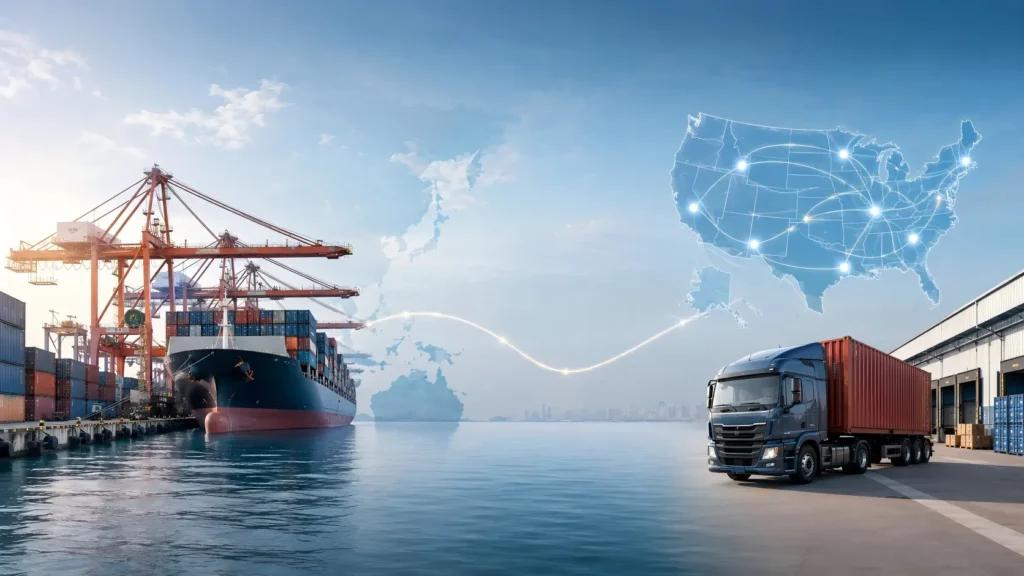
China remains one of the most important manufacturing bases for U.S. importers. From Qingdao, Shanghai, Ningbo, Shenzhen, Tianjin, Xiamen, Dalian, and other major Chinese ports, thousands of containers move every week to U.S. ports such as Los Angeles, Long Beach, Oakland, Seattle, Tacoma, Houston, Savannah, Charleston, Norfolk, New York/New Jersey, Miami, and other gateway terminals.
The reason containers are so important is simple: they connect different transportation systems into one continuous supply chain. A container can be loaded at a factory in China, moved by truck to the port, shipped by ocean vessel, transferred to rail or truck in the United States, and delivered to the final destination without unloading the cargo multiple times.
For importers, this reduces cargo handling, lowers damage risk, improves security, and makes it easier to manage international shipments from factory to final warehouse.
China to USA Container Export: How the Process Works
A complete China-to-USA container export project usually includes the following steps:
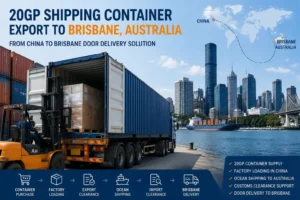
1. Container Selection in China
The buyer chooses a suitable container type, such as 20GP, 40GP, 40HQ, new one-trip container, cargo-worthy container, or customized container. For most export cargo, 40HQ containers are popular because they offer more loading volume and can later be used as large storage units.
2. Container Pickup and Factory Loading
The container is picked up from the depot and transported to the supplier’s factory or warehouse in China. The cargo is loaded directly into the container. For large products such as fence panels, gates, steel structures, machinery, plastic sheets, or pallets, professional loading planning is important to maximize space and protect the goods.
3. Export Customs Declaration in China
After loading, export documents are prepared, including commercial invoice, packing list, customs declaration information, bill of lading instructions, and product details. The container is then delivered to the Chinese port for export customs clearance and vessel loading.
4. Ocean Freight to the USA
The container is shipped by sea to the most suitable U.S. port based on the final delivery state. West Coast ports are often used for California, Nevada, Arizona, Washington, Oregon, Utah, and Colorado. Gulf Coast ports are useful for Texas, Louisiana, Oklahoma, Arkansas, and nearby states. East Coast ports are commonly used for Georgia, Florida, the Carolinas, Virginia, New York, New Jersey, Pennsylvania, and New England.
5. U.S. Customs Clearance
When the container arrives in the United States, the importer or customs broker handles import customs clearance. Correct HS code classification, ISF filing, commercial documents, duty calculation, and compliance review are important parts of the process.
6. Inland Delivery to Final Destination
After customs release, the container can be delivered by truck or rail to the final destination. For inland states, the container may move by intermodal rail to a nearby rail ramp and then by truck to the customer’s warehouse or job site.
7. Container Remains with the Buyer
Unlike a normal carrier-owned container that must be returned quickly, a buyer-owned container can stay with the importer. After unloading, it can be used as outdoor storage, warehouse overflow space, job-site storage, farm storage, equipment storage, or inventory protection.
Export and Delivery Coverage to All 50 U.S. States
A professional China-to-USA container export service can support delivery across all 50 states by combining ocean freight, rail, trucking, and final-mile delivery.
West Coast and Pacific States
California, Oregon, Washington, Alaska, Hawaii
These states are commonly served through West Coast ports such as Los Angeles, Long Beach, Oakland, Seattle, and Tacoma. Alaska and Hawaii require special routing, but container export and delivery solutions can still be arranged.
Southwest States
Nevada, Arizona, New Mexico
Shipments to the Southwest often enter through California ports and move inland by truck or rail. This region is suitable for construction materials, fencing products, solar equipment, machinery, outdoor storage containers, and wholesale inventory.
Mountain and Western States
Idaho, Montana, Wyoming, Utah, Colorado
For inland western states, rail and truck combinations are often used. A 40HQ container can be shipped to a nearby intermodal terminal and then delivered to farms, warehouses, construction sites, or industrial yards.
Texas and Central South
Texas, Oklahoma, Arkansas, Louisiana
Texas is one of the most important destinations for China-to-USA container trade. Houston and other Gulf Coast ports are useful for importers serving Dallas, Austin, San Antonio, Houston, Oklahoma City, Little Rock, and New Orleans.
Midwest States
North Dakota, South Dakota, Nebraska, Kansas, Minnesota, Iowa, Missouri, Wisconsin, Illinois, Michigan, Indiana, Ohio
The Midwest has strong demand for containers because of agriculture, manufacturing, automotive, warehousing, and equipment storage. Containers can move from coastal ports by rail to inland ramps near Chicago, Kansas City, St. Louis, Detroit, Columbus, Minneapolis, and other logistics hubs.
Southeast States
Kentucky, Tennessee, Mississippi, Alabama, Georgia, Florida, South Carolina, North Carolina, Virginia, West Virginia
The Southeast is a fast-growing region for warehousing, manufacturing, construction, and e-commerce distribution. Savannah, Charleston, Jacksonville, Miami, Norfolk, and other ports can support efficient container movement into this region.
Northeast, Mid-Atlantic, and New England
Maine, New Hampshire, Vermont, Massachusetts, Rhode Island, Connecticut, New York, New Jersey, Pennsylvania, Delaware, Maryland
For the Northeast and Mid-Atlantic region, New York/New Jersey, Philadelphia, Baltimore, Boston, and nearby ports can be used depending on the final address. This region has strong demand for retail inventory storage, construction site storage, seasonal business storage, and warehouse overflow containers.
Best Container Types for China-to-USA Export
Choosing the right container is important because the container must not only carry the cargo safely but may also be used after arrival in the United States.
| Container Type | Best For | Main Advantage |
|---|---|---|
| 20GP Container | Heavy cargo, machinery, stone, metal parts | Easier to handle, strong load capacity |
| 40GP Container | General cargo, pallets, medium-volume shipments | Balanced cost and loading space |
| 40HQ Container | Large-volume cargo, fences, panels, tarps, furniture | Extra height and larger CBM capacity |
| New One-Trip Container | Buyers who want clean storage after arrival | Excellent condition, strong resale and storage value |
| Cargo-Worthy Container | International shipping and export cargo | Suitable for ocean transport inspection |
| Used WWT Container | Storage after delivery | Cost-effective outdoor storage option |
| Refrigerated Container | Food, medicine, temperature-sensitive cargo | Temperature control during transport and storage |
| Modified Container | Office, workshop, mobile warehouse | Can be customized with doors, windows, vents, shelves, insulation |
For most China-to-USA export buyers, a new 40HQ container is one of the most practical choices. It provides high loading volume, strong structure, clean interior condition, and long-term value after the cargo is unloaded.
Why Buyers Purchase Containers in China Before Exporting
Many U.S. buyers usually rent or use carrier-owned containers for international shipping. However, buying a container in China and loading cargo directly into it can offer several advantages.
1. The Container Becomes Part of the Investment
Instead of paying only for freight, the buyer receives a physical asset after delivery. The container can be used for storage, resale, rental, modification, or long-term business operations.
2. No Need to Return the Container Quickly
Carrier-owned containers must be returned within a limited free time. If delays happen, demurrage and detention fees may occur. A buyer-owned container avoids the pressure of returning the box after unloading.
3. Better for Remote or Job-Site Delivery
Many U.S. customers do not have large warehouses. A container can be delivered directly to a farm, construction site, equipment yard, retail lot, or outdoor project location and used immediately.
4. Ideal for Large or Irregular Cargo
Products such as aluminum fences, gates, steel frames, machinery, tarps, panels, pipes, building materials, and outdoor equipment often require careful loading. Owning the container allows better planning and more flexible loading.
5. Long-Term Storage Value
A new or high-quality used container can protect goods from rain, wind, dust, theft, and outdoor exposure. For businesses in all 50 U.S. states, this is especially useful when warehouse costs are high.
Common Products Exported from China to the USA in Buyer-Owned Containers
Shipping containers are suitable for many product categories, including:
- Aluminum fences and gates
- Steel products and metal structures
- Plastic tarps and waterproof covers
- Building materials
- Machinery and equipment
- Tools and hardware
- Auto parts
- Agricultural supplies
- Sound barrier panels
- Solar mounting systems
- Furniture and outdoor products
- E-commerce inventory
- Wholesale retail products
- Industrial components
- Temporary warehouse supplies
For products with large volume or irregular dimensions, professional loading design can reduce wasted space and lower the overall cost per unit.
Container Uses After Arrival in the United States
After the cargo is unloaded, the container can continue working in many practical ways.
Warehouse Overflow Storage
When warehouse space is limited, a container can be placed outside the building to store seasonal stock, spare parts, tools, packaging materials, or slow-moving inventory.
Construction Site Storage
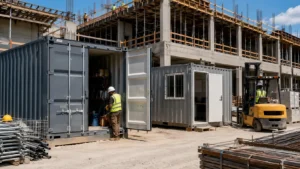
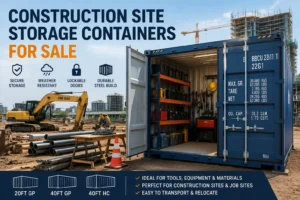
Contractors use containers to store tools, machinery, safety equipment, electrical materials, and building supplies. A lockable steel container helps reduce theft and weather damage.
Farm and Ranch Storage
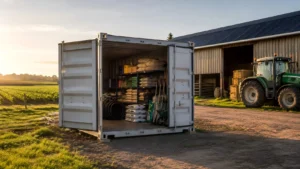
Agricultural customers can use containers for feed, tools, irrigation parts, fencing materials, tires, machinery parts, and seasonal supplies.
E-Commerce Inventory Storage
Small and medium-sized sellers can use containers as affordable inventory storage instead of renting additional warehouse space.
Industrial Equipment Storage
Manufacturers and repair companies use containers to store spare parts, molds, motors, tools, and project materials.
Mobile Office or Workshop
With modification, a container can be converted into an office, inspection room, repair station, showroom, or mobile workshop.
How to Choose the Right U.S. Port and Delivery Route
The best shipping route depends on the factory location in China, the U.S. final destination, cargo weight, delivery deadline, and total logistics cost.
For Western U.S. Delivery
Los Angeles, Long Beach, Oakland, Seattle, and Tacoma are common choices. These routes are suitable for California, Nevada, Arizona, Washington, Oregon, Utah, Colorado, Idaho, Montana, and nearby states.
For Central U.S. Delivery
Containers may arrive at West Coast, Gulf Coast, or East Coast ports and then move inland by rail or truck. This is common for Texas, Illinois, Missouri, Kansas, Nebraska, Iowa, Minnesota, Indiana, Ohio, and Michigan.
For Southern U.S. Delivery
Houston, New Orleans, Mobile, Savannah, Charleston, Jacksonville, and Miami can support deliveries across Texas, Louisiana, Arkansas, Oklahoma, Alabama, Georgia, Florida, Mississippi, Tennessee, Kentucky, and the Carolinas.
For Eastern and Northeastern U.S. Delivery
New York/New Jersey, Baltimore, Philadelphia, Norfolk, Boston, and other East Coast ports can serve New York, New Jersey, Pennsylvania, Maryland, Delaware, Virginia, Connecticut, Massachusetts, Rhode Island, Vermont, New Hampshire, and Maine.
A professional freight team should compare ocean freight, port congestion, inland trucking distance, rail availability, customs process, and final delivery conditions before confirming the best route.
Important Documents for China-to-USA Container Export
A smooth export project requires correct documents. Common documents include:
- Commercial invoice
- Packing list
- Bill of lading
- Export customs declaration
- ISF information
- HS code and product description
- Importer information
- Customs bond information
- Arrival notice
- Delivery order
- Trucking delivery appointment
- Container ownership or purchase documents if required
Because U.S. customs regulations vary by product, importers should work with a qualified customs broker before shipping. This is especially important for products involving anti-dumping duties, FDA requirements, EPA requirements, wood packaging rules, or special compliance standards.
Why Work With a China-Based Container Export Supplier
A China-based container supplier and logistics partner can provide a complete solution from container purchase to final U.S. delivery.
A reliable service should include:
- New and used container supply in China
- 20GP, 40GP, 40HQ, and customized container options
- Container inspection before loading
- Factory pickup and trucking
- Professional cargo loading support
- Export customs declaration
- Ocean freight booking
- U.S. customs clearance coordination
- Rail and truck delivery to all 50 states
- Door-to-door delivery options
- Container unloading guidance
- Long-term storage and modification recommendations
This one-stop model is especially useful for foreign buyers who purchase goods from Chinese suppliers and want to ship everything inside their own container.
China to USA Container Export: Best Solution for Modern Cross-Border Commerce
As cross-border commerce continues to grow, importers need more than simple ocean freight. They need flexible, secure, and cost-effective logistics solutions that connect Chinese factories with U.S. warehouses, job sites, retail networks, farms, and distribution centers.
A shipping container can complete the entire journey: loaded in China, shipped across the ocean, cleared through U.S. customs, delivered to any state, and reused as a storage or business asset. For companies importing large-volume cargo from China to the United States, buying a container in China before export can be a smart and practical choice.
Whether the destination is California, Texas, Florida, New York, Illinois, Georgia, Washington, Colorado, Ohio, Arizona, or any other U.S. state, a properly planned container export solution can help buyers reduce handling, protect cargo, simplify delivery, and create long-term value after arrival.
FAQ: Shipping Containers from China to the USA
Can I buy a shipping container in China and ship it loaded to the USA?
Yes. Many buyers purchase a new or cargo-worthy container in China, load their products inside, ship it to the United States, and keep the container after delivery for storage or business use.
Can the container be delivered to all 50 U.S. states?
Yes. By combining ocean freight, rail, trucking, and final-mile delivery, containers can be delivered across all 50 states, including inland states, coastal states, Alaska, and Hawaii.
Which container is best for China-to-USA export?
For most large-volume cargo, a 40HQ container is the most popular option because it offers more internal space. For heavy cargo, a 20GP container may be more suitable. For buyers who want long-term storage after arrival, a new one-trip container is often recommended.
Can I use the container as storage after the goods arrive?
Yes. If the container is buyer-owned, it does not need to be returned to the shipping line. After unloading, it can be used as warehouse storage, farm storage, construction site storage, equipment storage, or retail inventory storage.
What products are suitable for this shipping model?
This model is suitable for aluminum fences, gates, steel products, plastic tarps, machinery, building materials, auto parts, tools, panels, furniture, e-commerce inventory, and many industrial goods.
Do I need a customs broker in the USA?
Yes, it is strongly recommended to work with a licensed customs broker to handle import clearance, duty calculation, ISF filing, HS code confirmation, and compliance review.
Can one company handle container purchase, loading, shipping, customs, and delivery?
Yes. A one-stop China-to-USA container export service can help buyers manage container supply, factory loading, export customs, ocean freight, U.S. customs clearance, and delivery to the final address.
Is a used container suitable for export to the USA?
A used container may be suitable if it is cargo-worthy and meets ocean shipping requirements. For buyers who want better appearance, cleaner interior, and long-term storage value, a new one-trip container is usually a better choice.
How long does shipping from China to the USA take?
Transit time depends on the Chinese port, U.S. destination port, vessel schedule, customs process, and inland delivery distance. West Coast destinations are usually faster than inland or East Coast deliveries, but the best route should be confirmed case by case.
Why is a buyer-owned container better than a standard shipping line container?
A buyer-owned container can be kept after arrival, used for storage, modified for business purposes, and does not need to be returned quickly. This can create additional value for the importer beyond the cargo shipment itself.