Introduction: Should You Buy a New or Used Shipping Container?
When buying a shipping container, one of the most common questions is: Should I buy a new shipping container or a used shipping container?
The answer depends on your real purpose. If you need a clean container for export, food storage, office conversion, container house, or long-term high-value use, a new one-trip container may be the best choice. If you need a strong, practical, and cost-effective storage unit for tools, equipment, farm supplies, construction materials, or general warehouse use, a used shipping container can often deliver excellent value at a lower cost.
A shipping container is not just a steel box. Its condition, grade, previous use, waterproof performance, flooring, door seals, and structural integrity all affect its value. This guide explains the real difference between new and used shipping containers, how to compare each grade, and how to choose the right container for your project.
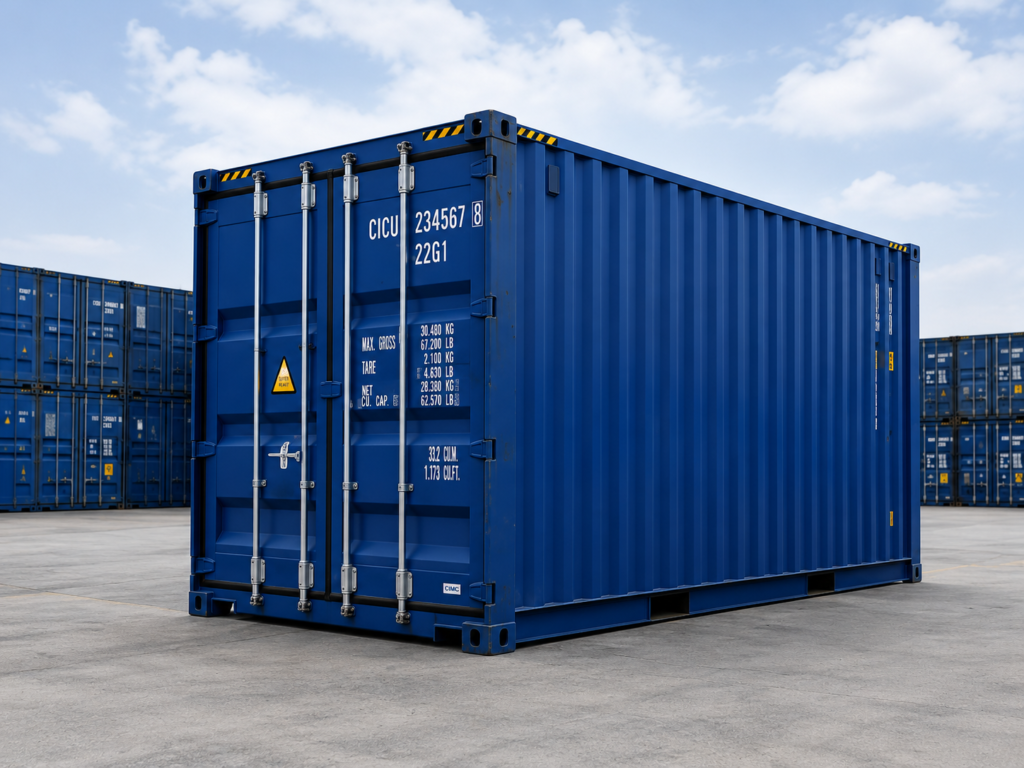
What Is a New Shipping Container?
A new shipping container is usually called a one-trip container. It is manufactured overseas and used only once to carry cargo from the factory region to the destination market. After this first voyage, it is sold as a new or nearly new container.
Although it has technically completed one international trip, it has not been used repeatedly in ports, rail yards, job sites, or storage yards. This means the container usually has:
- Clean exterior paint
- Minimal dents
- Very little or no rust
- Clean interior walls
- Original container-grade wooden flooring
- Strong door seals
- Better appearance
- Better modification potential
For customers who care about appearance, cleanliness, and long-term value, a new one-trip container is often worth the higher purchase price.
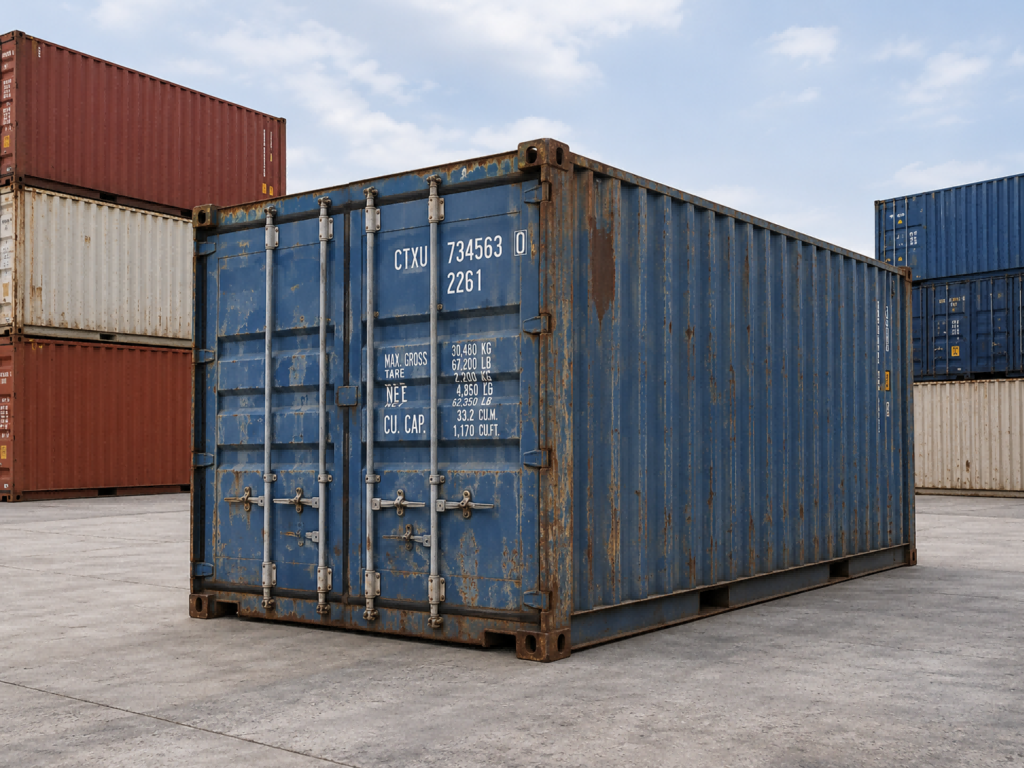
What Is a Used Shipping Container?
A used shipping container has already been used for multiple shipping cycles, storage projects, or cargo movements. Used containers can still be very strong and practical, but their condition can vary greatly.
Some used containers are still suitable for international shipping. Some are wind and watertight for storage only. Others may be sold as-is and require repair before use.
That is why buyers should never judge a used container by age alone. A well-maintained 10-year-old container can be better than a poorly maintained newer unit. The most important factor is the container grade.
Common Shipping Container Grades Explained
1. New / One-Trip Container
A one-trip container is the best condition available in the market. It is ideal for buyers who need a clean, attractive, and reliable container.
Best for:
- Container homes
- Container offices
- Retail pop-up stores
- Food-grade storage
- Pharmaceutical storage
- High-end modification projects
- Long-term business storage
- Export cargo with strict appearance requirements
Main advantages:
- Near-new appearance
- Clean interior
- Strong resale value
- Easier to modify
- Lower repair cost before use
- Better for customer-facing projects
2. Multi-Trip Container
A multi-trip container has completed several shipping cycles but remains in good functional condition. It may have small dents, light surface rust, and normal wear, but the structure is still strong.
Best for:
- General storage
- Construction job sites
- Farm storage
- Equipment storage
- Business inventory storage
- Budget container modification
Multi-trip containers are a smart choice for buyers who want a balance between good condition and lower price.
3. WWT Container – Wind and Water Tight
WWT means Wind and Water Tight. A WWT container is inspected to make sure it has no active leaks and can keep wind and rain out. It may have visible rust, dents, faded paint, or cosmetic wear, but it should still protect goods from weather.
Best for:
- Dry storage
- Tools and equipment
- Seasonal goods
- Farm supplies
- Construction materials
- Personal storage
WWT containers are often one of the most cost-effective choices for storage buyers.
4. CW Container – Cargo Worthy
CW means Cargo Worthy. A cargo worthy container is suitable for active shipping and can be used for international cargo transport when it meets the required inspection and documentation standards.
Best for:
- Export cargo
- Ocean freight
- Rail and truck transport
- International shipping projects
- Customers who need a container that can be loaded and shipped again
If you are buying a container in China and loading products for export to the USA, Canada, Australia, New Zealand, Europe, or other markets, a cargo worthy container is usually the safer option.
5. AS-IS Container
An AS-IS container is sold in its current condition without a strong guarantee. It may have damage, leaks, floor problems, door problems, or heavy rust.
Best for:
- Scrap projects
- Parts
- Low-budget non-critical use
- Repair projects
- Temporary storage where appearance and waterproofing are not important
For most commercial buyers, AS-IS containers are not recommended unless you can inspect the unit carefully and accept the repair risk.
New vs Used Shipping Container Comparison Table
| Factor | New / One-Trip Container | Used Container |
|---|---|---|
| Price | Higher | Lower |
| Appearance | Very clean, near-new | May have dents, rust, faded paint |
| Interior Condition | Clean and original | Depends on previous use |
| Flooring | Usually in excellent condition | May show wear, stains, or repair marks |
| Door Seals | Usually tight and new | Must be inspected |
| Rust Risk | Very low | Low to moderate depending on grade |
| Best Use | Homes, offices, food storage, premium projects | Storage, farms, job sites, equipment, export |
| Modification Potential | Excellent | Good if structure is sound |
| Resale Value | Strong, but higher initial cost | Good value if bought at the right price |
| Best Buyer | Customers who need clean condition | Customers who need practical value |
When Should You Buy a New Shipping Container?
A new one-trip container is the better choice when the condition directly affects the success of your project.
You should choose a new container if you need:
Clean Interior for Sensitive Goods
If the container will store food, medical products, clean equipment, packaged consumer goods, or high-value products, a clean one-trip container reduces contamination concerns.
Better Appearance for Customer-Facing Use
For retail stores, container cafes, container offices, display rooms, exhibitions, and public-facing spaces, appearance matters. A new container creates a more professional image.
Easier Modification
If you plan to cut doors, windows, vents, HVAC openings, insulation panels, or electrical systems, a new container gives your builder a cleaner base. Less rust and fewer dents mean less preparation work.
Longer-Term Ownership
If you plan to keep the container for many years, the higher initial price may be easier to justify because the container starts with better condition and may need less repair.
When Should You Buy a Used Shipping Container?
A used shipping container is usually the smarter option when function matters more than appearance.
You should choose a used container if you need:
Cost-Effective Storage
For tools, machinery, spare parts, construction materials, farm equipment, garden tools, and seasonal goods, a good used container can provide strong storage protection at a lower cost.
Job Site Use
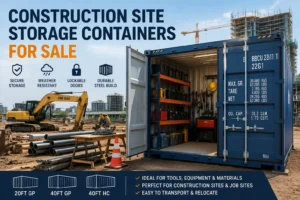
Construction sites usually need secure, mobile, and durable storage. A used WWT or multi-trip container is often enough. Add a lock box, shelving, and ventilation, and it becomes a practical job site storage solution.
Farm and Agricultural Storage
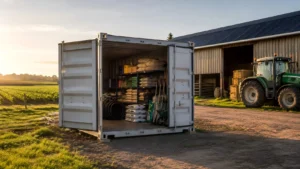
Farmers often use shipping containers to store equipment, feed, tools, irrigation parts, fertilizer, and seasonal materials. A clean new container is usually not necessary unless the goods are temperature-sensitive or food-grade.
Export Loading with Cargo
If a customer buys products from China and also wants to purchase a container, the container can be used to load cargo and ship to the destination. In this case, the buyer should select a cargo worthy container or a new one-trip container depending on the cargo value and shipping requirement.
Buying a Container in China and Exporting with Cargo
For international buyers, a shipping container can serve two purposes at the same time.
First, it works as an export container for ocean freight.
Second, after arrival, the buyer can keep the container for storage, warehouse use, farm use, or resale.
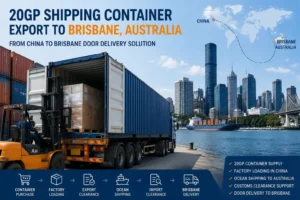
For example, a customer may purchase a new 40HQ container in China, load products inside at a factory or warehouse, ship it by sea, complete customs clearance, and finally deliver it to the customer’s yard or warehouse. After unloading the cargo, the container can remain with the customer as a storage unit.
This solution is especially useful for buyers importing:
- Building materials
- Fencing and gates
- Tarpaulins
- Machinery
- Tools
- Agricultural products
- Industrial supplies
- E-commerce inventory
- Outdoor equipment
If the container will be shipped internationally with cargo, the buyer should confirm:
- Container grade
- CSC plate validity
- Door sealing condition
- Floor condition
- Weight limit
- Loading plan
- Export customs documents
- Destination customs clearance
- Final delivery method
Used Shipping Container Inspection Checklist
Before buying a used shipping container, check the following points carefully.
1. Roof Condition
The roof is one of the most important areas. Look for rust holes, deep dents, standing water marks, or repair patches. A damaged roof can lead to leaks.
2. Floor Condition
Inspect the wooden floor for soft spots, cracks, chemical stains, oil marks, or broken boards. Flooring repair can add extra cost.
3. Door Operation
Both doors should open and close properly. Check locking rods, hinges, handles, and rubber gaskets. Poor door seals can allow water to enter.
4. Walls and Panels
Check for deep dents, cracks, rust-through areas, or bent panels. Small dents are normal, but structural damage should be avoided.
5. Corner Castings
Corner castings are important for lifting, stacking, and transport. They should not be cracked or badly damaged.
6. Ventilation
Blocked vents can cause condensation inside the container. Good ventilation helps protect stored goods from moisture problems.
New vs Used Container: Which One Is Better for Different Applications?
| Application | Recommended Container |
| International shipping | Cargo Worthy or New One-Trip |
| General storage | WWT or Multi-Trip |
| Construction site | WWT or Multi-Trip |
| Farm storage | WWT or Multi-Trip |
| Food-grade storage | New One-Trip |
| Pharmaceutical storage | New One-Trip |
| Container home | New One-Trip or High-Quality Multi-Trip |
| Container office | New One-Trip preferred |
| Budget project | WWT or AS-IS with inspection |
| Long-term business use | New One-Trip or Multi-Trip |
| Export from China with cargo | Cargo Worthy, 40HQ, 40GP, or 20GP depending on cargo |
20GP, 40GP, and 40HQ: Which Size Should You Choose?
20GP Container
A 20GP container is compact and strong. It is suitable for heavy cargo, tools, machinery, small storage yards, and locations with limited space.
Best for:
- Heavy products
- Small warehouse storage
- Job sites
- Farm equipment
- Machinery parts
40GP Container
A 40GP container offers more length and volume than a 20GP. It is suitable for larger cargo and long-term storage.
Best for:
- Furniture
- Building materials
- Light industrial goods
- Larger storage projects
40HQ Container
A 40HQ high cube container has extra height, making it one of the most popular options for export and storage. It provides more internal volume and is ideal for bulky cargo.
Best for:
- Large-volume cargo
- E-commerce goods
- Fencing and gates
- Tarpaulins
- Lightweight but bulky products
- Long-term warehouse storage
How to Choose the Right Shipping Container
Use this simple decision guide:
Choose a new one-trip container if you care about appearance, cleanliness, easy modification, long-term use, or high-value cargo.
Choose a multi-trip container if you want good condition and better value for general storage or business use.
Choose a WWT container if your main need is dry storage and you want to control cost.
Choose a CW container if the container must be used for international shipping.
Choose an AS-IS container only if you understand the repair risks and do not need guaranteed waterproofing or appearance.
Why Choose ONE BOX for Shipping Containers?
ONE BOX provides practical container solutions for buyers who need new containers, used containers, export containers, storage containers, and customized container solutions.
We help customers choose the right container based on real usage, not just price. Whether you need a 20GP for heavy cargo, a 40HQ for export loading, or a used container for farm storage, our team can help you match the correct size, condition, and shipping plan.
Our service can include:
- New and used shipping container sourcing
- 20GP, 40GP, and 40HQ container supply
- Cargo worthy container selection
- Factory loading support
- China export customs coordination
- Ocean freight booking
- Destination customs clearance support
- Door-to-door delivery solutions
- Container storage and modification consultation
For international buyers, ONE BOX can also help combine container purchasing with cargo loading and global shipping, allowing customers to import products and keep the container for long-term storage after delivery.
FAQ
Is a new shipping container worth it?
Yes, a new shipping container is worth it if you need a clean interior, better appearance, easier modification, or long-term reliable use. It is especially suitable for container homes, offices, food storage, pharmaceutical storage, and high-value cargo.
Is a used shipping container good for storage?
Yes. A good WWT or multi-trip container is usually enough for dry storage, tools, farm equipment, construction materials, and business inventory. The key is to inspect the roof, floor, doors, seals, walls, and ventilation.
What does WWT mean?
WWT means Wind and Water Tight. It means the container is designed and inspected to keep wind and rain out. It may not look new, but it should protect goods from weather.
What does Cargo Worthy mean?
Cargo Worthy means the container is suitable for shipping cargo and can be used for transport when it meets the required inspection and documentation standards.
Which container is best for export from China?
For export from China, a cargo worthy container or new one-trip container is usually recommended. The right choice depends on cargo value, destination, route, and whether the buyer wants to keep the container after delivery.
Which is better, 20GP or 40HQ?
A 20GP is better for heavy cargo and limited space. A 40HQ is better for large-volume goods and bulky products. Many importers choose 40HQ because it provides more loading volume and better value for international shipping.
Conclusion
Choosing between a new and used shipping container is not only about price. It is about matching the container condition to your real application.
If you need a clean, attractive, and long-lasting container for high-value use, a new one-trip container is the safest choice. If you need practical storage at a lower cost, a used WWT or multi-trip container can offer excellent value. If you plan to ship cargo internationally, a cargo worthy container or new container should be selected.
Before buying, always confirm the container grade, check the structure, inspect the floor and doors, and understand your final use. With the right supplier and the right inspection process, both new and used shipping containers can become a reliable asset for storage, shipping, export, and long-term business use.