Buying a shipping container in China and shipping it to Canada can be a practical solution for importers that need both international cargo transportation and permanent storage equipment.
Instead of renting a carrier-owned container that must be returned after unloading, a Canadian buyer can purchase a new or used container in China, load commercial products inside it and transport the entire unit to Canada.
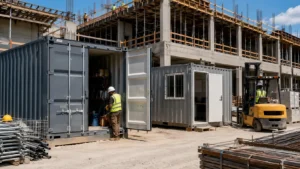
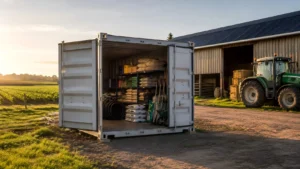
After customs clearance and delivery, the buyer keeps the container and can use it as a warehouse, farm storage unit, construction-site store, equipment room, workshop or commercial storage facility.
However, successfully importing a purchased container requires careful coordination. The buyer must select an export-suitable container, confirm that the ocean carrier accepts shipper-owned equipment, arrange factory loading, prepare Canadian import documentation and organize final delivery.
This complete guide explains how to buy shipping containers in China and ship to Canada, including container types, purchase procedures, SOC booking, Canadian customs clearance, GST, wood packaging requirements, shipping costs and door-to-door delivery.
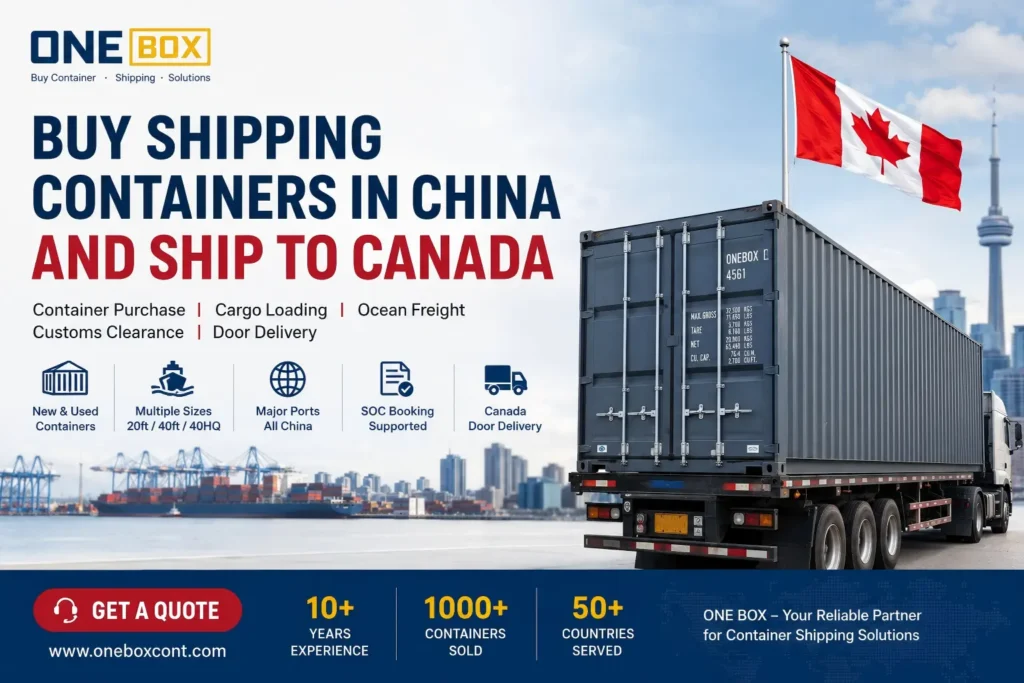
Can You Buy a Shipping Container in China and Import It into Canada?
Yes. Canadian businesses and individuals can purchase shipping containers in China and import them into Canada, provided the container and any cargo inside it meet the applicable transportation, customs and regulatory requirements.
The shipment can be arranged in two main ways:
- Purchase an empty container in China and ship it to Canada.
- Purchase a container in China, load commercial cargo inside it and ship the loaded container to Canada.
The second option is often more efficient because the buyer uses the purchased container to transport products that already need to be shipped from China.
For example, a Canadian importer could purchase a new 40ft high cube container in Qingdao, load aluminum fences or building materials into it and ship the loaded container to Vancouver. After the products are unloaded, the container can remain at the buyer’s warehouse for long-term storage.
A container owned by the cargo owner rather than the ocean carrier is commonly called a shipper-owned container, or SOC.
Before shipment, the freight forwarder must confirm that the selected carrier accepts SOC equipment on the intended China-to-Canada route.
Why Buy a Shipping Container in China?
China is an important manufacturing and export market with access to container factories, used-container depots, international seaports and a large network of cargo suppliers.
Wide Range of Container Types
International buyers can source:
- Brand-new shipping containers
- One-trip containers
- Cargo-worthy used containers
- Wind- and watertight storage containers
- 20ft standard containers
- 40ft standard containers
- 40ft high cube containers
- Side-opening containers
- Double-door containers
- Open-top containers
- Customized storage containers
This allows the buyer to select a container based on cargo volume, loading requirements, destination access and future use in Canada.
Convenient Loading at Chinese Factories
After the container is purchased, it can be released from a depot and delivered to a factory or warehouse in China.
The buyer’s products can then be loaded directly into the purchased container.
Suitable products may include:
- Aluminum fences and gates
- Building materials
- Machinery
- Agricultural equipment
- Furniture
- Automotive components
- Plastic tarpaulins
- Steel products
- Warehouse equipment
- Sound barrier panels
- Industrial components
- Packaged consumer goods
This arrangement combines container purchasing, cargo loading and international shipping into one coordinated process.
Access to Major Chinese Export Ports
Containers can be sourced and exported from major Chinese port regions, including:
- Qingdao
- Shanghai
- Ningbo
- Shenzhen
- Guangzhou
- Tianjin
- Dalian
- Xiamen
The most appropriate loading port normally depends on the cargo factory location, available containers, carrier services and the Canadian destination.
Long-Term Value After Delivery
Once the container arrives and clears Canadian customs, it can be used for:
- Farm machinery storage
- Construction tools
- Building materials
- Seasonal inventory
- Commercial warehouse overflow
- Outdoor equipment
- Mobile workshops
- Temporary offices
- Container conversion projects
- Residential storage, where local regulations permit
Purchasing a container can therefore provide value beyond the original ocean shipment.
New or Used Shipping Containers: Which Should You Choose?
The best option depends on the buyer’s budget, expected service life and appearance requirements.
| Factor | New or One-Trip Container | Used Cargo-Worthy Container |
|---|---|---|
| Exterior condition | Clean with limited dents | May have dents, scratches and repairs |
| Interior condition | Usually clean and dry | Condition varies |
| Service life | Generally longer | Depends on age and maintenance |
| Purchase price | Higher | Lower |
| Appearance | Suitable for premium projects | Suitable for industrial storage |
| Export suitability | Normally straightforward | Must be carefully verified |
| CSC status | Usually current | Must be checked before shipment |
A used container intended only for stationary storage does not necessarily meet the requirements for international ocean transportation.
When importing a used container from China to Canada, buyers should request confirmation that it is cargo-worthy and acceptable to the selected ocean carrier.
Popular Container Sizes for China-to-Canada Shipping
20ft Standard Container
A 20ft general-purpose container is suitable for heavy or compact cargo.
| Specification | Typical Measurement |
|---|---|
| External length | 6,058 mm |
| External width | 2,438 mm |
| External height | 2,591 mm |
| Internal volume | Approximately 33 CBM |
| Best for | Machinery, dense cargo and smaller storage sites |
A 20ft container may be easier to position on farms, construction sites or properties with limited delivery space.
40ft Standard Container
A 40ft standard container provides more floor space and is suitable for longer or higher-volume products.
It is commonly used for:
- Furniture
- Fence panels
- Building products
- Packaged goods
- Long industrial components
- Commercial inventory
40ft High Cube Container
The 40ft high cube container, also called a 40HC or 40HQ, is one of the most popular options for shipments from China to Canada.
| Specification | Typical Measurement |
|---|---|
| External length | 12,192 mm |
| External width | 2,438 mm |
| External height | 2,896 mm |
| Internal volume | Approximately 76 CBM |
| Best for | Bulky cargo, high-volume products and warehouse storage |
The additional height provides more loading capacity and makes the container suitable for long-term warehouse use.
Side-Opening Container
A side-opening container has cargo doors installed along one side of the unit.
It provides easier access to:
- Long materials
- Wide equipment
- Retail inventory
- Frequently handled products
- Products requiring forklift access from the side
Because it is special equipment, availability and carrier acceptance should be confirmed before purchase.
Double-Door Container
A double-door or tunnel container has doors at both ends.
This design can improve cargo access and simplify loading or unloading when the container will later be used as a warehouse.
Container Inspection Checklist
Before purchasing a container, request detailed photographs, a video inspection or an independent survey.
Important areas to inspect include:
- Roof panels
- Side walls
- Front wall
- Corner posts
- Corner castings
- Bottom cross members
- Door seals
- Locking bars
- Hinges
- Interior walls
- Wooden flooring
- Underside structure
- Container identification number
- CSC Safety Approval Plate
Transport Canada states that container owners are responsible for ensuring that containers used in international transport are approved, carry an appropriate Safety Approval Plate, remain in safe condition and are periodically examined.
Transport Canada also warns that damaged or improperly loaded containers may become non-compliant with the International Convention for Safe Containers and unsafe for transportation.
Buyers should avoid containers with:
- Structural deformation
- Damaged corner castings
- Large holes
- Severe corrosion
- Weak or contaminated floors
- Water leakage
- Difficult-to-operate doors
- Strong chemical odors
- Missing identification information
- Unverifiable safety certification
How to Buy a Container in China and Ship It to Canada
Step 1: Confirm the Required Container
Determine:
- Container size
- New or used condition
- Required quantity
- Cargo type
- Cargo weight
- Future container use
- Canadian delivery location
- Required modifications
- Expected shipping date
The final delivery site is especially important. A buyer may prefer a 40HQ for maximum storage, but the property must have enough space for truck access and unloading.
Step 2: Request a Container Quotation
A complete quotation should clearly state:
- Container type
- Container condition
- Depot location
- Manufacturing year, where available
- CSC plate status
- Purchase price
- Inspection charges
- Empty-container trucking
- Loading-port charges
- SOC handling fees
- Ocean freight
- Canadian destination charges
- Customs clearance
- Final delivery
Avoid comparing suppliers based only on the container purchase price. A low depot price may be offset by expensive trucking, certification problems or carrier rejection.
Step 3: Confirm SOC Acceptance
The freight forwarder should obtain carrier approval before the buyer finalizes the container purchase.
The carrier may request:
- Container number
- Container type
- Container age
- CSC plate photograph
- Structural inspection report
- Exterior photographs
- Door photographs
- Maximum gross weight
- Tare weight
- Container dimensions
- Ownership declaration
Do not assume that every carrier accepts every shipper-owned container.
SOC booking requirements can vary by carrier, route, port and container condition.
Step 4: Release the Container from the Depot
After the container is approved and purchased, it can be released from a Chinese depot.
A container truck then transports it to:
- The product factory
- A third-party warehouse
- A consolidation facility
- A designated loading yard
The trucking schedule must be coordinated with factory loading time and the vessel cut-off date.
Step 5: Load Cargo into the Purchased Container
During loading, the factory or warehouse should:
- Check the container interior
- Protect the floor
- Distribute cargo weight evenly
- Secure products against movement
- Use suitable blocking and bracing
- Avoid exceeding the payload
- Photograph the loading process
- Record the container number
- Apply a numbered seal
- Prepare a final packing list
Heavy cargo should not be concentrated in one section of the container.
Improper weight distribution can damage the equipment, create road-transport risks and cause problems during terminal handling.
Step 6: Check Wood Packaging Requirements
Cargo imported into Canada from China may use wooden pallets, crates, supports or dunnage.
The Canadian Food Inspection Agency states that wood packaging entering Canada from locations outside the continental United States is subject to Canada’s wood-packaging import requirements. Qualifying solid-wood packaging should be treated and marked in accordance with ISPM 15.
Common regulated materials include:
- Solid-wood pallets
- Wooden crates
- Wooden boxes
- Dunnage
- Blocking
- Bracing
- Cable drums
- Skids
Processed materials such as plywood, oriented strand board and certain manufactured-wood products may be treated differently, but the exporter should confirm the current requirements before loading.
Non-compliant wood packaging can result in inspection, treatment, removal, re-export or shipment delays.
Step 7: Obtain the Verified Gross Mass
Before a loaded container can be placed aboard a vessel, the shipper must arrange its Verified Gross Mass.
The weight generally includes:
- Container tare weight
- Cargo
- Packaging
- Pallets
- Blocking and bracing
- Securing materials
The VGM must remain within the maximum gross weight permitted for the container and the applicable road-transport limits.
Step 8: Complete Chinese Export Customs Clearance
Typical export documents include:
- Commercial invoice
- Packing list
- Sales contract
- Export declaration
- Container purchase invoice
- Booking confirmation
- VGM declaration
- Container and seal numbers
- Bill of lading instructions
- Commodity-specific certificates
The documents should clearly describe both the purchased container and the cargo loaded inside it.
Step 9: Ship the Container to Canada
Common destination ports include:
- Port of Vancouver
- Port of Prince Rupert
- Port of Montreal
- Port of Halifax
Common routing options may include:
| China Loading Region | Potential Canadian Destination |
|---|---|
| Qingdao | Vancouver, Prince Rupert, Montreal or Halifax |
| Shanghai and Ningbo | Vancouver, Prince Rupert, Montreal or Halifax |
| Shenzhen and Guangzhou | Vancouver, Prince Rupert, Montreal or Halifax |
| Tianjin and Dalian | Vancouver, Prince Rupert, Montreal or Halifax |
Some East Coast services may involve transshipment or alternative intermodal routing.
Transit times vary according to:
- Port pair
- Direct or transshipment service
- Shipping line
- Vessel schedule
- Weather
- Port congestion
- Customs examination
- Rail availability
- Inland destination
As a general planning range, port-to-port services to Canada’s West Coast may take approximately two to four weeks, while services to Eastern Canada may take approximately four to seven weeks.
These figures are estimates rather than guaranteed schedules.
Canadian Customs Clearance for Purchased Containers
A purchased container that will remain in Canada may need to be treated as imported merchandise, separately from the products loaded inside it.
Before the shipment departs from China, the importer should appoint a Canadian customs broker and confirm:
- Importer-of-record arrangements
- Container tariff classification
- Cargo tariff classification
- Declared container value
- Declared cargo value
- Country of origin
- Applicable customs duty
- GST
- Possible anti-dumping or countervailing measures
- Other government department requirements
The container and cargo should not automatically be declared as a single product.
Business Number and RM Account
Commercial importers need an appropriate Canadian business number and import-export program account.
CBSA states that businesses importing commercial goods require a Business Number and an RM import-export account. The CARM system is now Canada’s official system of record for commercial import accounting and the collection of duties and taxes.
A Canadian importer should complete the necessary CARM registration before the cargo arrives.
Importer of Record
The importer of record is responsible for customs accounting and may remain liable for:
- Classification
- Valuation
- Origin
- Duties
- Taxes
- Corrections
- Recordkeeping
- Post-entry verification
Commercial entities transacting with CBSA are identified through their Business Number and RM account.
Using a customs broker does not eliminate the importer’s responsibility for accurate declarations.
Customs Classification
The customs broker must determine the appropriate tariff classification for the purchased shipping container and each product loaded inside it.
Canada’s Customs Tariff includes heading 8609 for containers specially designed and equipped for carriage by one or more modes of transport. However, the correct classification and duty treatment depend on the container’s design, use, origin and current tariff provisions.
Importers should not rely on a classification copied from an older shipment without verification.
Value for Duty
The declared value should be supported by commercial documents.
CBSA explains that, in many normal sales-for-export transactions, the value for duty is based on the price paid or payable for the imported goods, subject to the applicable customs valuation rules. The declaration must be supported by an invoice containing a complete description, price and terms of sale.
The customs broker may need separate values for:
- Purchased container
- Products inside the container
- Modifications
- Accessories
- Certain assists or additional costs
Customs Duty and GST
Goods imported into Canada may be subject to customs duties based on:
- HS classification
- Country of origin
- Tariff treatment
- Product value
- Trade-remedy measures
- Current Canadian customs rules
The applicable rate should be checked against the current Canadian Customs Tariff rather than estimated from an old online article. Canada publishes an updated 2026 Customs Tariff showing current tariff treatments and duty rates.
Commercial goods imported into Canada are generally subject to the 5% federal Goods and Services Tax, although exemptions may apply to specific goods. The GST calculation may include the value for duty plus applicable customs duties and certain other taxes.
A GST/HST-registered Canadian business may be eligible to recover qualifying import GST through input tax credits, depending on how the goods are used and whether all tax requirements are met.
Documents Required for Importing into Canada
A typical shipment may require:
- Commercial invoice for the container
- Commercial invoice for the cargo
- Packing list
- Ocean bill of lading
- Container purchase contract
- Container identification number
- CSC plate information
- Country-of-origin details
- Customs broker authorization
- Business Number and RM account
- CARM registration
- Cargo control information
- Customs accounting declaration
- Product permits or certificates
- Wood-packaging compliance information
- Arrival notice
- Delivery order
The final document list depends on the cargo.
Food, plants, wood products, chemicals, vehicles, electrical products and other regulated commodities may require additional approvals.
How Much Does It Cost to Ship a Container from China to Canada?
The total landed cost includes more than the container purchase price and ocean freight.
Container Purchase Cost
The price depends on:
- Container size
- New or used condition
- Age
- Depot location
- Market availability
- CSC status
- Required modifications
- Number of containers
China-Side Charges
Possible origin charges include:
- Depot release
- Empty-container trucking
- Factory loading
- Cargo securing
- Container inspection
- VGM weighing
- Export customs clearance
- Terminal handling
- Documentation
- SOC handling
- Port delivery
Ocean Freight
Ocean freight is influenced by:
- China loading port
- Canadian destination port
- Container type
- Cargo weight
- Shipping line
- SOC acceptance
- Direct or transshipment service
- Seasonal demand
- Fuel surcharges
- Port congestion
- Equipment availability
Canadian Destination Charges
Possible destination costs include:
- Customs brokerage
- Customs duty
- GST
- Terminal handling
- Port charges
- Documentation
- Customs examination
- Container storage
- Demurrage
- Chassis or trailer use
- Drayage
- Rail transportation
- Final delivery
- Crane or tilt-bed unloading
Buyers should request a detailed quotation showing which charges are included and which remain payable at destination.
China-to-Canada Shipping Options
Port-to-Port Shipping
ONE BOX arranges the container purchase, China-side loading and ocean freight to a Canadian port.
The buyer arranges:
- Canadian customs clearance
- Port pickup
- Inland transportation
- Unloading
This option is suitable for experienced importers with established Canadian logistics partners.
CIF Shipping
Under a CIF arrangement, the seller arranges freight and insurance to the named Canadian port.
The buyer generally remains responsible for:
- Import customs clearance
- Duties and taxes
- Destination terminal charges
- Final delivery
The exact included charges must be confirmed in writing.
DAP Door Delivery
Under a DAP-style service, the shipment is transported to the agreed Canadian destination, while the buyer normally remains responsible for import duties and taxes.
This option can simplify inland transportation without transferring every import responsibility to the seller.
DDP Door-to-Door Shipping
A comprehensive door-to-door solution may include:
- Container sourcing
- Container inspection
- Depot release
- Factory pickup
- Cargo loading
- Export customs clearance
- Ocean freight
- Canadian customs brokerage coordination
- Duties and GST
- Port pickup
- Rail or truck transportation
- Final delivery
Before selecting DDP, confirm:
- Who acts as importer of record
- Whose Business Number is used
- Whether GST is included
- Whether customs duty is included
- Whether examinations are included
- Whether delivery unloading is included
- Whether storage and demurrage are excluded
Delivery to Canadian Cities
Containers can be transported to destinations across Canada, including:
- Vancouver
- Surrey
- Burnaby
- Calgary
- Edmonton
- Winnipeg
- Toronto
- Mississauga
- Brampton
- Ottawa
- Montreal
- Quebec City
- Halifax
A container arriving at Vancouver or Prince Rupert may move inland by rail and truck to Alberta, Saskatchewan, Manitoba, Ontario or Quebec.
A container arriving at Montreal or Halifax may be suitable for destinations in Eastern Canada.
The best route depends on ocean freight, rail schedules, destination charges and final delivery distance.
Check the Canadian Delivery Site
Before booking delivery, verify:
- Street width
- Truck access
- Turning radius
- Gate width
- Overhead cables
- Tree branches
- Ground stability
- Snow or ice conditions
- Local weight restrictions
- Municipal permits
- Zoning rules
- Unloading equipment
- Final container orientation
Common unloading methods include:
- Tilt-bed delivery
- Crane truck
- Side-loader
- Reach stacker
- Forklift, for suitable equipment
- Container handler
A 40ft high cube requires significantly more delivery space than a 20ft container.
Common Mistakes to Avoid
Buying Before Carrier Approval
Do not purchase an export container before confirming SOC acceptance.
The carrier may reject it because of age, condition, dimensions or documentation.
Choosing a Storage-Grade Container for Ocean Transport
A wind- and watertight container may be suitable for stationary storage but not for international shipment.
Confirm cargo-worthy condition and CSC compliance.
Ignoring Canadian CARM Registration
Commercial importers should have their Business Number, RM account and CARM arrangements ready before arrival.
Incomplete registration may delay customs release.
Using Non-Compliant Wooden Pallets
Solid-wood pallets and dunnage from China must meet applicable Canadian plant-health requirements.
Check for clear and valid ISPM 15 marks before loading.
Declaring Only the Cargo
When the purchased container will remain in Canada, it may also need to be declared as imported merchandise.
Provide the container invoice to the customs broker.
Underestimating Destination Charges
A low ocean-freight quotation does not represent the full landed cost.
Request estimates for customs, GST, terminal handling, examination, rail, drayage and final delivery.
Failing to Check Local Regulations
Some municipalities restrict where shipping containers can be placed or require permits for permanent use.
Confirm zoning and property rules before purchasing.
Why Choose ONE BOX?
ONE BOX helps international buyers source shipping containers in China and coordinate their export to Canada.
Our services can include:
- New container supply
- Used container sourcing
- 20ft, 40ft and 40HQ containers
- Container condition inspection
- CSC plate verification
- SOC booking support
- Depot release
- China factory delivery
- Cargo loading
- Cargo securing
- Export customs clearance
- Ocean freight to Canada
- Canadian customs-clearance coordination
- Port pickup
- Rail and truck transportation
- Door delivery
Whether you need one container for farm storage or multiple containers for a commercial project, ONE BOX can develop a solution based on your cargo, budget and destination.
Frequently Asked Questions
Can I buy a container in China and keep it in Canada?
Yes. A purchased container can be imported into Canada and retained for storage or other permitted uses after customs clearance.
The buyer should confirm customs, zoning and delivery requirements before shipment.
Can I load products inside the container in China?
Yes. The container can be delivered to a Chinese factory or warehouse for loading before export.
This is one of the most efficient ways to combine container purchasing with cargo transportation.
Is a purchased container considered an SOC?
It is generally handled as a shipper-owned container when the cargo owner owns the equipment rather than renting it from the ocean carrier.
Carrier approval is required before booking.
Do I need a CSC plate?
A container used in international ocean transport should meet the applicable safety and carrier requirements.
The Safety Approval Plate and structural condition should be checked before purchase.
Do I need a Canadian customs broker?
Importers may handle certain customs procedures themselves, but many businesses appoint a licensed customs broker to manage classification, valuation, release and accounting.
The importer remains responsible for the accuracy of the declaration.
How much GST will I pay?
Commercial imports are generally subject to the 5% federal GST, unless an exemption applies.
The final amount depends on the customs value, applicable duties and tax treatment.
Can ONE BOX deliver to Toronto or Calgary?
Yes. Shipments may arrive through Vancouver, Prince Rupert, Montreal or Halifax and continue by rail and truck to inland Canadian destinations.
The most economical route depends on the final postal code, current freight rates and available services.
Can the container be delivered to a residential property?
Residential delivery may be possible, but the buyer must verify road access, property space, municipal permits, zoning and unloading conditions.
How long does shipping from China to Canada take?
West Coast port-to-port transportation may require approximately two to four weeks, while Eastern Canada routes may require approximately four to seven weeks.
Customs, transshipment, rail and final delivery may add additional time.
Request a China-to-Canada Container Quotation
To receive an accurate quotation, provide:
- Required container size
- New or used condition
- Number of containers
- Cargo description
- Cargo weight
- Cargo volume
- Chinese factory address
- Preferred loading port
- Canadian destination port
- Final delivery postal code
- Expected shipping date
- Customs-clearance requirements
- Whether duties and GST should be included
- Available unloading method
ONE BOX can help you purchase a suitable container, load your products in China and ship the complete unit to Canada.
Buy your shipping container in China, load your cargo and deliver it to Canada through one coordinated solution.
Import regulations, freight rates, tariff classifications and tax requirements may change. Confirm the latest requirements with ONE BOX, the ocean carrier and a qualified Canadian customs broker before shipment.