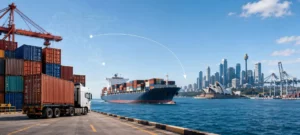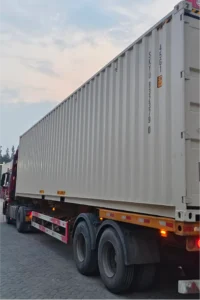
Buying a shipping container in China and shipping it to New Zealand can be an efficient way to combine international cargo transportation with long-term storage.
Instead of renting a carrier-owned container that must be unloaded and returned, a New Zealand buyer can purchase a new or used shipping container in China, load commercial products inside it and ship the complete unit to New Zealand.
After customs and biosecurity clearance, the buyer keeps the container and can use it for agricultural storage, construction equipment, commercial inventory, building materials, machinery, workshops or container conversion projects.
However, importing a purchased shipping container into New Zealand requires more than selecting a container and booking ocean freight. The unit must be suitable for international transport, accepted by the ocean carrier, correctly documented and free from biosecurity contamination.
This guide explains how to buy shipping containers in China and ship to New Zealand, including container selection, SOC approval, China factory loading, MPI biosecurity requirements, New Zealand Customs clearance, GST and final delivery.
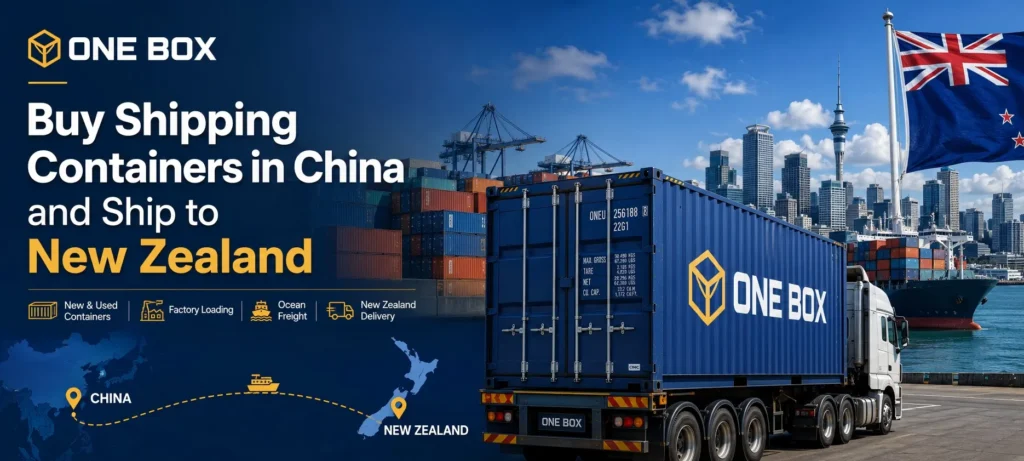
Can You Buy a Shipping Container in China and Import It into New Zealand?
Yes. New Zealand businesses and private buyers can purchase shipping containers in China and import them into New Zealand, provided the container and any cargo inside it meet shipping, customs and biosecurity requirements.
Two purchasing models are commonly used:
- Purchase an empty shipping container in China and transport it to New Zealand.
- Purchase a container in China, load commercial cargo inside it and ship the loaded container to New Zealand.
The second option is often more practical because the buyer uses the purchased container to transport products that already need to be shipped from China.
For example, a New Zealand importer can purchase a brand-new 40ft high cube container in Qingdao, load aluminum fences, building materials or machinery inside it and ship the complete unit to Auckland or Tauranga.
After clearance and unloading, the buyer can retain the container for warehouse or farm storage.
A container owned by the cargo owner instead of the shipping line is commonly known as a shipper-owned container, or SOC.
Before the container is purchased and delivered to the factory, the freight forwarder should confirm that the selected ocean carrier accepts SOC equipment on the intended China-to-New Zealand route.
Why Buy Shipping Containers from China?
China is one of the world’s most important container manufacturing and cargo-export markets. Buyers can access container factories, used-container depots, major seaports and a wide range of export suppliers.
Wide Range of Container Types
International buyers can source:
- Brand-new shipping containers
- One-trip containers
- Cargo-worthy used containers
- Wind- and watertight storage containers
- 20ft standard containers
- 40ft standard containers
- 40ft high cube containers
- Side-opening containers
- Double-door containers
- Open-top containers
- Customized storage containers
This allows buyers to select equipment according to cargo volume, budget, destination access and future storage requirements.
Load Products Directly at the Chinese Factory
After purchase, the container can be released from a Chinese depot and transported to the cargo factory or warehouse.
The buyer’s products can then be loaded directly into the purchased container.
This arrangement is suitable for:
- Aluminum fences and gates
- Machinery
- Building materials
- Agricultural equipment
- Furniture
- Plastic tarpaulins
- Steel products
- Automotive components
- Warehouse equipment
- Sound barrier panels
- Packaged consumer products
- Industrial components
Combining container purchasing and cargo loading can reduce unnecessary handling and make better use of the ocean shipment.
Access to Major Chinese Export Ports
Containers can be sourced and exported through major Chinese port regions, including:
The most suitable loading port normally depends on the cargo factory location, container availability, inland trucking cost and the shipping line’s New Zealand service.
Permanent Value After Arrival
After New Zealand customs and biosecurity clearance, the container can be reused for:
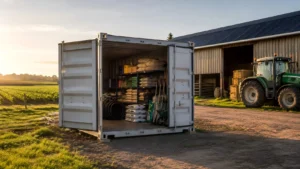
- Farm equipment storage
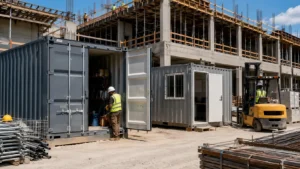
- Construction-site storage
- Building materials
- Workshop conversion
- Commercial inventory
- Seasonal stock
- Machinery and tools
- Mobile offices
- Outdoor warehouse space
- Container homes or studios, subject to local approval
The buyer receives both an international transport unit and a reusable storage asset.
Popular Container Types for China-to-New Zealand Shipping
20ft Standard Container
A 20ft general-purpose container is suitable for dense, heavy or relatively small-volume cargo.
| Item | Typical Specification |
|---|---|
| External Length | 6,058 mm |
| External Width | 2,438 mm |
| External Height | 2,591 mm |
| Internal Volume | Approximately 33 CBM |
| Typical Use | Machinery, tools, building materials and farm storage |
A 20ft container can also be easier to deliver to rural properties or sites with limited access.
40ft Standard Container
A 40ft standard container provides more floor space and is suitable for long or high-volume products.
Common applications include:
- Fence panels
- Furniture
- Packaged goods
- Construction products
- Long industrial components
- Commercial warehouse inventory
40ft High Cube Container
A 40ft high cube container, commonly called a 40HC or 40HQ, is one of the most popular options for shipments from China to New Zealand.
| Item | Typical Specification |
|---|---|
| External Length | 12,192 mm |
| External Width | 2,438 mm |
| External Height | 2,896 mm |
| Internal Volume | Approximately 76 CBM |
| Typical Use | Bulky cargo, long products and warehouse storage |
The additional height provides more internal capacity and makes the container useful for long-term storage after delivery.
Side-Opening Container
A side-opening container has cargo doors along one side in addition to the standard end doors.
It can be useful for:
- Long building materials
- Wide machinery
- Retail stock
- Products requiring side forklift access
- Frequently accessed storage
Special containers can have more limited carrier acceptance and sailing availability, so booking conditions should be checked before purchase.
Double-Door Container
A double-door or tunnel container has cargo doors at both ends.
It provides easier access to stored products and can be suitable for warehouses, workshops and drive-through storage arrangements.
Open-Top Container
An open-top container is designed for cargo that must be loaded by crane or extends above the standard door height.
It normally requires special equipment approval, suitable covers and careful cargo securing.
New Versus Used Shipping Containers
The right condition depends on the buyer’s budget, desired appearance and expected service life.
| Factor | New or One-Trip Container | Used Cargo-Worthy Container |
|---|---|---|
| Exterior Appearance | Clean with limited dents | May have dents, scratches and repairs |
| Interior Condition | Generally clean and dry | Varies according to previous use |
| Expected Service Life | Longer | Depends on age and maintenance |
| Purchase Price | Higher | Lower |
| Export Suitability | Usually easier to verify | Requires careful inspection |
| Storage Use | Premium commercial projects | Cost-sensitive industrial storage |
| CSC Status | Normally current | Must be verified |
A storage-grade container is not automatically suitable for international ocean transportation.
When purchasing a used unit, confirm that it is structurally cargo-worthy and acceptable to the selected shipping line.
Check the CSC Safety Approval Plate
A shipping container used in international transport should have valid safety approval information and remain structurally suitable for handling and vessel transport.
The International Convention for Safe Containers establishes common safety-testing and strength requirements and provides for approved containers to carry a Safety Approval Plate containing technical data.
Before purchase, check:
- Container number
- Manufacturing date
- Maximum gross weight
- Allowable stacking weight
- Racking-test information
- Examination status
- CSC approval plate condition
The carrier may also request photographs of the plate before approving the SOC booking.
Container Inspection Checklist
Before payment or depot release, request detailed photographs, videos or an independent inspection report.
Inspect the following areas:
- Roof panels
- Side walls
- Front wall
- Corner posts
- Corner castings
- Bottom cross members
- Door seals
- Locking bars
- Hinges
- Interior walls
- Wooden flooring
- Underside structure
- Container identification number
- CSC Safety Approval Plate
Avoid containers with:
- Significant structural deformation
- Damaged corner castings
- Severe corrosion
- Holes in the roof or walls
- Water leakage
- Weak or contaminated floors
- Broken locking bars
- Difficult-to-operate doors
- Strong chemical odors
- Missing identification information
- Unverifiable safety certification
How to Buy a Container in China and Ship It to New Zealand
Step 1: Confirm Your Requirements
Before requesting a quotation, provide:
- Required container size
- New or used condition
- Number of containers
- Cargo description
- Cargo dimensions
- Total cargo weight
- Chinese factory location
- New Zealand destination
- Required modifications
- Expected shipping date
- Intended use after arrival
The destination site should be checked before selecting the container size.
A 40HQ offers greater storage capacity, but it also requires more road width, turning space and unloading clearance.
Step 2: Choose a Reliable Container Supplier
A professional China shipping container supplier should provide:
- Container type
- Condition grade
- Depot location
- Manufacturing year, where available
- Container identification number
- CSC plate status
- Maximum gross weight
- Tare weight
- Payload
- Door condition
- Floor condition
- Known repairs
- Export suitability
Avoid choosing a supplier based only on the lowest purchase price.
A cheap container can become expensive if it requires repairs, long-distance repositioning or replacement after carrier rejection.
Step 3: Confirm SOC Acceptance
The freight forwarder should obtain carrier approval before the buyer completes the container purchase.
The shipping line may request:
- Container identification number
- Container type and dimensions
- Manufacturing year
- CSC plate photograph
- Exterior photographs
- Door photographs
- Inspection certificate
- Maximum gross weight
- Tare weight
- Ownership declaration
Carrier policies can differ according to equipment type, age, port and route.
Step 4: Release the Container from the Depot
After the container is approved and purchased, it can be released from the Chinese depot.
A container truck transports it to:
- The product factory
- A third-party warehouse
- A consolidation facility
- A designated loading yard
The container release should be coordinated with the factory’s loading schedule and the vessel cut-off date.
Step 5: Clean the Container Before Loading
New Zealand has strict biosecurity controls for imported sea containers.
Before loading, the container should be inspected and cleaned inside and outside. It should be free from:
- Soil
- Mud
- Seeds
- Grain
- Straw
- Leaves
- Insects
- Snails
- Animal material
- Plant material
- Standing water
- Organic residue
MPI requires imported sea containers to be accompanied by a quarantine declaration confirming that the container was inspected before export. The declaration addresses cleanliness and restricted packing or packaging materials.
Pay special attention to:
- Underside cross members
- Forklift pockets
- Corner castings
- Twist-lock openings
- Door seals
- Floor joints
- Internal corners
- Roof surfaces
- Ventilation openings
Cleaning should be completed before cargo is loaded, and photographs should be retained as part of the shipment record.
Step 6: Load and Secure the Cargo
During loading, the factory or warehouse should:
- Inspect the empty container
- Protect the flooring
- Distribute weight evenly
- Secure products against movement
- Use suitable blocking and bracing
- Avoid exceeding the payload
- Photograph the loading process
- Record the container number
- Apply a numbered seal
- Prepare the final packing list
Heavy cargo should not be concentrated at one end or on a small area of the container floor.
Proper securing helps protect the goods, container and transport workers during trucking, terminal handling and ocean transit.
Step 7: Check Wood Packaging Requirements
Products shipped from China may be packed on solid-wood pallets or inside wooden crates.
New Zealand requires imported wood packaging to comply with its biosecurity requirements. On arrival, MPI may check for pests, bark, soil, fungi, leaves and a clear ISPM 15 mark.
Potentially regulated packaging includes:
- Solid-wood pallets
- Wooden crates
- Boxes
- Dunnage
- Packing blocks
- Skids
- Cable drums
- Wooden bracing
Before loading, confirm that applicable wood packaging:
- Has been debarked
- Has received approved treatment
- Carries a clear ISPM 15 mark
- Is free from insects
- Is free from soil and plant material
- Meets the current New Zealand import health standard
Processed materials such as plywood and oriented strand board may be treated differently, but the applicable requirement should be checked before shipment.
Step 8: Obtain the Verified Gross Mass
The packed container must have a Verified Gross Mass before vessel loading.
Under the SOLAS container-weight rules, the shipper is responsible for obtaining and submitting the verified gross mass. A packed container without the required VGM should not be loaded aboard the vessel.
The VGM includes:
- Container tare weight
- Cargo weight
- Pallets
- Packaging
- Dunnage
- Blocking and bracing
- Securing materials
The total must remain within the container’s maximum gross weight and applicable road and port restrictions.
Step 9: Complete China Export Customs Clearance
Typical export documents include:
- Commercial invoice
- Packing list
- Sales contract
- Export customs declaration
- Container purchase invoice
- Booking confirmation
- VGM declaration
- Container number
- Seal number
- Bill of lading instructions
- Treatment certificates
- Commodity-specific certificates
The commercial documents should clearly describe both the purchased container and the goods loaded inside it.
Step 10: Ship the Container to New Zealand
Common New Zealand destination ports include:
- Auckland
- Tauranga
- Lyttelton
- Napier
- Wellington
- Port Chalmers
Potential route combinations include:
| China Loading Region | Common New Zealand Destination |
|---|---|
| Qingdao | Auckland, Tauranga or Lyttelton |
| Shanghai and Ningbo | Auckland, Tauranga or Lyttelton |
| Shenzhen and Guangzhou | Auckland, Tauranga or Lyttelton |
| Tianjin and Dalian | Auckland, Tauranga or Lyttelton |
| Xiamen | Auckland or Tauranga |
Some sailings may be direct, while others may involve transshipment through an Asian or Australian hub.
As a broad commercial planning range, port-to-port shipping can take approximately three to six weeks. Actual transit time depends on the loading port, shipping line, destination, vessel schedule and transshipment arrangement.
New Zealand Biosecurity Clearance
Biosecurity is one of the most important parts of importing a purchased container into New Zealand.
MPI requires importers to comply with the import health standard for the sea container and any applicable import health standards for the cargo and packaging materials.
Sea Container Quarantine Declaration
The shipment should include a completed sea container quarantine declaration.
This document generally confirms that:
- The container was inspected before export
- The container is clean
- It is free from animal material
- It is free from live organisms
- It is free from plant material
- It is free from soil and other contamination
- Wood packaging has been correctly declared
Incomplete or inaccurate declarations can lead to inspection, delays and additional costs.
Biosecurity Authority Clearance Certificate
Depending on the shipment, the importer or broker may need to submit information for a Biosecurity Authority Clearance Certificate, commonly called a BACC.
MPI recommends providing the necessary container information before arrival so that risk assessment and clearance arrangements can begin promptly.
Transitional Facility Requirement
Imported sea containers cannot normally be delivered directly to an ordinary warehouse, farm or residential property before completing the required biosecurity process.
MPI states that arriving sea containers must be taken to an approved transitional facility for inspection and unpacking. The facility may be located at the port or at another MPI-approved site.
The importer or customs broker should arrange the transitional facility before the container arrives.
The facility must be appropriate for the cargo and should have an MPI-accredited person available to supervise container opening and unpacking when required.
What Happens if Contamination Is Found?
If MPI finds serious contamination or a live organism, the importer may be required to:
- Clean the container
- Arrange fumigation or another treatment
- Identify the organism
- Reship the container or cargo
- Destroy contaminated materials
- Destroy the container or cargo in serious cases
Treatments must be carried out by approved providers at an appropriate transitional facility, and the importer is generally responsible for the resulting costs.
New Zealand Customs Clearance
A purchased shipping container that will remain in New Zealand may need to be declared as imported merchandise separately from the products loaded inside it.
Before departure from China, the importer should appoint a New Zealand customs broker and provide complete information about the container and cargo.
Client Code and Supplier Code
Commercial importers bringing in goods valued above NZ$1,000 generally require a Customs client code and supplier code.
New Zealand Customs states that a client code uniquely identifies commercial importers and is required for eligible imports valued at NZ$1,000 or more.
A private importer may instead require a Customs Number, depending on the nature and value of the shipment.
Trade Single Window
Import information is submitted electronically through New Zealand’s Trade Single Window.
TSW allows Customs, MPI and other border agencies to receive and process cargo information through one electronic channel.
Businesses can register to lodge their own entries, but many importers appoint a customs broker to handle:
- Import declarations
- Customs classification
- Biosecurity documentation
- Tariff preference
- GST calculations
- Port release
- Transitional-facility arrangements
Import Declaration
An electronic import declaration is generally required for commercial goods with a Customs value above NZ$1,000.
Customs requires importers to submit declaration details before goods are released.
The declaration may include:
- Importer details
- Supplier details
- Goods description
- Tariff classification
- Country of origin
- Customs value
- Freight and insurance
- Duty treatment
- GST
- Permit information
Customs Classification
The purchased container and the cargo loaded inside it may require separate tariff classifications.
International freight containers specially designed and equipped for carriage by one or more transport modes are commonly considered under HS heading 8609.
However, the importer should ask a qualified broker to confirm:
- The correct container classification
- Cargo classifications
- Applicable tariff rates
- Country-of-origin treatment
- Any concessions or restrictions
Do not assume that the container and its contents can be declared as one product.
Customs Value
The declared value should be supported by commercial documents such as:
- Supplier invoice
- Purchase contract
- Payment record
- Purchase order
- Freight invoice
- Insurance documentation
New Zealand Customs requires evidence of a sale for export to New Zealand when using the transaction value method.
The broker may need separate values for:
- Shipping container
- Cargo
- Container modifications
- Accessories
- Spare parts
- Packing materials
Customs Duty and the New Zealand–China FTA
Customs duty depends on:
- Tariff classification
- Country of origin
- Customs value
- Applicable trade agreement
- Current tariff provisions
- Product-specific restrictions
New Zealand and China have a free trade agreement. A New Zealand importer may claim preferential tariff treatment using a certificate of origin, declaration of origin or other acceptable evidence showing that the goods meet the agreement’s rules of origin.
The FTA does not mean every product can automatically be imported duty-free.
The importer should confirm:
- Whether the container qualifies as Chinese-origin goods
- Whether the cargo qualifies
- Which origin document is required
- Whether the supplier can provide the evidence
- Whether any product remains subject to duty or trade measures
GST on Containers Imported into New Zealand
New Zealand GST is generally charged at 15% on imported goods.
Customs calculates import GST using the value of the goods plus applicable customs duty and international freight and insurance costs.
A simplified example:
| Cost Component | Example |
|---|---|
| Container and cargo customs value | NZ$40,000 |
| Customs duty | NZ$0 |
| International freight and insurance | NZ$6,000 |
| GST value | NZ$46,000 |
| GST at 15% | NZ$6,900 |
This is an illustrative example only.
Actual GST depends on the accepted customs value, freight, insurance, duty and other applicable adjustments.
A GST-registered New Zealand business may be able to claim eligible import GST through its tax return, subject to Inland Revenue requirements and appropriate import documents.
Customs and MPI Goods Levies
New Zealand Customs and MPI charge goods-management levies on relevant imported consignments.
The goods-levy structure changed on April 1, 2026, and high-value imports above NZ$1,000 are subject to the applicable import goods levy unless an exemption applies.
The customs broker or freight forwarder normally pays these charges as part of the border-clearance process and may pass them to the importer.
Documents Required for Importing into New Zealand
A typical shipment may require:
- Commercial invoice for the container
- Commercial invoice for the cargo
- Packing list
- Ocean bill of lading
- Container purchase contract
- Container identification number
- CSC plate information
- China export declaration
- VGM declaration
- Customs import declaration
- Importer client code
- Supplier code
- Sea container quarantine declaration
- BACC application information
- Wood-packaging declaration
- ISPM 15 details
- Treatment certificate
- Certificate or declaration of origin
- Import permit, where applicable
- Manufacturer’s declaration
- Arrival notice
- Delivery order
The final document list depends on the cargo.
Food, timber, plant products, animal products, agricultural equipment, used machinery, vehicles and other risk goods may require additional MPI controls.
How Much Does It Cost to Ship a Container from China to New Zealand?
The total landed cost includes several separate components.
Container Purchase Cost
The purchase price depends on:
- Container size
- New or used condition
- Manufacturing age
- Depot location
- CSC status
- Market availability
- Required modifications
- Order quantity
China-Side Charges
Possible origin charges include:
- Depot release
- Empty-container trucking
- Container inspection
- Cleaning
- Factory loading
- Cargo securing
- VGM weighing
- Export customs clearance
- Terminal handling
- Documentation
- SOC booking fees
- Port delivery
Ocean Freight
Ocean freight depends on:
- Chinese loading port
- New Zealand destination port
- Container size
- Cargo weight
- Shipping line
- SOC acceptance
- Direct or transshipment route
- Seasonal demand
- Port congestion
- Fuel surcharges
- Available vessel space
New Zealand Destination Charges
Potential destination costs include:
- Customs brokerage
- GST
- Customs duty
- Customs and MPI levies
- Biosecurity assessment
- Transitional-facility handling
- Container inspection
- Cleaning
- Treatment or fumigation
- Terminal handling
- Port charges
- Documentation
- Storage
- Trucking
- Side-loader or crane service
- Final delivery
Buyers should request an itemized quotation showing which costs are included and which are payable after arrival.
China-to-New Zealand Shipping Options
Port-to-Port Shipping
ONE BOX arranges:
- Container sourcing
- Container inspection
- Depot release
- Factory loading
- Chinese export customs clearance
- Ocean freight
The buyer arranges:
- New Zealand customs clearance
- MPI biosecurity clearance
- Transitional facility
- Port pickup
- Final delivery
This option is suitable for experienced importers with established local service providers.
CIF Shipping
Under a CIF arrangement, the seller normally arranges ocean freight and marine insurance to the named New Zealand port.
The buyer normally remains responsible for:
- Customs clearance
- MPI clearance
- GST and duty
- Destination charges
- Transitional facility
- Inland delivery
The sales contract should clearly identify all included and excluded charges.
DAP Door Delivery
Under a DAP-style service, transportation is arranged to an agreed New Zealand destination.
However, the buyer generally remains responsible for import clearance, GST, duties and border charges unless otherwise stated.
Because imported sea containers must follow MPI transitional-facility procedures, “door delivery” should not be interpreted as direct delivery to an ordinary property before biosecurity clearance.
DDP Door-to-Door Shipping
A comprehensive door-to-door solution may include:
- Container purchase
- Container inspection
- Depot release
- China factory pickup
- Cargo loading
- Export customs clearance
- Ocean freight
- New Zealand customs brokerage
- MPI documentation
- Transitional-facility handling
- GST and duty
- Port pickup
- Final delivery
Before accepting a DDP quotation, confirm:
- Who acts as importer
- Whose client code is used
- Whether GST is included
- Whether duty is included
- Whether MPI levies are included
- Whether transitional-facility costs are included
- Whether inspections and treatment are included
- Whether final unloading is included
Unexpected inspections, treatment, storage and waiting time are commonly excluded from fixed quotations.
Delivery to New Zealand Cities
Containers can be transported to locations including:
- Auckland
- Hamilton
- Tauranga
- Rotorua
- Wellington
- Palmerston North
- Napier
- Hastings
- New Plymouth
- Christchurch
- Ashburton
- Timaru
- Dunedin
- Invercargill
Delivery to rural farms, construction sites and regional warehouses may also be arranged after customs and biosecurity release.
The final cost depends on:
- Port of arrival
- Delivery postcode
- Distance from the port
- Container size
- Road restrictions
- Ferry requirements
- Site access
- Unloading method
- Waiting time
Container Delivery Methods
Side-Loader Delivery
A side-loader places the container beside the truck.
This method requires sufficient side clearance and firm, level ground.
Tilt-Tray Delivery
A tilt-tray truck slides the container onto the ground.
It requires adequate straight-line space and suitable ground conditions.
Crane-Truck Delivery
A crane truck can position the container over a fence or place it more accurately.
The crane’s lifting capacity, reach and site access must be checked in advance.
Standard Trailer Delivery
A standard container trailer can be used when the buyer has a crane, reach stacker or other container-handling equipment at the destination.
Check the Delivery Site Before Ordering
Before purchasing a container, confirm:
- Road width
- Gate width
- Turning radius
- Ground stability
- Overhead power lines
- Tree branches
- Drainage
- Ground slope
- Truck weight restrictions
- Local council requirements
- Required building consent
- Foundations
- Door orientation
- Unloading equipment
Local planning or building approval may be needed when a container will be installed permanently or converted into an occupied structure.
Common Mistakes to Avoid
Buying the Container Before Carrier Approval
An ocean carrier may reject an SOC because of age, structural condition, certification or documentation.
Confirm acceptance before completing the purchase.
Purchasing a Storage-Grade Container
A wind- and watertight storage unit may not be suitable for international ocean transportation.
Request a cargo-worthy container with verifiable safety approval.
Ignoring Biosecurity Cleanliness
Soil, insects, seeds, leaves or animal material can result in inspection, cleaning, treatment and storage charges.
Clean and photograph the container before loading.
Using Non-Compliant Wood Packaging
Solid-wood pallets, crates and dunnage should meet applicable ISPM 15 and New Zealand MPI requirements.
Check that the marks are clear and legitimate.
Sending the Container Directly to a Farm
An uncleared imported sea container must follow MPI transitional-facility procedures.
Do not arrange delivery to an unapproved location before release.
Combining the Container and Cargo on One Invoice Line
The purchased container and the products inside it may require separate descriptions, values and tariff classifications.
Prepare clear commercial invoices before shipment.
Comparing Only Ocean-Freight Prices
Ocean freight is only one part of the landed cost.
Budget for GST, brokerage, MPI charges, transitional-facility handling, inspection, trucking and unloading.
Why Choose ONE BOX?
ONE BOX helps international buyers purchase shipping containers in China and coordinate the complete export process to New Zealand.
Our services can include:
- New container supply
- Used container sourcing
- 20ft, 40ft and 40HQ containers
- Side-opening and double-door containers
- Container condition inspection
- CSC plate verification
- SOC booking support
- Depot release
- China factory delivery
- Cargo loading
- Cargo securing
- Export customs clearance
- Ocean freight to New Zealand
- Customs-clearance coordination
- MPI documentation support
- Transitional-facility coordination
- Port pickup
- Door delivery
Whether you need one container for farm storage or multiple units for a commercial project, ONE BOX can develop a solution based on your cargo, budget and final destination.
Frequently Asked Questions
Can I buy a shipping container in China and keep it in New Zealand?
Yes. A purchased container can be imported and retained after customs and MPI biosecurity clearance.
The buyer should also check local council and building requirements before permanent installation.
Can I load products inside the purchased container?
Yes. The container can be delivered to a Chinese factory or warehouse for cargo loading before export.
The unit must be suitable for international transport and approved by the ocean carrier.
Is the container treated as an SOC?
It is generally handled as a shipper-owned container because it belongs to the buyer rather than the shipping line.
Carrier acceptance must be confirmed before booking.
Does the container need a CSC plate?
A container used for international transport should have valid safety approval information and remain structurally safe.
The CSC plate and examination status should be checked before purchase.
Does New Zealand inspect imported containers?
MPI may inspect the container, cargo and packaging for documentation problems, pests, diseases and contamination.
Inspection may occur at the port or an approved transitional facility.
Can the container be delivered directly to my farm?
Not before the required biosecurity process is completed.
Imported sea containers must generally move to an approved transitional facility for inspection and unpacking before final release.
How much GST will I pay?
New Zealand GST is generally 15% of the customs value plus applicable duty, international freight and insurance.
The final calculation should be confirmed by the customs broker.
Do I need a customs client code?
Commercial importers generally need a client code for eligible shipments valued at NZ$1,000 or more.
A supplier code and import declaration may also be required.
Can ONE BOX deliver to Auckland or Christchurch?
Yes. Port-to-port and door-delivery solutions can be coordinated to major New Zealand cities and many regional destinations.
Delivery remains subject to Customs and MPI release.
How long does shipping from China to New Zealand take?
A broad port-to-port planning range is approximately three to six weeks.
Actual transit time depends on the loading port, destination port, shipping line, vessel schedule and transshipment route.
Request a China-to-New Zealand Container Quotation
To receive an accurate quotation, provide:
- Required container size
- New or used condition
- Number of containers
- Cargo description
- Cargo dimensions
- Total cargo weight
- Chinese factory address
- Preferred loading port
- New Zealand destination port
- Final delivery postcode
- Expected shipping date
- Customs-clearance requirements
- Wood-packaging information
- Biosecurity details
- Required unloading method
ONE BOX can help you purchase a suitable shipping container, load your products in China and transport the complete unit to New Zealand.
Buy your container in China, load your cargo and ship everything to New Zealand through one coordinated solution.
New Zealand tariff rules, biosecurity requirements, goods levies, carrier policies and freight rates may change. Confirm current requirements with ONE BOX, New Zealand Customs, MPI and a qualified customs broker before shipment.