How Much Does a Used Shipping Container Weigh?
When buying a used shipping container, one of the most important questions is: how much does a used shipping container weigh?
Whether you plan to use a container for storage, export loading, equipment protection, farm use, construction site storage, or a container modification project, understanding container weight helps you choose the right truck, crane, foundation, and loading plan.
A shipping container’s weight is usually described in three ways: tare weight, payload capacity, and maximum gross weight. These numbers are not only useful for transportation but also important for road permits, lifting safety, cargo loading, and long-term site planning.
At ONE BOX, we help buyers choose suitable used 20ft, 40ft, and 40ft High Cube containers based on real project needs, cargo type, delivery conditions, and budget.
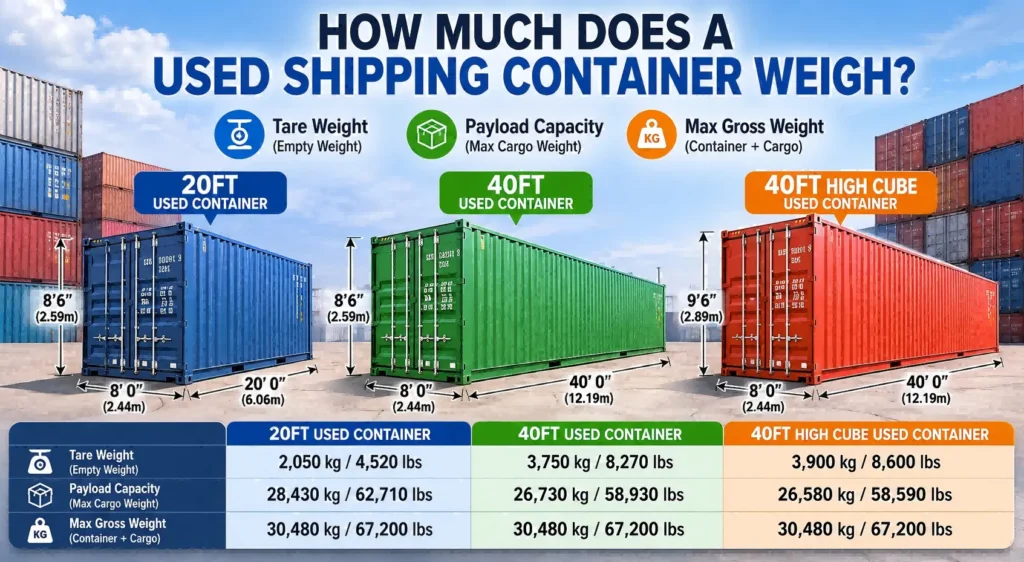
What Does Shipping Container Weight Mean?
Before comparing different container sizes, it is important to understand the three common weight terms used in the container industry.
Tare Weight
Tare weight means the empty weight of the shipping container itself. It does not include any cargo inside.
For example, if a 20ft used container has a tare weight of about 2,050 kg, that means the empty steel container weighs around 2,050 kg before loading any goods.
Payload Capacity
Payload capacity, also called net cargo capacity, means the maximum weight of cargo the container can safely carry.
This number is especially important for export shipping, heavy equipment storage, raw materials, machinery, building materials, and industrial products.
Maximum Gross Weight
Maximum gross weight means the total maximum weight of the container plus the cargo inside.
Formula:
Tare Weight + Payload Capacity = Maximum Gross Weight
For most standard used shipping containers, the maximum gross weight is around 30,480 kg / 67,200 lbs, depending on container type and certification.
Used Shipping Container Weight Chart
| Container Type | Tare Weight | Payload Capacity | Max Gross Weight |
|---|---|---|---|
| 20ft Used Shipping Container | 2,050 kg / 4,520 lbs | 28,430 kg / 62,710 lbs | 30,480 kg / 67,200 lbs |
| 40ft Used Shipping Container | 3,750 kg / 8,270 lbs | 26,730 kg / 58,930 lbs | 30,480 kg / 67,200 lbs |
| 40ft High Cube Used Container | 3,900 kg / 8,600 lbs | 26,580 kg / 58,590 lbs | 30,480 kg / 67,200 lbs |
The 20ft container is much shorter than a 40ft container, but it often has a higher payload capacity because the maximum gross weight is similar while the empty container itself is lighter. Eveon’s data shows a used 20ft container tare weight of 2,050 kg and a payload capacity of 28,430 kg, while a standard 40ft container has a tare weight of 3,750 kg and a payload capacity of 26,730 kg.
20ft Used Shipping Container Weight
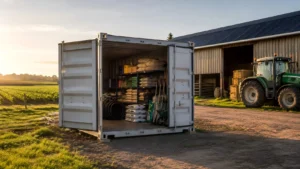
A 20ft used shipping container is one of the most popular choices for storage, export loading, workshop use, farm storage, and small business inventory.
Standard 20ft Container Weight
| Item | Specification |
|---|---|
| Tare Weight | Approx. 2,050 kg / 4,520 lbs |
| Payload Capacity | Approx. 28,430 kg / 62,710 lbs |
| Maximum Gross Weight | Approx. 30,480 kg / 67,200 lbs |
Best Uses for 20ft Used Containers
A 20ft container is ideal for:
- Personal storage
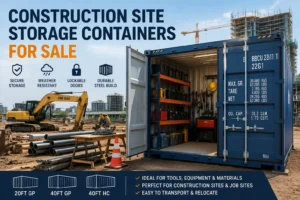
- Construction site storage
- Farm tools and equipment
- Small machinery
- Export cargo loading
- Workshop conversion
- Warehouse overflow storage
- Temporary business storage
Because a 20ft container is compact and strong, it is easier to place in tight locations than a 40ft container. It also works well for heavy cargo because its payload capacity is high compared with its size.
40ft Used Shipping Container Weight
A 40ft used shipping container provides much more floor space than a 20ft container, making it suitable for large-volume storage and international cargo shipping.
Standard 40ft Container Weight
| Item | Specification |
|---|---|
| Tare Weight | Approx. 3,750 kg / 8,270 lbs |
| Payload Capacity | Approx. 26,730 kg / 58,930 lbs |
| Maximum Gross Weight | Approx. 30,480 kg / 67,200 lbs |
Best Uses for 40ft Used Containers
A 40ft used container is suitable for:
- Large warehouse storage
- Building materials
- Furniture storage
- Export cargo consolidation
- Retail inventory storage
- Construction projects
- Industrial equipment
- Long-term site storage
Although a 40ft container is nearly twice the length of a 20ft container, it is not twice as heavy. This makes it a cost-effective choice when you need more internal space but do not necessarily need to carry extremely heavy cargo.
40ft High Cube Used Shipping Container Weight
A 40ft High Cube container, often called a 40HC or 40HQ container, has the same length and width as a standard 40ft container but offers extra height.
A standard 40ft container is about 8ft 6in high, while a 40ft High Cube container is about 9ft 6in high. This extra height makes it better for tall cargo, lightweight bulky goods, container homes, mobile offices, and storage conversions.
40ft High Cube Container Weight
| Item | Specification |
|---|---|
| Tare Weight | Approx. 3,900 kg / 8,600 lbs |
| Payload Capacity | Approx. 26,580 kg / 58,590 lbs |
| Maximum Gross Weight | Approx. 30,480 kg / 67,200 lbs |
The 40ft High Cube container is slightly heavier than the standard 40ft container because it uses additional steel structure for the extra height. Eveon lists the 40ft High Cube tare weight at about 3,900 kg compared with 3,750 kg for a standard 40ft container.
Why Used Container Weight Matters
Understanding container weight is not just a technical detail. It affects almost every part of the buying, delivery, and installation process.
1. Trucking and Delivery Planning
Before delivering a used container, the seller or logistics company needs to confirm whether the truck can safely carry the container.
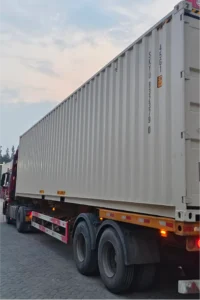
A 20ft container, 40ft container, and 40ft High Cube container may require different truck arrangements depending on local road conditions, lifting method, site access, and unloading equipment.
2. Crane and Forklift Requirements
If the container needs to be lifted by crane or forklift, tare weight is very important.
For example, lifting an empty 40ft High Cube container requires equipment that can safely handle around 3,900 kg / 8,600 lbs, not including any cargo or modifications.
3. Cargo Loading Safety
If you are using the container for export loading, you need to calculate cargo weight carefully.
The maximum gross weight includes both the container and the cargo inside. Overloading a container may cause safety risks, road transport problems, port rejection, or shipping delays.
4. Foundation and Ground Preparation
For storage or modification projects, container weight helps determine the foundation design.
Common foundation options include:
- Compacted gravel pad
- Concrete blocks
- Concrete slab
- Steel support beams
- Pier foundation
- Level hardstand surface
A level foundation helps container doors open smoothly and reduces twisting of the container frame.
5. Container Modification Projects
For container homes, offices, workshops, pop-up shops, and equipment rooms, the empty container weight is only the starting point.
After adding insulation, windows, doors, flooring, electrical systems, wall panels, furniture, or HVAC equipment, the final structure becomes much heavier. That is why weight planning should be part of the early design process.
Does a Used Container Weigh the Same as a New Container?
Usually, the basic weight is similar if the container size and structure are the same. However, used containers may vary slightly due to:
- Age
- Manufacturer
- Flooring condition
- Repairs
- Rust level
- Door type
- Added accessories
- Interior modifications
- Previous cargo use
- Structural reinforcements
For the most accurate information, always check the container’s CSC plate or manufacturer plate on the door. The source article also notes that container weight information is typically found on the CSC plate on the container doors.
20ft vs 40ft vs 40ft High Cube: Which One Should You Choose?
Choosing the right used container depends on what you need to store, ship, or build.
Choose a 20ft Used Container If You Need:
- Compact storage
- Heavy cargo loading
- Lower delivery cost
- Easier site placement
- Small workshop or tool room
- Farm or construction storage
A 20ft container is a strong option when weight capacity is more important than internal volume.
Choose a 40ft Used Container If You Need:
- More floor space
- Large-volume storage
- Long materials storage
- Commercial inventory storage
- Export loading for bulky goods
- Better cost per square foot
A 40ft container is popular for customers who need more space but still want a standard container height.
Choose a 40ft High Cube Used Container If You Need:
- Extra internal height
- Tall cargo storage
- Container house conversion
- Office or workshop modification
- Furniture, machinery, or oversized products
- Better air space and comfort for conversion projects
A 40ft High Cube container is often the best choice for modification and storage projects because the additional height makes the interior more flexible.
Used Shipping Container Weight and Export Loading
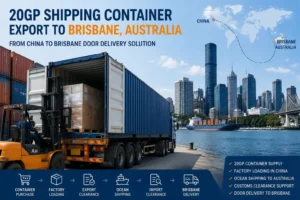
For international buyers, used container weight is especially important when buying a container in China and loading cargo for export.
For example, if a customer purchases a used 40HC container and loads aluminum fencing, building materials, furniture, or machinery inside, the total loaded weight must be calculated before booking sea freight.
The basic process usually includes:
- Confirm container type and condition
- Check tare weight and max gross weight
- Confirm cargo weight and volume
- Arrange trucking to the supplier’s factory
- Load cargo into the purchased container
- Complete customs declaration
- Ship the loaded container to destination port
- Arrange customs clearance and delivery if needed
This is why choosing a reliable container supplier is important. The supplier should understand both container condition and logistics requirements.
Why Buy Used Shipping Containers from ONE BOX?
ONE BOX supplies practical and cost-effective used shipping containers for storage, export loading, warehouse use, farm use, construction projects, and overseas buyers.
Our Advantages
Reliable container condition
We help customers choose suitable used containers based on actual usage, including storage grade, cargo-worthy condition, and export loading needs.
20ft, 40ft, and 40HC options
Customers can choose from common container sizes depending on cargo weight, storage space, and delivery requirements.
Export loading support
For overseas buyers, ONE BOX can help coordinate container purchase, factory loading, trucking, customs clearance, and sea freight arrangements.
Cost-effective solution
Used containers are often much cheaper than new one-trip containers while still offering strong steel structure and practical storage value.
Flexible applications
Our containers can be used as warehouses, site storage, farm storage, temporary workshops, export containers, or modified container structures.
Frequently Asked Questions
How much does an empty 20ft used shipping container weigh?
A standard 20ft used shipping container weighs about 2,050 kg / 4,520 lbs when empty.
How much does an empty 40ft used shipping container weigh?
A standard 40ft used shipping container weighs about 3,750 kg / 8,270 lbs when empty.
How much does a 40ft High Cube used container weigh?
A 40ft High Cube used container weighs about 3,900 kg / 8,600 lbs when empty.
What is the maximum gross weight of a shipping container?
For many standard 20ft, 40ft, and 40ft High Cube containers, the maximum gross weight is about 30,480 kg / 67,200 lbs.
Can a used shipping container carry heavy cargo?
Yes. Used shipping containers are designed for heavy-duty transport. However, you must confirm the container condition, CSC plate data, payload capacity, and cargo distribution before loading.
Where can I find the exact weight of my container?
The exact tare weight, payload capacity, and maximum gross weight are usually printed on the container doors or CSC plate.
Is a 40ft container twice as heavy as a 20ft container?
No. A 40ft container provides nearly double the length, but it is not twice as heavy. A 40ft standard container weighs about 3,750 kg, while a 20ft container weighs about 2,050 kg.
Conclusion
So, how much does a used shipping container weigh?
A used 20ft container usually weighs about 2,050 kg / 4,520 lbs empty. A used 40ft container weighs about 3,750 kg / 8,270 lbs empty. A used 40ft High Cube container weighs about 3,900 kg / 8,600 lbs empty.
Understanding these numbers helps you plan trucking, lifting, cargo loading, site preparation, export shipping, and container modification safely.
Whether you need a compact 20ft used container, a large 40ft storage container, or a 40ft High Cube container for extra height, ONE BOX can help you find a practical and cost-effective container solution for your project.