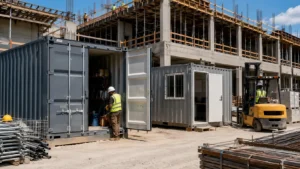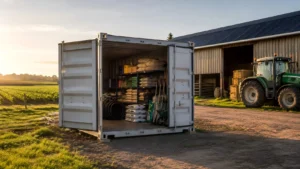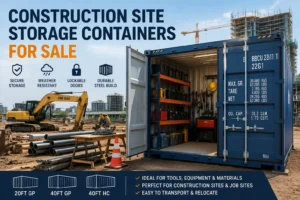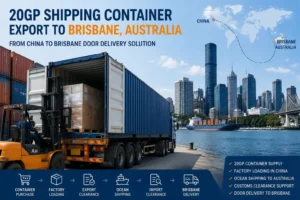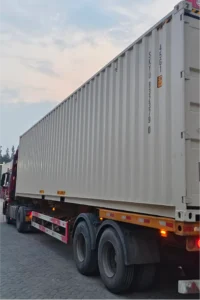
Professional shipping container export loading in China involves much more than placing products inside a container.
The container must be suitable for international transport, the cargo must be ready, the loading plan must account for dimensions and weight, and the products must be secured correctly. Export documents, customs clearance, verified gross mass, terminal cut-off times and shipping-line requirements must also be coordinated.
ONE BOX provides container sourcing and export-loading support for international buyers purchasing products from China.
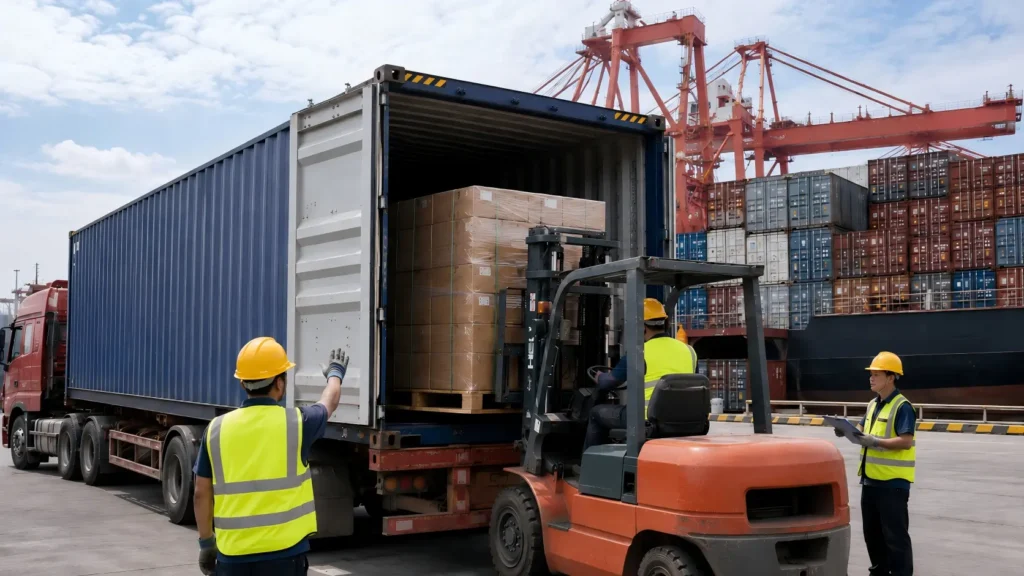
Our coordinated service can include:
- New and used container sourcing
- Empty container inspection
- Depot release
- Empty container delivery
- Factory or warehouse loading
- Multi-supplier cargo consolidation
- Cargo measurement and loading planning
- Cargo securing and moisture protection
- Loading photos and records
- Export customs clearance
- Verified gross mass coordination
- Port gate-in
- Ocean freight
- Destination customs support
- Final door delivery
Whether you are using a carrier-owned container or buying a shipper-owned container in China, ONE BOX can help organize the loading and export process.
What Is Shipping Container Export Loading?
Shipping container export loading is the process of preparing, loading and securing products inside a container before international transportation.
The industry may also use terms such as:
- Container stuffing
- Export container loading
- Factory loading
- Warehouse loading
- Cargo consolidation
- Container packing
- Container loading supervision
- SOC container loading
A typical project begins when an empty container is released from a depot and ends when the loaded unit is accepted at the export terminal.
The complete process may include:
- Confirming the booking and container type
- Collecting an empty container
- Inspecting the empty unit
- Delivering it to the factory or warehouse
- Checking cargo quantity and packaging
- Loading products according to a plan
- Securing the cargo
- Recording the loading process
- Closing and sealing the container
- Completing customs procedures
- Submitting the required weight information
- Delivering the container to the port
Why Professional Container Loading Matters
Poor loading can lead to product damage, container-floor damage, unstable weight distribution, customs delays and problems during unloading.
Professional planning helps reduce these risks.
Protecting Products During Transportation
Export cargo may experience:
- Truck vibration
- Sudden braking
- Crane handling
- Terminal movements
- Vessel motion
- Transshipment handling
- Temperature changes
- Humidity and condensation
The cargo should therefore be packed and secured for the complete journey rather than only for the truck movement from the factory to the port.
Using Container Space Efficiently
A loading plan helps determine:
- The most suitable container size
- The number of packages that will fit
- Product orientation
- Pallet arrangement
- Required loading equipment
- Remaining empty space
- Cargo-securing requirements
Efficient loading may reduce the number of containers required and improve transportation cost per unit.
Controlling Cargo Weight
The loading team must consider the container’s maximum payload as well as local road, terminal and carrier restrictions.
Heavy cargo should be distributed across the container floor rather than concentrated in one small area.
Meeting Export Requirements
A packed container generally needs verified gross mass information before loading onto a SOLAS-regulated vessel. The shipper is responsible for providing the verified weight to the carrier and terminal sufficiently early for vessel-stowage planning; without VGM, the packed container may be denied loading.
Factory Loading vs Warehouse Loading
ONE BOX can coordinate loading at a Chinese factory or an export warehouse.
Factory Container Loading in China
Factory loading is suitable when the products are ready at one manufacturing location.
The typical process is:
- An empty container is collected from the depot.
- The truck delivers it to the factory.
- The factory checks the container.
- Products are loaded directly from the production or packing area.
- The cargo is secured.
- The container is sealed.
- The truck delivers it to the export terminal.
Factory loading can reduce extra handling because the products do not need to be moved through a separate warehouse.
It is commonly used for:
- Machinery
- Furniture
- Aluminum fences and gates
- Building materials
- Plastic products
- Textiles
- Electrical equipment
- Automotive parts
- Industrial products
- Agricultural equipment
Warehouse Container Loading in China
Warehouse loading is useful when:
- Products come from multiple suppliers
- The factory cannot load a container
- Cargo needs inspection before export
- Packaging needs improvement
- Products need palletizing
- Different orders must be consolidated
- The buyer requires loading supervision
The warehouse may provide:
- Cargo receiving
- Quantity checks
- Package inspection
- Labeling
- Palletizing
- Repacking
- Cargo measurement
- Temporary storage
- Loading-plan preparation
- Container loading
- Cargo securing
This is often the most practical option for buyers purchasing different products from several Chinese suppliers.
Container Types Available for Export Loading
ONE BOX can help source or coordinate several standard container types.
20ft Standard Container
A 20ft standard container is commonly used for smaller shipments and relatively dense cargo.
| Item | Specification |
|---|---|
| Container Type | 20ft Standard |
| External Length | 6,058 mm |
| External Width | 2,438 mm |
| External Height | 2,591 mm |
| Internal Volume | Approximately 33 CBM |
| Door Type | Double Cargo Doors |
| Main Material | Corten Steel |
Typical cargo includes:
- Machinery
- Metal products
- Building materials
- Tools
- Industrial components
- Minerals
- Dense palletized products
40ft Standard Container
A 40ft standard container provides additional floor length for large shipments.
It may be used for:
- Furniture
- Machinery
- Building products
- Automotive components
- Commercial inventory
- Palletized cargo
- Long products
40ft High Cube Container
A 40ft high cube container offers additional internal height and is frequently selected for high-volume cargo.
| Item | Specification |
|---|---|
| Container Type | 40ft High Cube |
| External Length | 12,192 mm |
| External Width | 2,438 mm |
| External Height | 2,896 mm |
| Internal Volume | Approximately 76.4 CBM |
| Door Type | Double Cargo Doors |
| Main Material | Corten Steel |
Common cargo includes:
- Furniture
- Aluminum products
- Plastic products
- Textiles
- Consumer goods
- Storage racks
- Building materials
- Lightweight machinery
Open-Top and Flat-Rack Containers
Oversized machinery or cargo that cannot pass through standard container doors may require an open-top or flat-rack solution.
These shipments require additional planning for:
- Lifting points
- Crane loading
- Cargo dimensions
- Over-width or over-height charges
- Lashing
- Weather protection
- Terminal acceptance
Shipper-Owned Containers
An international buyer may purchase a container in China and load export cargo inside it.
This is commonly known as an SOC, or shipper-owned container.
After delivery and unloading, the buyer keeps the unit for:
- Warehouse storage
- Construction equipment
- Farm storage
- Workshops
- Retail conversion
- Outdoor inventory
- Container buildings
The carrier must approve the SOC before loading. The unit should also have suitable structural condition and acceptable safety approval.
The International Convention for Safe Containers establishes safety approval, inspection and maintenance procedures for containers used in international transport.
Empty Container Inspection Before Loading
An empty container should be inspected before products are placed inside.
Check the Container Number
Confirm that the physical container number matches:
- The booking
- Depot release documents
- Trucking instructions
- Customs information
- Shipping documents
Photograph the container number before loading.
Inspect the Cargo Doors
Check:
- Door handles
- Locking bars
- Hinges
- Locking cams
- Rubber seals
- Door frame
- Lockbox
The doors should open and close correctly.
Check the Roof and Side Walls
Look for:
- Holes
- Severe corrosion
- Deep dents
- Poor repairs
- Water marks
- Structural deformation
An interior daylight test can help identify small holes.
Inspect the Floor
Check the floor for:
- Broken plywood
- Soft areas
- Oil stains
- Chemical contamination
- Water damage
- Strong odors
- Protruding nails or screws
The floor should be clean, dry and suitable for the cargo.
Check the Interior
The interior should be free from:
- Standing water
- Loose debris
- Strong chemical odors
- Pest contamination
- Sharp objects
- Previous cargo residue
Sensitive products may require a particularly clean container.
Verify CSC Information
For a container used in international transport, check the safety-approval plate and examination status.
The CSC framework requires internationally transported containers to follow safety approval and inspection procedures.
Preparing Cargo Before Container Loading
Cargo should be fully prepared before the truck arrives.
Preparation may include:
- Completing production
- Confirming package quantities
- Checking export marks
- Measuring packages
- Weighing products
- Preparing pallets
- Reinforcing cartons
- Protecting sharp edges
- Waterproofing sensitive products
- Preparing loading equipment
Delays may create truck waiting charges and increase the risk of missing the port cut-off.
How to Prepare a Container Loading Plan
A loading plan should be prepared before loading begins, especially for machinery, mixed cargo or large projects.
The plan should consider:
- Package dimensions
- Package weight
- Loading sequence
- Cargo orientation
- Center of gravity
- Floor-loading limits
- Forklift access
- Unloading sequence
- Cargo-securing points
- Empty spaces
Load Heavy Cargo Low
Heavy products should generally be positioned low and distributed across the floor.
Avoid concentrating excessive weight in one small section.
Distribute Weight Evenly
Uneven loading can affect:
- Truck stability
- Axle loading
- Container handling
- Vessel planning
- Cargo safety
Weight should be distributed from front to back and from side to side.
Plan the Unloading Sequence
Products needed first at the destination should usually be loaded last, near the doors.
The loading plan should also consider whether the destination will use:
- Forklift unloading
- Crane unloading
- Manual unloading
- Loading dock
- Ground-level unloading
Container Loading Methods
Manual Loading
Manual loading may be suitable for:
- Cartons
- Bags
- Lightweight products
- Small packages
- Loose-loaded consumer goods
The team should still protect packages from crushing and movement.
Forklift Loading
Forklifts are commonly used for:
- Pallets
- Machinery
- Crates
- Building materials
- Industrial products
The forklift capacity, mast height and container entrance clearance should be checked in advance.
Crane Loading
Cranes may be required for:
- Heavy machinery
- Steel structures
- Large equipment
- Oversized products
- Open-top containers
- Flat-rack cargo
Lifting points and cargo balance must be confirmed before lifting begins.
Ramp Loading
Mobile ramps can allow forklifts to enter containers positioned on trailers.
The ramp must have suitable:
- Width
- Weight capacity
- Surface grip
- Connection method
- Operating angle
Cargo Securing for Export Containers
Cargo must be secured so that it does not move during transportation.
Common securing materials include:
- Ratchet straps
- Timber blocking
- Timber bracing
- Dunnage airbags
- Anti-slip mats
- Steel bands
- Plastic bands
- Cargo nets
- Pallets
- Corner protectors
- Protective covers
Timber Blocking and Bracing
Timber can be used to fill spaces and prevent machinery or crates from moving.
When wood packaging or securing materials are used, destination phytosanitary and treatment requirements should be checked.
Dunnage Airbags
Airbags can fill spaces between packages and reduce sideways movement.
They must be selected and installed according to:
- Gap size
- Cargo weight
- Transportation mode
- Required pressure
Ratchet Straps
Straps can secure machinery, pallets and large products to suitable lashing points.
Straps should not pass across sharp edges without protection.
Anti-Slip Materials
Anti-slip mats increase friction beneath heavy cargo and may reduce movement.
They can be combined with blocking and lashing.
Moisture and Condensation Protection
Container cargo may be exposed to temperature changes during international transportation.
Moisture-control options may include:
- Container desiccants
- Moisture absorbers
- Waterproof wrapping
- Vapor-barrier packaging
- Plastic liners
- Ventilated packaging
- Elevated pallets
Products should be dry before loading.
Loading wet timber, wet cartons or damp products can increase condensation risk.
Loading Photos and Documentation
ONE BOX recommends recording the complete loading process.
Useful photographs include:
- Empty container exterior
- Container number
- CSC plate
- Empty interior
- Container floor
- First cargo layer
- Loading progress
- Cargo securing
- Final loaded condition
- Closed doors
- Container seal
Loading records can help with:
- Buyer confirmation
- Quantity verification
- Insurance claims
- Customs questions
- Damage investigations
- Supplier accountability
Container Seal Management
After loading is complete, the cargo doors should be closed and a suitable seal applied.
Record:
- Container number
- Seal number
- Loading date
- Loading location
- Driver information
- Booking reference
The seal number should match the relevant shipping documents.
Verified Gross Mass for Export Containers
Verified gross mass is the total verified weight of the packed container, including:
- Cargo
- Packaging
- Pallets
- Securing materials
- The container tare weight
IMO guidance makes the shipper responsible for providing the packed container’s VGM in the shipping document to the carrier and terminal in time for the stowage plan. VGM is a condition for loading the packed container onto a SOLAS-regulated vessel.
VGM may generally be established by:
- Weighing the complete packed container using approved equipment
- Calculating cargo, packaging and securing-material weights and adding the container tare weight through an approved method
The exact procedure and submission deadline should be confirmed with the freight forwarder, terminal and carrier.
Export Customs Clearance in China
After loading, the shipment must complete the applicable Chinese export procedures.
The process may include:
- Export declaration
- Document examination
- Customs acceptance
- Inspection when selected
- Customs release
China Customs publishes a general clearance process that includes declaration, document examination, acceptance, inspection and release.
Common documents may include:
- Commercial invoice
- Packing list
- Sales contract
- Customs declaration information
- Cargo HS code
- Shipping instructions
- Container number
- Seal number
- Certificate of origin, when required
- Export licence, when required
- Product certificates, when applicable
Cargo information, package quantity and weight must be consistent across the documents.
Depending on the declaration and supervision arrangement, packing-list or manifest data may also need to be transmitted through the applicable customs and logistics systems.
Port Gate-In and Cut-Off Coordination
The loaded container must arrive at the terminal before the applicable cut-off.
Important deadlines may include:
- Shipping-instruction cut-off
- VGM cut-off
- Customs cut-off
- Terminal gate-in cut-off
- Dangerous-goods documentation cut-off
- Vessel departure
Missing a cut-off may result in:
- Shipment rollover
- Additional trucking
- Storage charges
- Terminal charges
- Customs-document amendments
- Delivery delays
ONE BOX coordinates the loading schedule with the booking and port cut-off whenever the required information is available.
Common Export Loading Locations in China
ONE BOX can coordinate container loading in major port and manufacturing regions, subject to service availability.
Qingdao and Shandong
Suitable for cargo from:
- Qingdao
- Linyi
- Weifang
- Yantai
- Zibo
- Jinan
- Other Shandong cities
Shanghai and the Yangtze River Delta
Suitable for cargo from:
- Shanghai
- Suzhou
- Kunshan
- Wuxi
- Changzhou
- Jiaxing
- Hangzhou
- Nearby industrial areas
Shenzhen and the Pearl River Delta
Suitable for cargo from:
- Shenzhen
- Dongguan
- Huizhou
- Guangzhou
- Foshan
- Zhongshan
- Other South China cities
Tianjin and Northern China
Suitable for cargo from:
- Tianjin
- Beijing
- Langfang
- Cangzhou
- Baoding
- Tangshan
- Other northern manufacturing areas
Dalian and Northeast China
Suitable for cargo from:
- Dalian
- Shenyang
- Liaoning
- Jilin
- Heilongjiang
- Nearby industrial regions
Loading Cargo from Multiple Chinese Suppliers
International buyers often purchase products from several factories.
ONE BOX can help organize a consolidation process:
- Confirm supplier addresses
- Collect cargo information
- Select a suitable warehouse
- Arrange domestic delivery
- Receive each shipment
- Check package quantities
- Store cargo temporarily
- Prepare a combined loading plan
- Load and secure all products
- Prepare export documentation
Before consolidation, confirm whether the different products can legally and safely be loaded together.
Consider:
- Hazardous cargo
- Food and chemicals
- Odor transfer
- Moisture sensitivity
- Cargo weight
- Customs declaration requirements
- Destination restrictions
Dangerous Goods and Special Cargo
Dangerous goods require additional documentation, packaging, marking and carrier approval.
Examples may include:
- Batteries
- Chemicals
- Aerosols
- Flammable liquids
- Gas products
- Certain paints
- Magnetized materials
Do not load dangerous goods without confirming:
- Product classification
- UN number
- Safety data sheet
- Approved packaging
- Labels and marks
- Carrier acceptance
- Port requirements
- Customs requirements
Oversized, fragile or high-value cargo may also require a specialized loading and securing plan.
Common Container Loading Mistakes
Loading Without Inspecting the Container
A damaged or contaminated unit can create cargo loss and export delays.
Inspect it before loading starts.
Selecting the Wrong Container Size
Choosing a container based only on volume can overlook weight, door dimensions and unloading requirements.
Review all cargo measurements first.
Uneven Weight Distribution
Concentrating heavy products at one end can affect road transport and cargo safety.
Prepare a weight-distribution plan.
Insufficient Cargo Securing
Cargo that appears stable at the factory may move during crane handling and ocean transportation.
Use suitable blocking, bracing and lashing.
Loading Damp Cargo
Wet products and packaging can increase the risk of condensation and mold.
Load only dry, export-ready cargo.
Missing Loading Records
Without photos, it may be difficult to confirm cargo quantity, securing or pre-shipment condition.
Record the process clearly.
Missing the Port Cut-Off
Late loading can result in additional costs and a missed vessel.
Coordinate production readiness with the booking schedule.
How Much Does Export Container Loading Cost?
The cost depends on:
- Loading city
- Factory or warehouse location
- Container size
- Cargo type
- Number of packages
- Cargo weight
- Loading equipment
- Loading time
- Warehouse storage
- Cargo securing materials
- Customs requirements
- Empty and loaded trucking distance
A complete quotation may include:
| Cost Item | Description |
|---|---|
| Empty Container Pickup | Depot release and trucking |
| Container Inspection | Condition and identification check |
| Factory Loading | Loading labor and coordination |
| Warehouse Handling | Receiving and consolidation |
| Forklift or Crane | Loading equipment |
| Cargo Securing | Straps, timber, airbags and mats |
| Export Customs | Declaration and clearance |
| VGM | Weighing or verified calculation |
| Port Trucking | Loaded container delivery |
| Ocean Freight | International transportation |
| Destination Service | Customs and final delivery |
Information Needed for a Loading Quotation
To prepare an accurate proposal, provide:
- Loading city
- Exact factory or warehouse address
- Container size
- Carrier-owned or shipper-owned container
- Cargo description
- HS code, when available
- Package quantity
- Package dimensions
- Gross weight
- Total volume
- Product photos
- Packing method
- Required loading equipment
- Export port
- Destination port
- Final delivery address
- Expected loading date
- Special securing requirements
For multiple suppliers, provide the address and cargo information for each factory.
Why Choose ONE BOX?
ONE BOX combines shipping-container supply with export-loading and logistics coordination.
Container Sourcing
We can help source:
- New one-trip containers
- Used cargo-worthy containers
- Wind-and-watertight storage containers
- 20ft containers
- 40ft containers
- 40ft high cube containers
- Selected special containers
Factory and Warehouse Loading
Loading can be coordinated at:
- Manufacturing factories
- Export warehouses
- Consolidation facilities
- Container yards
- Project sites
Inspection and Loading Records
Available support may include:
- Empty container photos
- Container-number confirmation
- Condition checks
- Loading supervision
- Cargo-securing photos
- Seal-number records
Complete Export Coordination
ONE BOX and its logistics partners can coordinate:
- Container sourcing
- Depot release
- Empty trucking
- Supplier collection
- Warehouse consolidation
- Factory loading
- Cargo securing
- Export customs clearance
- VGM coordination
- Port delivery
- Ocean freight
- Destination customs support
- Final door delivery
Frequently Asked Questions
What is shipping container export loading?
It is the process of inspecting an empty container, loading products, securing the cargo, sealing the unit and preparing it for export transportation.
Can ONE BOX load a container at my Chinese supplier’s factory?
Yes. Factory loading may be coordinated when the location has suitable access, equipment and cargo readiness.
Can products from several suppliers be loaded together?
Yes. The goods can be delivered to a consolidation warehouse and loaded into one container, subject to cargo compatibility and customs requirements.
Can I buy the container and load products inside?
Yes. ONE BOX can help source a shipper-owned container and coordinate factory or warehouse loading.
Does an export container need VGM?
A packed container subject to SOLAS must have verified gross mass available to the carrier and terminal in time for vessel-stowage planning.
What should be checked before loading?
Check the container number, doors, roof, walls, floor, interior cleanliness, holes, odors, CSC information and suitability for the cargo.
Can ONE BOX provide loading photos?
Loading photos and records can be coordinated according to the project requirements.
What materials are used to secure cargo?
Common options include ratchet straps, timber blocking, dunnage airbags, anti-slip mats, steel bands and protective covers.
Can ONE BOX arrange export customs clearance?
Export customs coordination can be included in the complete logistics solution.
Can ONE BOX arrange door-to-door delivery?
Door delivery may be arranged depending on destination customs rules, trucking coverage and final-site access.
Request a Shipping Container Export Loading Quote
Professional export loading helps protect cargo, control container weight, meet shipping requirements and reduce delays.
ONE BOX can coordinate the complete factory-to-port process:
- Select or source the container
- Inspect the empty unit
- Release it from the depot
- Deliver it to the factory or warehouse
- Load and secure the products
- Record the loading process
- Complete export customs clearance
- Coordinate VGM
- Deliver the container to the terminal
- Arrange ocean freight and final delivery
Send ONE BOX your loading address, cargo description, package dimensions, weight, container size and destination.
Our team will help prepare a practical container-loading and export solution.
ONE BOX — professional shipping container export loading in China, from container inspection and factory stuffing to customs clearance and global delivery.