Are you looking for shipping containers for export to Europe?
ONE BOX supplies new and used shipping containers in China for customers who need international cargo transportation, commercial storage, construction-site storage, agricultural use, workshops or container conversion projects in Europe.
International buyers can purchase a 20ft, 40ft or 40ft high cube container in China, load products inside it and ship the complete unit to a European destination.
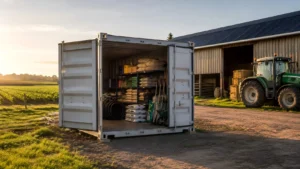
After the cargo is unloaded, the buyer can keep the container for:
- Commercial storage
- Warehouse overflow
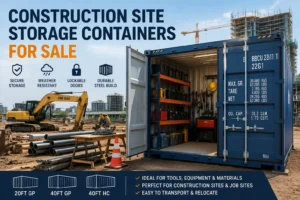
- Construction equipment
- Farm machinery
- Workshop use
- Retail conversion
- Container offices
- Outdoor inventory
- Container building projects
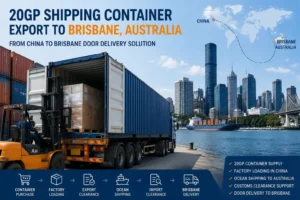
ONE BOX can help coordinate the full process, including:
- Container sourcing in China
- New and used container inspection
- Depot release
- Factory or warehouse delivery
- Cargo loading and securing
- Export customs clearance
- Ocean or rail transportation
- European import clearance
- Port or terminal pickup
- Final door delivery
Whether you need one container or multiple units, ONE BOX can help you select a practical container and transportation solution for Europe.
Can You Buy a Shipping Container in China and Export It to Europe?
Yes.
An overseas buyer can purchase a shipping container in China and export it to Europe either as an empty unit or with commercial cargo loaded inside.
For many customers, loading products into the purchased container is the more practical solution.
The shipment then includes:
- The purchased container
- Commercial products sourced in China
- International transportation
- A permanent storage asset at the destination
A purchased container used for international cargo transportation is commonly called a shipper-owned container, or SOC.
Unlike a standard carrier-owned container, an SOC normally remains the buyer’s property after delivery.
Why Export Shipping Containers from China to Europe?
China has a large container manufacturing, depot and logistics network.
International buyers can source containers near major Chinese ports and manufacturing areas, including:
- Qingdao
- Shanghai
- Ningbo
- Tianjin
- Dalian
- Shenzhen
- Guangzhou
- Xiamen
Purchasing a container near the cargo factory may reduce inland transportation costs and simplify loading.
Combine Container Purchase with Product Shipping
A European buyer may purchase products from Chinese manufacturers and use the purchased container for export.
For example:
- ONE BOX sources a suitable container.
- The container is inspected.
- It is released from the depot.
- It is delivered to the Chinese supplier.
- Products are loaded and secured.
- Export customs clearance is completed.
- The container is shipped to Europe.
- European import clearance is completed.
- The complete container is delivered to the buyer.
- The buyer unloads the cargo and keeps the unit.
This approach can be more efficient than shipping products first and purchasing a separate storage container in Europe.
Access New and Used Containers
Buyers can select:
- Brand-new containers
- One-trip containers
- Used cargo-worthy containers
- Wind-and-watertight storage containers
- 20ft standard containers
- 40ft standard containers
- 40ft high cube containers
- Side-opening containers
- Double-door containers
- Selected modified containers
The correct condition depends on whether the container will be shipped internationally, used only for storage or converted after arrival.
Shipping Container Sizes for Europe
ONE BOX supplies standard container sizes for export, storage and conversion projects.
20ft Shipping Containers
A 20ft standard container is compact and suitable for smaller cargo volumes or relatively heavy products.
Typical specifications include:
| Item | Specification |
|---|---|
| Container Type | 20ft Standard |
| External Length | 6,058 mm |
| External Width | 2,438 mm |
| External Height | 2,591 mm |
| Internal Volume | Approximately 33 CBM |
| Door Type | Standard Double Cargo Doors |
| Main Material | Corten Steel |
| Main Uses | Shipping, Storage and Conversion |
Typical applications include:
- Machinery
- Metal components
- Building materials
- Tools
- Agricultural equipment
- Construction-site storage
- Small commercial inventory
- Workshop conversion
A 20ft container may also be easier to position at European sites with limited access.
40ft Shipping Containers
A 40ft standard container provides additional floor space.
It may be suitable for:
- Furniture
- Machinery
- Building products
- Commercial inventory
- Automotive parts
- Palletized cargo
- Industrial equipment
- Warehouse storage
A 40ft container may provide a lower storage cost per square meter than two separate 20ft units.
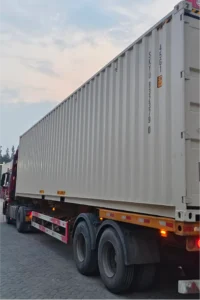
However, the final delivery site must have enough road access and turning space for a 40ft trailer.
40ft High Cube Containers
A 40ft high cube container provides extra internal height.
Typical specifications include:
| Item | Specification |
|---|---|
| Container Type | 40ft High Cube |
| External Length | 12,192 mm |
| External Width | 2,438 mm |
| External Height | 2,896 mm |
| Internal Volume | Approximately 76.4 CBM |
| Door Type | Standard Double Cargo Doors |
| Main Material | Corten Steel |
| Main Uses | High-Volume Cargo, Storage and Conversion |
A 40HC container is commonly selected for:
- Furniture
- Aluminum fences and gates
- Plastic products
- Lightweight machinery
- Storage racks
- Building materials
- Consumer products
- Container workshops
- Container offices
- Commercial conversions
For many China-to-Europe projects, the 40ft high cube provides the best combination of internal volume and long-term storage value.
Side-Opening Containers
A side-opening container includes cargo doors along one side.
It may be useful for:
- Machinery
- Building materials
- Retail inventory
- Event equipment
- Mobile workshops
- Container shops
- Frequently accessed storage
Special container availability and carrier acceptance should be confirmed before export.
Double-Door Containers
A double-door or tunnel container has cargo doors at both ends.
It may be suitable for:
- Long products
- Loading from either direction
- Warehouse workflows
- Divided storage
- Construction materials
- Faster cargo access
Buyers should confirm that the chosen carrier and route accept the selected container type.
New vs Used Containers for Europe
The right container condition depends on the buyer’s budget, appearance requirements and final application.
New and One-Trip Containers
A new container is often described as a one-trip container because it may have completed one cargo movement after manufacture.
Benefits may include:
- Cleaner interior
- Better paint condition
- Minimal dents
- Newer flooring
- Stronger door seals
- Longer expected service life
- Lower initial maintenance
- Better suitability for branding
New containers are commonly chosen for:
- Container offices
- Retail conversions
- Workshops
- Container homes
- Long-term storage
- High-value equipment
- Branded commercial projects
Used Shipping Containers
Used containers generally provide a lower purchasing cost.
Normal signs of previous use may include:
- Surface rust
- Paint fading
- Small dents
- Scratches
- Previous owner markings
- Shipping labels
- Floor wear
- Repaired panels
These cosmetic signs do not automatically make the container unsuitable.
The buyer should focus on:
- Structural condition
- Door operation
- Roof condition
- Floor quality
- Wind-and-watertight performance
- CSC status
- Previous cargo contamination
- Final application
ONE BOX can provide available photos and coordinate condition inspection before release.
Storage Containers vs Export Containers
Not every storage container is suitable for international transportation.
The buyer should confirm whether the unit will be used for:
- Stationary storage only
- International cargo transport
- Storage and future transport
- Commercial conversion
- Construction or building use
Wind-and-Watertight Containers
A wind-and-watertight container should protect normally stored goods from wind and rain.
It may be suitable for:
- Construction storage
- Farm equipment
- Machinery
- Tools
- Building materials
- Commercial inventory
- Local warehouse use
However, wind-and-watertight condition alone does not confirm that the unit is suitable for ocean or rail transport.
Cargo-Worthy Containers
A cargo-worthy container should have adequate structural condition for cargo transportation.
Important inspection areas include:
- Corner posts
- Top rails
- Bottom rails
- Roof
- Side walls
- Cargo doors
- Flooring
- Understructure
- Corner castings
CSC-Valid Containers
Containers used for international transportation normally require acceptable CSC approval and examination status.
The CSC plate may include:
- Manufacturer information
- Container identification
- Maximum gross weight
- Allowable stacking load
- Approval information
- Examination status
The selected carrier should confirm acceptance before the container is loaded.
Shipping Routes from China to Europe
Shipping containers can be exported from China to Europe through different transport modes.
Ocean Freight
Ocean freight is commonly used for full-container shipments.
Possible Chinese departure ports include:
- Qingdao
- Shanghai
- Ningbo
- Tianjin
- Dalian
- Shenzhen
- Guangzhou
- Xiamen
European destination ports may include:
- Rotterdam
- Hamburg
- Antwerp-Bruges
- Bremerhaven
- Felixstowe
- Southampton
- Le Havre
- Marseille
- Barcelona
- Valencia
- Genoa
- La Spezia
- Gdansk
- Piraeus
- Koper
- Other regional ports
The most suitable route depends on:
- Final destination
- Shipping-line acceptance
- Container type
- Vessel schedule
- Ocean-freight cost
- Port charges
- Inland delivery requirements
Rail Freight
China-Europe rail may be considered for selected cargo and destinations.
Rail services can connect Chinese inland hubs with European terminals.
This option may be useful when:
- Ocean transit is too slow
- Air freight is too expensive
- The cargo is suitable for rail movement
- The final destination is inland
- The route accepts the selected container
SOC acceptance, terminal handling and customs arrangements should be confirmed before booking.
Multimodal Transport
A multimodal shipment may combine:
- Truck
- Rail
- Ocean
- Barge
- European inland trucking
For example, a container may arrive at a major European port and continue by rail or barge to an inland terminal before final truck delivery.
ONE BOX can help compare available transport options according to the destination.
Major European Markets Served
Shipping and delivery solutions may be available for customers in:
- Germany
- France
- Netherlands
- Belgium
- United Kingdom
- Ireland
- Spain
- Portugal
- Italy
- Poland
- Czech Republic
- Austria
- Hungary
- Denmark
- Sweden
- Finland
- Norway
- Romania
- Greece
- Other European markets
Service availability depends on the container, cargo, customs requirements, selected route and final delivery site.
Complete Export Process from China to Europe
Step 1: Confirm Container Requirements
The buyer should provide:
- Container size
- New or used condition
- Quantity
- Cargo name
- Cargo weight
- Cargo volume
- Chinese factory address
- Export port
- European destination port
- Final delivery address
- Required modifications
- Expected loading date
This information helps determine the correct container and route.
Step 2: Source the Container
ONE BOX can check available inventory near the cargo factory or export port.
The comparison should consider:
- Container price
- Depot location
- Container condition
- CSC status
- Factory distance
- Empty trucking cost
- Required release date
The lowest unit price may not provide the lowest total delivered cost.
Step 3: Inspect the Container
Before approving a used container, request photos showing:
- Cargo doors
- Door seals
- Locking bars
- Side walls
- Front wall
- Roof
- Interior
- Floor
- Corner castings
- Container number
- CSC plate
A physical or third-party inspection may also be arranged.
Step 4: Confirm SOC Acceptance
Before loading, the selected carrier should confirm acceptance of the shipper-owned container.
The carrier may require:
- Container number
- Container size and type
- CSC information
- Ownership details
- Container photos
- Inspection documentation
- Cargo information
- Export and destination ports
Approval should be obtained before factory loading.
Step 5: Release the Container from the Depot
After approval and payment, the depot releases the container.
A truck then delivers it to:
- The cargo factory
- A consolidation warehouse
- A loading yard
- A container modification workshop
Step 6: Inspect the Empty Container Again
Before loading, check:
- Correct container number
- Clean interior
- Dry floor
- No visible holes
- Door operation
- No strong odor
- Suitable cargo space
- Acceptable condition
Problems should be reported before the cargo is loaded.
Step 7: Load and Secure the Cargo
Cargo should be loaded according to:
- Dimensions
- Weight
- Center of gravity
- Floor-load limits
- Container payload
- Product fragility
- Destination unloading method
Common securing materials include:
- Ratchet straps
- Timber blocking
- Dunnage airbags
- Anti-slip mats
- Pallets
- Steel bands
- Protective covers
- Corner protectors
Loading photos should be taken for records.
Step 8: Complete Export Customs Clearance
Common Chinese export documents may include:
- Commercial invoice
- Packing list
- Sales contract
- Export customs information
- Cargo HS code
- Shipping instructions
- Container number
- Certificate of origin, when required
- Product certificates, when applicable
The cargo description, quantity, weight and value should be consistent across the documents.
Step 9: Deliver the Container to the Port or Rail Terminal
After loading and customs preparation, the container is delivered before the applicable cutoff.
The process may include:
- Terminal gate-in
- Customs release
- Verified gross mass
- Shipping-document submission
- Vessel or rail departure
Step 10: European Import Customs Clearance
After arrival, the European importer or customs broker completes import clearance.
Common requirements may include:
- Commercial invoice
- Packing list
- Bill of lading or rail document
- HS classification
- Customs value
- Importer details
- Country of origin
- Product certificates
- Duty and VAT payment
The purchased container itself may also need to be included correctly in the customs declaration.
The importer should confirm the appropriate treatment with the European customs broker before shipment.
Step 11: Port Release and Final Delivery
After customs and terminal release, the container can be delivered to:
- A business warehouse
- A construction site
- A farm
- An industrial yard
- A storage facility
- A residential site
- A container-conversion workshop
Possible delivery equipment includes:
- Standard chassis
- Side-loader
- Crane truck
- Tilt-bed trailer
- Separate mobile crane
The delivery method depends on local equipment availability and site access.
Step 12: Unload the Cargo and Keep the Container
After delivery, the buyer unloads the products and retains the container.
It can then be used as:
- Storage space
- Warehouse overflow
- Tool storage
- Machinery storage
- Workshop
- Office
- Retail unit
- Agricultural storage
- Conversion project
Import Duty and VAT in Europe
European import charges depend on:
- Destination country
- Product HS code
- Customs value
- Country of origin
- Importer status
- Applicable trade measures
- Value-added tax rules
The shipment may include both:
- The commercial cargo
- The purchased shipping container
The invoice and packing list should clearly describe the transaction so the customs broker can prepare the import declaration correctly.
ONE BOX can coordinate logistics and document preparation, but the final duty and VAT treatment should be confirmed with the destination customs broker.
Product Compliance for Cargo Loaded Inside
European import compliance depends on the products loaded inside the container.
Depending on the cargo, the importer may need:
- CE-related documentation
- Technical files
- Test reports
- Safety labels
- Material declarations
- Product-specific certificates
- Packaging compliance
- Chemical compliance
- Electrical compliance
- Importer identification
The container’s transport approval does not replace product-compliance requirements.
Before shipping, the buyer should confirm that all products meet the destination market’s requirements.
Wood Packaging Requirements
Wooden pallets, crates and timber securing materials may be subject to phytosanitary requirements.
Before loading, confirm whether the wood packaging requires:
- Heat treatment
- Approved marks
- Treatment certificates
- Bark-free material
- Destination inspection
Noncompliant wood packaging can lead to customs or quarantine problems.
Cargo Insurance
Cargo insurance should be considered for international container shipments.
Coverage may be useful for risks such as:
- Physical cargo damage
- Theft
- Water damage
- Handling accidents
- General average
- Transportation incidents
The insurance should clearly address both the cargo and, when required, the purchased container.
Coverage conditions should be reviewed before shipment.
Empty Container Export to Europe
A purchased container can potentially be exported empty.
However, this may not be the most cost-effective solution.
Possible methods include:
Shipping as an Empty SOC
The empty container may be accepted as shipper-owned equipment.
Carrier acceptance and documentation should be confirmed.
Shipping Multiple Empty Containers
Larger quantities may require special loading or transport arrangements.
The available solution depends on:
- Container quantity
- Container type
- Route
- Carrier
- Port
- Destination
Loading Commercial Cargo Inside
For many buyers, loading commercial products inside the container is the most economical option because the same transport movement carries both the cargo and the purchased container.
Container Modification Before Export
Selected containers can be modified in China before shipment.
Possible modifications include:
- Steel lockboxes
- Additional vents
- Personnel doors
- Windows
- Shelving
- Storage racks
- Electrical systems
- Lighting
- Insulation
- Air conditioning
- Internal partitions
- Custom paint
- Company logos
- Loading ramps
- Steel flooring
Major structural modifications may affect:
- Container strength
- CSC approval
- Carrier acceptance
- Shipping cost
- Export timing
- European building compliance
When the final project involves a container office, shop or building, the buyer should confirm local planning, structural, electrical and fire-safety requirements.
Delivery Site Requirements in Europe
Before shipping, check whether the final location can receive the container.
Important factors include:
- Road width
- Gate width
- Turning space
- Overhead wires
- Trees and branches
- Ground stability
- Slope
- Crane access
- Side-loader access
- Local parking restrictions
- Planning permission
A 40ft high cube requires more delivery space than a 20ft container.
The installation surface should be level and stable.
Possible foundations include:
- Concrete blocks
- Concrete pads
- Steel supports
- Compacted gravel
- Engineered foundations
Supporting the four container corners correctly helps maintain door alignment.
How Much Does It Cost to Export a Container to Europe?
The complete price depends on the container, cargo, route and destination.
A full quotation may include:
| Cost Item | Description |
|---|---|
| Container Price | New or used container purchase |
| Inspection | Depot or third-party inspection |
| Depot Release | Handling and release fees |
| Empty Trucking | Delivery to factory or warehouse |
| Cargo Loading | Labor and loading equipment |
| Cargo Securing | Straps, timber and protective materials |
| Export Clearance | Chinese customs declaration |
| Port Charges | Terminal and documentation expenses |
| Ocean or Rail Freight | International transport |
| European Terminal Charges | Port or inland terminal handling |
| Import Clearance | Customs-broker services |
| Duty and VAT | Based on local regulations |
| Final Delivery | Trucking and unloading |
| Modification | Optional container customization |
International buyers should compare the total landed cost instead of only the container unit price or ocean-freight rate.
Information Needed for a Quotation
To prepare an accurate quotation, provide:
- Required container size
- New or used condition
- Quantity
- Chinese loading city
- Factory address
- Cargo description
- Cargo HS code, when available
- Package quantity
- Package dimensions
- Gross weight
- Total volume
- Export port
- European destination port
- Final delivery address
- Postal code
- Required container modifications
- Expected loading date
- Preferred ocean or rail service
Photos of the cargo and final delivery site may also be helpful.
Common Mistakes to Avoid
Buying Before Carrier Approval
Do not load a shipper-owned container before the selected carrier confirms acceptance.
Selecting Only by Container Price
A cheap container located far from the factory may create high trucking costs.
Compare the total project cost.
Using a Storage-Only Container for Shipping
A wind-and-watertight storage container may not meet international transport requirements.
Select a cargo-worthy and properly approved unit.
Failing to Inspect the Container
Inspect the doors, roof, floor, walls and CSC information before loading.
Ignoring European Import Requirements
Confirm duty, VAT, importer status and product compliance before shipment.
Failing to Plan Final Delivery
Large containers require sufficient road access, turning space and unloading equipment.
Modifying the Container Without Checking Compliance
Structural modifications may affect transport approval and local building requirements.
Confirm the final-use regulations before modification.
Why Choose ONE BOX?
ONE BOX combines shipping-container sourcing with export-loading and logistics coordination.
New and Used Container Supply
Available options may include:
- 20ft standard containers
- 40ft standard containers
- 40ft high cube containers
- New one-trip containers
- Used cargo-worthy containers
- Wind-and-watertight units
- Selected special containers
Inspection Support
ONE BOX can provide available photos, condition information and inspection coordination before depot release.
Factory and Warehouse Loading
Purchased containers can be delivered to:
- Chinese factories
- Consolidation warehouses
- Export loading yards
- Modification facilities
Export Logistics Support
ONE BOX and its logistics partners can coordinate:
- Container sourcing
- Depot release
- Empty trucking
- Factory pickup
- Multi-supplier consolidation
- Cargo loading
- Cargo securing
- Export customs clearance
- Port or rail-terminal delivery
- International freight
- European import support
- Final door delivery
Europe-Focused Delivery Solutions
We can help prepare container transportation plans for major European ports, inland terminals and business destinations.
The available solution depends on container type, cargo, route and final address.
Frequently Asked Questions
Can I buy a shipping container in China and ship it to Europe?
Yes. You can purchase a new or used container, load cargo inside and export the complete unit to Europe.
Can I keep the container after delivery?
Yes. A purchased shipper-owned container normally remains the buyer’s property after unloading.
Can products be loaded inside before export?
Yes. The container can be delivered to a Chinese factory or consolidation warehouse for loading.
Can ONE BOX supply used containers?
Yes. Used cargo-worthy and wind-and-watertight containers may be available, depending on location and inventory.
Does the container need CSC approval?
A container used for international transportation normally requires acceptable CSC approval and examination status.
Can the container be shipped by rail?
Rail may be available for selected routes, container types and European destinations.
Can ONE BOX arrange European customs clearance?
Destination customs support may be coordinated through local partners, depending on the country and shipment.
Are import duty and VAT included?
They may be included in selected door-delivery quotations or charged separately. The final treatment depends on the destination country and agreed service terms.
Can the container be modified before export?
Yes. Selected modifications may be completed in China, but transport and European compliance should be checked first.
Can ONE BOX arrange final delivery?
Final trucking and unloading may be arranged depending on the destination address and site access.
Request a Quote for Shipping Containers to Europe
Buying a container in China and shipping it to Europe can be an efficient solution for customers who need both cargo transportation and long-term storage.
ONE BOX can help coordinate the complete process:
- Source a suitable new or used container
- Inspect its condition
- Confirm SOC requirements
- Release it from the depot
- Deliver it to the factory or warehouse
- Load and secure the cargo
- Complete Chinese export clearance
- Arrange ocean or rail freight
- Coordinate European customs support
- Deliver the container to the final location
Send ONE BOX your required container size, Chinese loading address, cargo information and European destination.
Our team will help you compare suitable container and transport options.
ONE BOX — reliable shipping containers for export to Europe, from container sourcing and factory loading in China to customs clearance and final delivery.