Are Rusty Used Shipping Containers Still Strong?
When buying a used shipping container, one of the first things many customers notice is rust. A few orange or brown marks on the doors, side panels, roof edges, or corner areas can make buyers wonder: Is a rusty used shipping container still strong enough for storage, export loading, or long-term use?
The short answer is: yes, in many cases, surface rust does not mean the container is weak. Shipping containers are built for ocean transport, heavy cargo, stacking, lifting, and years of outdoor exposure. Most containers are made with weathering steel, often called Corten steel, which is designed to form a protective rust-like patina on the surface. This layer can help slow further corrosion when the container is properly maintained and inspected. Weathering steel is known for developing a protective oxide layer in suitable environments, which helps inhibit further corrosion.
However, not all rust is the same. Light surface rust is usually cosmetic. Deep corrosion, holes, soft metal, leaking roof areas, or damaged structural parts are serious problems. Understanding the difference helps you choose the right container and avoid overpaying for appearance when strength and function are what matter most.
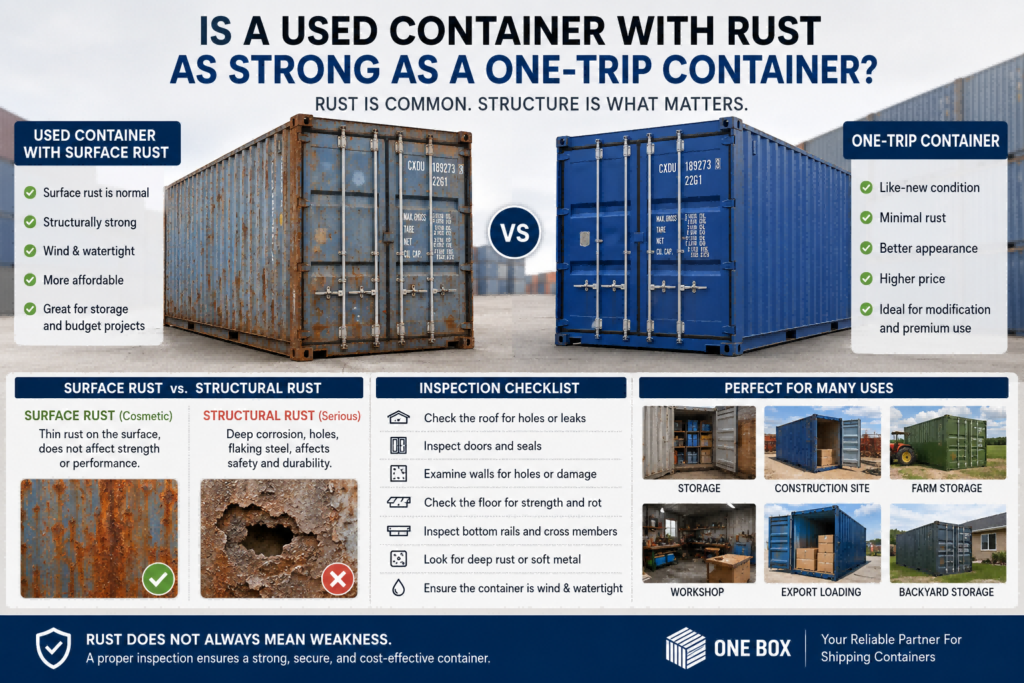
Why Do Used Shipping Containers Have Rust?
Rust is a natural result of steel reacting with oxygen and moisture. Shipping containers spend years exposed to rain, humidity, salty sea air, temperature changes, loading yards, trucks, ports, and ships. Because of this, visible rust is very common on used containers.
The original Eveon article explains that rust on a shipping container is often misunderstood. It notes that visible rust can be part of the container’s natural aging process and does not always compromise structure or function.
A used container may show:
- Surface rust on doors and panels
- Faded paint
- Scratches from handling
- Small dents or dings
- Rust around locking bars or corner castings
- Weathered exterior color
These signs are normal for second-hand shipping containers. For storage use, export loading, farm storage, construction sites, workshops, or temporary warehouse space, a used container with surface rust can still provide excellent value.
Surface Rust vs. Structural Rust
The most important thing is not whether a container has rust, but what kind of rust it has.
1. Surface Rust
Surface rust is usually thin, dry, and located on the exterior paint or outer steel surface. It may look rough or discolored, but the steel underneath is still solid.
Surface rust normally does not affect:
- Container strength
- Door function
- Wind and watertight performance
- Storage safety
- Basic stacking and handling ability
- Long-term usability
For many buyers, surface rust is mainly an appearance issue.
2. Structural Rust
Structural rust is different. It happens when corrosion has gone deeper into the steel and starts to weaken the container body.
Warning signs include:
- Holes in the roof, walls, or floor
- Soft or flaking steel
- Deep pitting corrosion
- Heavy rust around corner posts
- Damaged bottom side rails
- Leaking roof sections
- Door frames that no longer close properly
- Severe rust under the floor cross members
This type of rust can affect safety, weather protection, and long-term durability. A container with serious structural corrosion should be repaired, rejected, or used only for limited non-critical purposes after inspection.
Is a Rusty Used Container as Strong as a One-Trip Container?
A one-trip container is usually newer, cleaner, and has only made one cargo trip from the factory to the destination market. It often has better paint, fewer dents, newer flooring, and a more uniform appearance.
A used container has already served in international shipping for several years. It may have rust, dents, scratches, shipping marks, faded paint, and signs of wear. But if it is still structurally sound, wind and watertight, and properly inspected, it can still be strong enough for many storage and transport-related uses.
The key difference is not always strength. It is usually:
| Item | Used Container with Surface Rust | One-Trip Container |
|---|---|---|
| Appearance | Weathered, rusty, faded | Cleaner and newer |
| Price | More affordable | Higher cost |
| Condition | Used, may have dents and marks | Minimal wear |
| Best For | Storage, farms, job sites, budget buyers | Premium storage, modification, retail projects |
| Rust Level | Surface rust is common | Little or no rust |
| Value | High cost performance | Best appearance and longer remaining life |
If your main goal is low-cost secure storage, a used wind and watertight container may be the best choice. If your project requires a clean look, customer-facing appearance, container modification, container home conversion, or long-term premium use, a one-trip container may be worth the extra cost.
What Does Wind and Watertight Mean?
A used container is often sold as wind and watertight, also called WWT. This means the container should keep out normal rain and wind. It does not mean the container looks new.
A wind and watertight container may still have dents, scratches, faded paint, and surface rust, but it should have functional doors, intact walls, a usable floor, and no holes that allow water or wind to enter. Container condition guides commonly describe WWT containers as suitable for storage even when they show wear, dents, and rust.
Before buying, always check:
- Roof condition
- Door seals
- Door locking bars
- Floor strength
- Wall panels
- Bottom rails
- Corner posts
- Any visible holes or leaks
A container can look rough on the outside but still be highly useful if it remains sealed, solid, and secure.
Why Rust Does Not Always Mean Weakness
Shipping containers are not made like ordinary thin metal boxes. They are designed for heavy-duty logistics. Their structure includes:
- Corrugated steel side walls
- Strong corner posts
- Roof bows
- Bottom side rails
- Cross members under the floor
- Heavy-duty cargo doors
- Marine plywood or bamboo flooring
- Corner castings for lifting and stacking
Weathering steel can develop a stable rust-like patina that helps protect the material from deeper corrosion in suitable conditions. This is why a container with visible surface rust can still remain strong and functional.
In many cases, the paint may be old, but the structure is still reliable. That is why used containers are widely used for:
- Warehouse storage
- Farm equipment storage
- Construction site storage
- Tool rooms
- Export loading
- Workshop conversions
- Temporary offices
- Backyard storage
- Cargo consolidation
- Industrial material storage
When Should You Be Concerned About Rust?
Rust becomes a concern when it affects the container’s ability to protect goods or support structural load.
You should be careful if you see:
Roof Rust with Holes
The roof is one of the most important areas. If rust has created pinholes or larger openings, water can enter and damage stored goods.
Rust Around Door Frames
If door frames are badly corroded, the doors may not seal properly. This can affect security and waterproof performance.
Bottom Rail Corrosion
The bottom side rails and cross members support the container floor. Heavy corrosion in these areas can reduce strength.
Floor Damage
Rust under the floor or water damage inside the container can weaken the floor and affect loading capacity.
Deep Pitting
Deep rust pits show that corrosion is moving beyond the surface. This should be inspected carefully.
A good rule is simple: surface color is not the problem; metal loss is the problem.
How to Inspect a Rusty Used Shipping Container Before Buying
Before purchasing a used container, follow this inspection checklist.
1. Walk Around the Exterior
Check all four sides, roof edges, corner posts, and door areas. Look for holes, deep corrosion, large dents, or damaged panels.
2. Open and Close the Doors
The doors should open, close, and lock properly. Stiff doors are common on used containers, but badly twisted frames can be a warning sign.
3. Check the Door Seals
Rubber seals should be present and reasonably functional. Damaged seals can allow water to enter.
4. Inspect the Roof from Inside
Stand inside the container during daylight. Close the doors and look for light entering through holes. If light comes through the roof or wall, water may also enter.
5. Check the Floor
Walk across the floor and look for soft areas, rot, delamination, or strong chemical odors.
6. Inspect Bottom Rails
If possible, check the underside or ask for photos of bottom rails and cross members.
7. Ask for Condition Photos
If buying remotely, request clear photos of the front, back, sides, roof, floor, doors, and CSC plate if needed.
Used Container with Rust: Best Applications
A rusty used shipping container can still be a smart purchase when the condition matches the application.
Storage Warehouse
Used containers are ideal for tools, furniture, spare parts, machinery, building materials, and seasonal inventory.
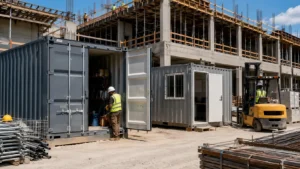
Construction Site Storage
Contractors often choose used containers because they are secure, mobile, and cost-effective.
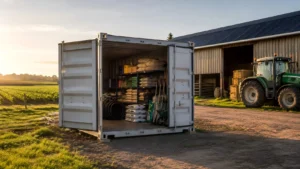
Farm and Agriculture Use
Farmers can store equipment, feed, irrigation parts, fencing materials, and tools inside used containers.
Export Loading
If the container is cargo-worthy and suitable for transport, it can be used to load goods for export.
DIY Workshop
A used container can be converted into a small workshop, repair room, or equipment room.
Budget-Friendly Backyard Storage
For customers who need secure storage at a lower price, a used container with surface rust can offer excellent value.
How to Extend the Life of a Used Container with Rust
Even if surface rust is normal, proper maintenance can help extend the service life of a used container.
Clean the Surface
Remove dirt, salt, mud, and moisture-trapping debris from the container surface.
Treat Rust Spots
For small rust areas, wire brushing, sanding, rust converter, primer, and paint can slow further corrosion.
Keep It Off the Ground
Place the container on concrete blocks, sleepers, gravel pads, or container supports. Good airflow under the container reduces moisture buildup.
Improve Drainage
Avoid placing the container where water pools around the base.
Check the Roof Regularly
The roof should be inspected after storms or heavy rain.
Repaint When Needed
A fresh coat of industrial paint can improve appearance and add extra protection.
Used Container vs. One-Trip Container: Which Should You Choose?
Choose a used container with surface rust if you want:
- Lower purchase cost
- Practical storage
- Job site use
- Farm or industrial storage
- Basic secure warehouse space
- A container where appearance is not the top priority
Choose a one-trip container if you want:
- Cleaner appearance
- Longer expected remaining life
- Better paint condition
- Fewer dents and scratches
- Container modification projects
- Retail, office, or customer-facing use
- Export-quality presentation
Both options can be strong. The right choice depends on your budget, usage, appearance requirements, and inspection standard.
Why Buy Used Shipping Containers from ONE BOX?
ONE BOX helps customers source practical and cost-effective shipping containers for storage, export loading, and project use. Whether you need a used 20ft container, used 40ft container, 40ft high cube container, or one-trip container, we can help you compare condition, price, size, and delivery options.
Our service can include:
- Used and one-trip container sourcing
- 20ft, 40ft, and 40HQ container options
- Container condition photos before purchase
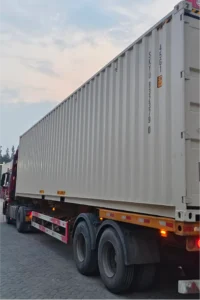
- Export loading coordination
- Trucking and port delivery support
- Container inspection guidance
- Storage and warehouse-use recommendations
- Cost-effective solutions for overseas buyers
For many buyers, a used container with surface rust is not a problem. It is a smart way to reduce cost while still getting a strong, secure, and functional steel storage unit.
Final Answer: Is a Rusty Used Container Still Worth Buying?
Yes. A used shipping container with surface rust can still be strong, secure, and highly useful. Rust does not automatically mean the container is weak. In many cases, it is only a cosmetic sign of age and outdoor exposure.
The real question is not “Does the container have rust?”
The better question is: “Is the container still structurally sound, wind and watertight, and suitable for my intended use?”
If the answer is yes, a rusty used shipping container can be one of the most cost-effective storage and export solutions available.
FAQ
Are rusty shipping containers safe to use?
Yes, if the rust is only surface rust and the container is still structurally sound. You should check for holes, leaks, deep corrosion, floor damage, and door sealing problems before buying.
Does rust make a shipping container weaker?
Light surface rust usually does not make a container weak. Deep corrosion, holes, or rust that affects corner posts, bottom rails, roof panels, or door frames can reduce strength.
Is a used container with rust waterproof?
A used container can still be waterproof if it is classified as wind and watertight. Always inspect the roof, doors, seals, walls, and floor before purchase.
Should I buy a rusty used container or a one-trip container?
Buy a used rusty container if you want affordable storage. Choose a one-trip container if you need better appearance, newer condition, or a cleaner unit for modification or customer-facing projects.
Can rusty shipping containers be repainted?
Yes. Surface rust can often be cleaned, treated, primed, and repainted to improve appearance and extend container life.
What is the best use for a rusty used shipping container?
A used container with surface rust is ideal for storage, construction sites, farms, workshops, equipment rooms, and budget warehouse space.
How can I check if a used container has serious rust?
Look for holes, deep pitting, flaking steel, soft floor areas, leaking roof sections, damaged bottom rails, and door frames that do not close properly.