Yes, you can paint a shipping container. In fact, repainting a container is one of the most practical ways to improve its appearance, protect the steel surface, reduce rust, and turn the container into a professional-looking storage space or branded business asset.
Whether you own a used 20ft container, a 40ft storage container, or a 40ft high cube container, the right paint system can help your container look cleaner, last longer, and better match your site, company image, or project requirements.
A shipping container is built from strong corrugated steel, designed to handle outdoor weather, transport conditions, and heavy-duty storage use. However, after years of service, exposure to rain, sun, salt air, and job-site environments can cause fading, scratches, surface rust, or worn paint. A proper repaint can refresh the container and add another layer of protection.
The original reference article explains that the best paint depends on how the container will be used and what type of environment it will face. It also recommends proper surface preparation before painting and gives approximate paint quantities for 20ft and 40ft containers.
Why Paint a Shipping Container?
Painting a shipping container is not only about making it look better. It can also improve performance, branding, and long-term value.
1. Improve Appearance
Used containers often come with old shipping line logos, faded colors, scratches, dents, and patches of rust. A fresh coat of paint gives the container a cleaner and more professional look.
This is especially important if the container is placed near a business, warehouse, construction site, retail yard, farm, school, or residential property.
2. Protect Against Rust
Shipping containers are made of steel. Although container steel is strong and weather-resistant, exposed metal can still rust when the original coating is damaged.
Painting helps seal the surface and reduce direct exposure to moisture, rain, salt air, and humidity.
3. Use the Container for Branding
A painted container can become a large on-site billboard. Businesses often paint containers with their company color, logo, phone number, website, or service message.
For construction companies, farms, storage yards, event companies, and industrial businesses, a customized container can work as both storage and advertising.
4. Match Your Property or Project
Containers do not have to stay in standard shipping colors. You can paint them in black, white, grey, green, beige, blue, or custom brand colors.
For residential or commercial sites, repainting makes the container blend better with buildings, fencing, landscaping, or outdoor equipment.
5. Extend Service Life
A good paint job, combined with proper rust removal and primer, can help extend the usable life of a container. This is especially useful for containers used for long-term outdoor storage.
What Is the Best Paint for a Shipping Container?
The best paint depends on your climate, budget, container condition, and how long you plan to use it outdoors.
1. Marine-Grade or Industrial Epoxy Paint
Marine-grade and industrial epoxy paint is one of the strongest options for shipping containers. It is designed for metal surfaces exposed to tough conditions.
This type of paint is best for containers used in:
- Coastal areas
- Wet or humid climates
- Industrial yards
- Long-term outdoor storage
- Heavy-duty commercial use
- Harsh weather environments
Advantages:
Epoxy paint offers strong corrosion resistance, excellent durability, and long-term protection.
Disadvantages:
It is usually more expensive and requires better surface preparation. For best results, the container should be cleaned, sanded, or blasted before application.
2. Direct-to-Metal Acrylic or Alkyd Paint
Direct-to-metal paint, often called DTM paint, is a popular option because it can adhere directly to metal surfaces when properly prepared.
It is suitable for:
- General storage containers
- Job-site containers
- Farm storage containers
- Office container projects
- Moderate weather conditions
- Budget-friendly repainting projects
Advantages:
DTM paint is easier to apply and can usually be used with a sprayer, roller, or brush.
Disadvantages:
It may not be as tough as epoxy paint in extreme environments and may need touch-ups over time.
3. Oil-Based or Urethane Paint
Oil-based and urethane paints are commonly used when extra resistance to sunlight, fading, chipping, and abrasion is needed.
They are suitable for:
- Containers in high-traffic areas
- Commercial storage yards
- Branded containers
- Containers exposed to strong sunlight
- Containers that may be touched, bumped, or moved often
Advantages:
Good resistance to UV exposure, weather damage, and surface wear.
Disadvantages:
Some products can be harder to clean up and may require more careful application.
How Much Paint Do You Need for a Shipping Container?
Paint quantity depends on the container size, surface condition, paint type, number of coats, and whether you paint only the exterior or both exterior and interior.
As a general estimate:
| Container Size | Approximate Paint Needed |
|---|---|
| 20ft Shipping Container | About 8 gallons |
| 40ft Shipping Container | About 13 gallons |
These numbers are only general guidelines. A rusty or rough surface may require more paint. A container with heavy old paint, decals, or patch repairs may also need more primer and topcoat.
For best results, always check the coverage rate listed on the paint manufacturer’s product label.
How to Prepare a Shipping Container Before Painting
Surface preparation is the most important part of painting a shipping container. Even the best paint will fail if the surface is dirty, rusty, wet, or poorly prepared.
Step 1: Inspect the Container
Before painting, inspect the full exterior of the container. Look for:
- Rust spots
- Peeling paint
- Dents
- Scratches
- Old decals
- Grease or oil stains
- Damaged door areas
- Exposed metal
Pay special attention to the roof, bottom rails, door edges, corner posts, and areas where water may collect.
Step 2: Clean the Surface
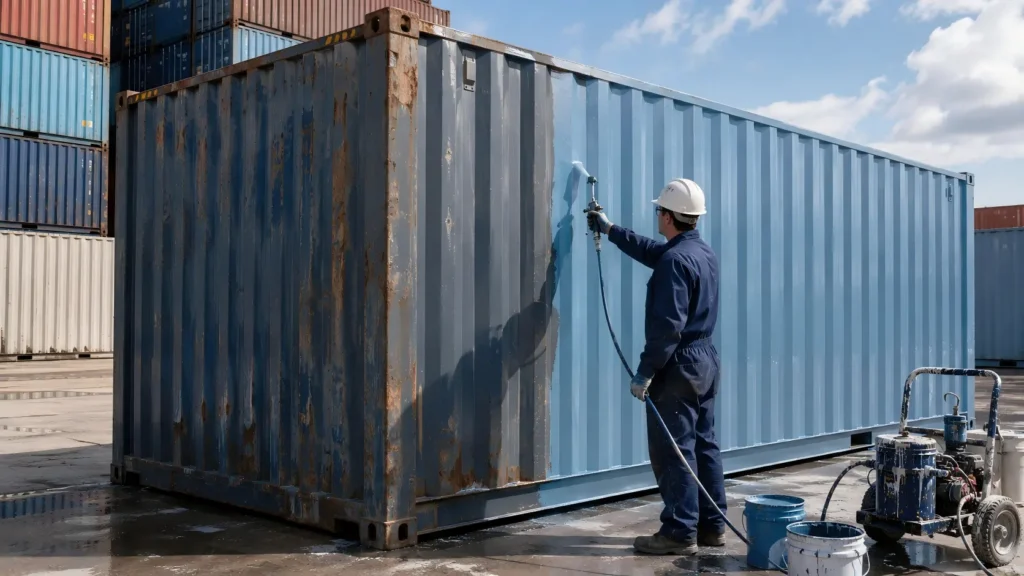
Use a pressure washer to remove dust, dirt, mud, salt, and loose paint. If the container has grease or oil, use a degreaser before painting.
Let the container dry completely before moving to the next step.
Step 3: Remove Rust
Rust must be removed or treated before painting. You can use:
- Wire brush
- Grinder
- Sandpaper
- Power sander
- Rust converter
- Metal scraper
For light surface rust, sanding and rust converter may be enough. For heavy rust, more aggressive cleaning may be needed.
Step 4: Sand Rough Areas
Sanding helps smooth peeling paint and improves adhesion. You do not always need to sand the entire container, but all loose paint, rough rust, and glossy areas should be prepared.
Step 5: Apply Metal Primer
A rust-inhibiting metal primer is highly recommended, especially if there are exposed steel areas.
Primer helps:
- Seal bare metal
- Improve paint adhesion
- Reduce future rust
- Create a more even finish
- Extend the life of the topcoat
If you are using an epoxy or oil-based paint system, choose a compatible primer.
Step 6: Mask Doors, Locks, Vents, and Hardware
Before painting, protect:
- Door locking bars
- Rubber seals
- Vents
- Lock boxes
- Hinges
- Identification plates
- Floor edges
- Nearby walls or vehicles
This helps keep the final result cleaner and more professional.
Best Ways to Apply Paint to a Shipping Container
There are three common ways to paint a shipping container: spray, roller, and brush.
Spray Painting
Spray painting usually gives the smoothest and most even finish. It is the best option for large containers, commercial repainting, or branding projects.
Best for:
Large surfaces, professional finish, fast application.
Roller Painting
A roller is a practical option for DIY painting. Because containers have corrugated walls, use a roller that can reach uneven surfaces.
Best for:
Small projects, budget painting, DIY repainting.
Brush Painting
Brushes are useful for corners, edges, lock boxes, hinges, and touch-ups. However, brushing a full container can take much longer.
Best for:
Detail areas, edges, repairs, small rust spots.
Should You Paint a New or Used Shipping Container?
Both new and used containers can be painted, but the preparation will be different.
Painting a New One-Trip Container
A new or one-trip container usually has better paint condition and less rust. You may only need light cleaning and surface preparation before painting.
However, if the existing finish is glossy, sanding may still be needed for proper adhesion.
Painting a Used Shipping Container
Used containers often need more preparation. They may have old logos, scratches, surface rust, faded paint, or shipping marks.
Before painting a used container, remove rust, clean the surface carefully, and apply primer to exposed metal.
Can You Paint the Inside of a Shipping Container?
Yes, you can paint the inside of a shipping container, but you should choose the paint carefully.
Interior container painting may be useful for:
- Workshops
- Retail container units
- Container offices
- Storage rooms
- Event containers
- Modified container projects
Before painting the interior, make sure the surface is clean, dry, and free of moisture. If the container will be used for tools, furniture, documents, or business storage, choose a durable low-odor coating suitable for indoor use.
Good ventilation is very important during and after painting.
Best Color Choices for Shipping Containers
The right color depends on your location, climate, and purpose.
White or Light Grey
Light colors reflect more sunlight and can help reduce heat buildup. They are popular for storage containers in hot areas.
Black or Dark Grey
Dark colors look modern and professional but may absorb more heat. They are often used for branded business containers or industrial sites.
Green or Brown
Green and brown colors help containers blend into farms, gardens, rural areas, or outdoor landscapes.
Blue, Red, or Custom Brand Colors
Bright colors are useful for branding, visibility, and advertising. A container painted in your company color can become a strong visual asset.
Common Mistakes to Avoid When Painting a Shipping Container
Painting Over Rust
Do not paint directly over untreated rust. Rust can continue to spread under the paint and cause peeling or bubbling.
Skipping Primer
Primer is important when painting bare metal or heavily worn areas. Skipping primer may reduce paint life.
Painting on a Wet Surface
Moisture can prevent paint from bonding correctly. Always let the container dry fully after washing.
Using the Wrong Paint
Regular wall paint is not suitable for shipping containers. Use paint designed for metal, outdoor exposure, and corrosion protection.
Applying Paint Too Thin
A very thin coat may not provide enough protection. Follow the recommended coverage and coating thickness.
Ignoring the Roof
The roof gets direct sun, rain, and standing water. It should be inspected and painted carefully.
How Long Does Shipping Container Paint Last?
The lifespan of container paint depends on preparation, paint quality, climate, and maintenance.
A properly painted container can last for many years before needing a full repaint. However, touch-ups may be needed sooner in coastal areas, industrial zones, or sites with heavy wear.
To extend paint life:
- Inspect the container once or twice a year
- Touch up scratches quickly
- Keep the roof clean
- Remove dirt and salt buildup
- Treat rust early
- Avoid standing water around the base
Good maintenance helps protect both the appearance and structure of the container.
Is Painting a Shipping Container Worth It?
Yes, painting a shipping container is usually worth it if you plan to use the container for long-term storage, business branding, outdoor placement, or customer-facing projects.
A fresh paint job can:
- Improve appearance
- Protect against rust
- Increase professional image
- Support business advertising
- Help match your site design
- Extend usable service life
- Make a used container look newer
For companies, a painted container can work as storage and marketing at the same time.
FAQ: Painting a Shipping Container
Can I paint a shipping container myself?
Yes. Many container owners paint containers themselves using rollers, brushes, or spray equipment. The most important part is surface preparation.
What paint should I use on a shipping container?
Use paint designed for metal and outdoor exposure. Common options include marine-grade epoxy paint, direct-to-metal paint, oil-based paint, and urethane coatings.
Do I need primer before painting a container?
Primer is strongly recommended, especially on bare metal, rusty areas, or older containers. A rust-inhibiting metal primer helps improve adhesion and protection.
Can I paint over shipping container logos?
Yes, but old decals and logos should be cleaned, sanded, or removed first. Otherwise, the new paint may not bond evenly.
How many gallons of paint for a 20ft container?
A 20ft shipping container usually needs around 8 gallons of paint for exterior painting, depending on paint coverage and surface condition.
How many gallons of paint for a 40ft container?
A 40ft shipping container usually needs around 13 gallons of paint for exterior painting, depending on the number of coats and the condition of the container.
Can painting stop rust?
Painting can help prevent future rust, but existing rust must be removed or treated first. Painting directly over rust is not recommended.
What is the best color for a storage container?
Light colors such as white or light grey are good for hot climates. Dark grey, black, green, blue, or custom brand colors are popular for business and site use.
Painting a shipping container is a smart way to protect your investment, refresh the appearance, and turn a simple steel box into a clean, professional, and functional storage solution.
Whether you use a 20ft container for backyard storage, a 40ft container for business equipment, or a customized unit for branding, the key to a successful paint job is choosing the right paint, preparing the surface properly, removing rust, applying primer, and maintaining the finish over time.
A well-painted shipping container does more than look good. It protects the steel, supports your brand, and helps your container serve your site for many years.
Need a Durable Shipping Container for Storage or Custom Use?
ONE BOX provides practical shipping container solutions for storage, export, modification, and business use. Whether you need a 20ft container, 40ft container, 40ft high cube container, or customized container solution, we can help you choose the right box for your project.
Contact ONE BOX today to find the right shipping container for your storage, branding, or modification needs.