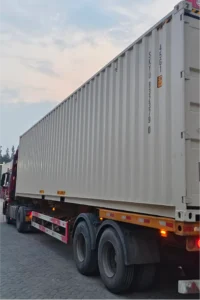
The Origin of Shipping Containers: How a Steel Box Changed Global Trade
Today, shipping containers are everywhere. They can be seen at seaports, railway terminals, construction sites, warehouses, farms, factories, and even in modern commercial spaces. For many people, a container looks like a simple steel box. However, behind this box is one of the most important innovations in modern logistics and international trade.
The birth of the modern shipping container changed the way goods move around the world. It made transportation faster, safer, more standardized, and more cost-effective. From ocean freight to inland transport, from storage to modular space solutions, containers have become a key part of global business.
For ONEBOX, containers are not only transportation tools. They are practical assets that can be used for storage, shipping, modification, construction, workshops, offices, and flexible commercial spaces.
Before Containers: Cargo Was Slow, Expensive, and Complicated
Before modern containers were introduced, most goods were shipped as break-bulk cargo. This meant that products were packed in bags, wooden crates, barrels, cartons, or loose packages. Every item had to be loaded and unloaded by hand or with basic lifting equipment.
This process created many problems:
Cargo handling was slow.
Labor costs were high.
Goods were easily damaged.
Theft and loss were common.
Ships stayed in port for a long time.
Transport between truck, ship, and train was inefficient.
A single shipment could require repeated loading and unloading at different points. Goods might be moved from a factory to a truck, from the truck to a warehouse, from the warehouse to a ship, from the ship to another port, and then to another truck or railway system.
Every transfer increased cost, time, and risk.
This was the problem that containerization eventually solved.
The Birth of the Modern Shipping Container
The modern shipping container is closely connected with American entrepreneur Malcolm McLean. McLean was originally in the trucking business. He noticed that the traditional cargo loading process wasted too much time and money. Instead of loading cargo piece by piece, he imagined a better system: put goods into one standardized box and move the entire box by truck, ship, and rail.
This idea became the foundation of modern containerization.
On April 26, 1956, the converted tanker SS Ideal X sailed from Port Newark, New Jersey, to Houston, Texas, carrying 58 metal containers. This voyage is widely recognized as a key moment in the birth of modern container shipping.
The success of this voyage proved that standardized container transport could reduce loading time, improve cargo safety, and lower logistics costs.
Why the Container Was Revolutionary
The shipping container was not revolutionary because it was simply a metal box. Its true value came from standardization.
A container could be:
Loaded at a factory
Moved by truck
Lifted onto a ship
Transferred to rail
Delivered to the final destination
without unloading the goods inside.
This changed the entire logistics system. Cargo no longer needed to be handled piece by piece at every transfer point. The container became one complete transport unit.
This created several major advantages:
1. Faster Loading and Unloading
Ports could load containers by crane instead of relying mainly on manual labor. Ships spent less time waiting at ports, which improved shipping efficiency.
2. Lower Shipping Costs
Because containers reduced labor, handling time, damage, and port delays, the total cost of international shipping dropped significantly.
3. Better Cargo Protection
Steel containers protect goods from weather, impact, theft, and contamination. This made long-distance shipping safer and more reliable.
4. Global Standardization
The container allowed different transportation systems to work together. Trucks, ships, trains, cranes, ports, and warehouses could all be designed around the same container sizes.
The Role of ISO Standards
As container shipping expanded, standardization became essential. Without common dimensions and handling systems, containers from different companies and countries would not fit ships, trucks, trains, or port equipment.
The International Organization for Standardization created ISO/TC 104 for freight containers in 1961, helping standardize container dimensions, stacking systems, securing methods, and terminology.
Today, the most common container sizes include:
20ft standard container
40ft standard container
40ft high cube container
Open top container
Flat rack container
Refrigerated container
Modified container units
These standards helped containers become a truly global product.
How Containers Changed World Trade
The rise of containerization made global trade more practical. Manufacturers could ship goods across continents more efficiently. Retailers could source products internationally. Exporters and importers could plan supply chains with greater confidence.
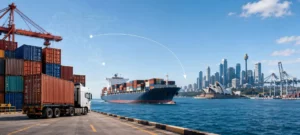
Containers helped connect factories, ports, warehouses, and final markets into one global logistics network.
This is why containers are often considered one of the most important inventions in modern trade. They made international shipping faster, cheaper, and more predictable.
From Shipping Tool to Flexible Space Solution
In the beginning, containers were mainly used for cargo transportation. Today, their value has expanded far beyond shipping.
Modern containers are widely used as:
Storage containers
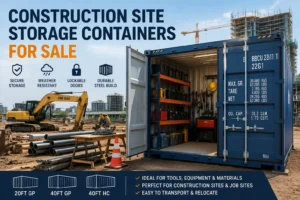
Construction site offices
Mobile workshops
Temporary warehouses
Equipment rooms
Retail spaces
Modified container homes
Cold storage units
Emergency shelters
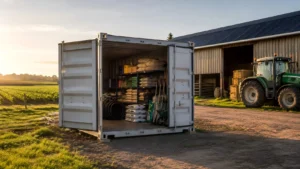
Farm and industrial storage units
A container is strong, movable, secure, and easy to modify. This makes it useful for many industries.
ONEBOX: Practical Container Solutions for Modern Needs
ONEBOX focuses on practical container supply and container-based solutions. We provide containers for storage, shipping, modification, business use, construction projects, and long-term asset applications.
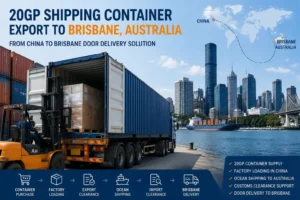
ONEBOX has container resources in major locations such as Dalian, Tianjin, Qingdao, Shanghai, Shenzhen, Thailand, Vietnam, and Cambodia. In recent years, our containers and container solutions have been exported to the United States, Canada, Australia, New Zealand, Europe, and many other countries and regions.
Our goal is to help customers find container solutions that are:
Durable
Secure
Cost-effective
Easy to use
Suitable for modification
Reliable for long-term service
Whether customers need standard shipping containers, storage containers, project containers, or modified container units, ONEBOX provides flexible support based on practical use.
Why Containers Still Matter Today
Even after decades of development, containers remain essential to global business. They support international trade, construction, warehousing, emergency response, agriculture, manufacturing, and retail.
The container is simple in appearance, but powerful in function. It connects factories with ports, ports with markets, and businesses with global opportunities.
From the first container voyage in 1956 to today’s global container network, the shipping container has become more than a logistics product. It is a symbol of efficiency, mobility, and modern trade.
Conclusion
The origin of the shipping container shows how one practical idea can change the world. By turning cargo into standardized, movable units, containers solved many of the biggest problems in traditional shipping.
Today, containers continue to create value in transportation, storage, construction, and customized space solutions.
For businesses looking for reliable container supply, storage solutions, or modified container applications, ONEBOX provides practical container options designed for real-world use and long-term performance.
FAQ
Who invented the modern shipping container?
The modern shipping container is closely associated with Malcolm McLean, an American trucking entrepreneur who developed the idea of moving cargo in standardized containers instead of loading goods piece by piece.
When was the first modern container shipment?
A major milestone happened on April 26, 1956, when the SS Ideal X carried 58 containers from Port Newark to Houston.
Why are shipping containers important?
Shipping containers reduce transport costs, protect cargo, improve loading efficiency, and make truck, rail, and ocean transport easier to connect.
What are the most common container sizes?
The most common sizes are 20ft containers, 40ft containers, and 40ft high cube containers.
What can containers be used for besides shipping?
Containers can be used for storage, offices, workshops, retail spaces, construction site units, equipment rooms, and customized modular spaces.