Why Are Shipping Container Prices Different in Every City?
When customers search for shipping containers for sale, one common question is: Why is the same used shipping container cheaper in one city but more expensive in another?
The answer is simple: shipping containers are not priced like normal retail products. A used shipping container is a commodity product. Its price is affected by location, supply, transportation cost, local demand, port access, and global trade conditions. According to Eveon Containers, used container prices can vary significantly from city to city because containers move through the global logistics network, and every location has a different balance of supply and demand.
For buyers, this means the final container price is not only the cost of the steel box itself. It also includes the journey that container has taken before reaching your city.
1. Port Cities Usually Have Better Container Prices
Cities near major seaports often have more available containers. This is because large volumes of cargo arrive at ports every day, and many containers are unloaded, inspected, stored, repaired, or sold locally.
For example, port cities such as Los Angeles, Houston, Savannah, Charleston, New York/Newark, Qingdao, Dalian,Tianjin,Shanghai, Shenzhen, or Ningbo usually have stronger container inventory. When supply is high, buyers may have more options and better pricing.
In contrast, inland cities often rely on containers being trucked or railed from coastal ports. That additional transportation cost is usually included in the final container quote.
In simple terms:
A used container in a port city may be cheaper because it is already close to the supply source. A container in an inland city may cost more because it must be delivered there first.
2. Inland Cities Have Higher Trucking Costs
Transportation is one of the biggest reasons container prices vary by city.
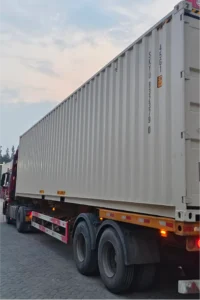
A 20ft or 40ft shipping container is large, heavy, and requires special trucking equipment. Moving a container from a port depot to an inland city can add significant cost, especially when the delivery distance is long.
For example, a container located near a coastal depot may only need a short truck delivery. But if the buyer is located hundreds of miles away from the port, the supplier must calculate:
- Trucking distance
- Fuel cost
- Driver cost
- Chassis or special trailer cost
- Local delivery restrictions
- Loading and unloading requirements
That is why the same 20ft used container or 40ft used container may have different prices in different cities.
3. Local Supply and Demand Change the Price
Shipping container prices also depend on how many containers are available in a city and how many customers want to buy them.
If a city has many used containers available but fewer buyers, prices may be more competitive. If a city has limited stock and high demand, prices may increase.
Demand can come from many industries, including:
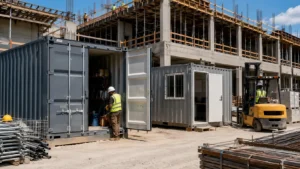
- Construction companies
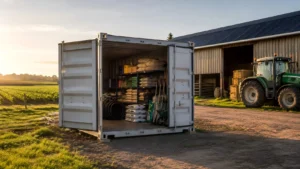
- Farms and agriculture businesses
- Warehouses and factories
- Retail storage users
- Export cargo shippers
- Homeowners needing storage
- Container modification projects
- Temporary site offices
- Workshops and mobile storage units
Eveon’s article notes that industries such as agriculture, construction, and retail can create seasonal demand spikes for containers. When many buyers purchase containers at the same time, local prices may rise.
4. Import and Export Balance Matters
Not every city or port has the same import and export flow.
Some ports receive more import containers than they export. In those cities, container stock may be easier to find. Other cities may have more export demand, meaning containers are quickly reused for outbound cargo instead of being sold locally.
When export demand is strong, available used containers may become limited. This can push prices higher.
For example:
- A city with many imports may have more used containers for sale.
- A city with strong export demand may have fewer containers available.
- A city far from major trade routes may have higher repositioning costs.
This is why container pricing is closely connected to local logistics conditions.
5. Container Size Affects Price by City
Different container sizes have different supply levels in different markets.
The most common container types include:
| Container Type | Common Use | Price Difference Reason |
|---|---|---|
| 20ft Shipping Container | Storage, small cargo, tools, personal use | Easy to place, but sometimes lower supply in some cities |
| 40ft Shipping Container | Large storage, export cargo, warehouse use | Popular for commercial storage and international shipping |
| 40ft High Cube Container | High-volume cargo, furniture, machinery, large goods | Higher demand because of extra height and capacity |
A 40ft High Cube container may be more expensive in some cities because it is widely used for export cargo, oversized goods, and storage projects. If local supply is limited, the price may be higher than in a port city with more inventory.
6. Container Grade and Condition Also Affect Local Pricing
Used shipping containers are not all the same. Even if two containers are both 20ft or 40ft, their condition may be different.
Common container grades include:
| Grade | Description | Suitable For |
|---|---|---|
| Cargo Worthy | Suitable for international shipping after inspection | Export cargo |
| Wind & Watertight | Good for storage, protects against rain and wind | Warehouse, farm, job site |
| As-Is | Lower-cost option, may need repair | Budget storage or modification |
| One Trip Container | Almost new, used once for shipping | Premium storage, office, modification |
A city with more high-quality containers may have different pricing from a city where only limited or older units are available.
For buyers, it is important not to compare only the lowest price. Always compare container size, grade, condition, delivery cost, and available stock.
7. Global Shipping Conditions Can Influence Local Prices
Container prices are also affected by global trade and shipping routes.
When international shipping routes change, container circulation can become less efficient. Events such as port congestion, route disruptions, canal restrictions, or tariff changes may affect how containers move around the world. Eveon’s article explains that disruptions such as Red Sea route changes, Panama Canal restrictions, and tariff regimes can influence container availability and pricing.
Even if a buyer is only purchasing one used container locally, the local price may still be connected to global container movement.
8. Why the Lowest Price Is Not Always the Best Deal
Some buyers only look for the cheapest used shipping container. However, the lowest price is not always the best value.
A very cheap container may have:
- Poor floor condition
- Heavy rust
- Door sealing problems
- Water leakage
- Structural damage
- No valid inspection
- High delivery cost
- Limited after-sales service
A better way to compare container prices is to check the full cost:
Container Price + Delivery Cost + Condition + Service + Availability
Sometimes a container with a slightly higher price but better condition and closer location can actually save money.
9. How to Buy a Shipping Container at the Best Price
To get the best container price in your city, buyers should follow these steps:
Step 1: Confirm Your Container Size
Choose the right container type based on your use:
- 20ft container for small storage or limited space
- 40ft container for large storage or cargo loading
- 40ft High Cube container for extra height and volume
- Side opening container for easy side loading
- Modified container for office, workshop, or special use
Step 2: Check Local Stock
Container prices depend heavily on local inventory. If your city has limited stock, you may need to compare nearby cities or port depots.
Step 3: Ask for Delivered Price
Do not ask only for the container price. Always ask for the full delivered price to your location.
A professional supplier should provide:
- Container cost
- Trucking cost
- Delivery time
- Loading method
- Condition photos
- Container grade
- Optional inspection or repair information
Step 4: Compare Condition, Not Just Price
A cheaper container may cost more later if it needs repair. Always check photos, floor condition, door condition, roof condition, rust level, and water-tight performance.
Step 5: Buy from a Reliable Supplier
Working with a reliable container supplier helps reduce risk. A professional supplier can help buyers choose the right container, arrange delivery, and provide clear information before purchase.
10. ONE BOX Helps Customers Source Containers in Different Cities
ONE BOX provides shipping container solutions for customers who need reliable containers for storage, export loading, warehouse use, home use, construction sites, farms, and modification projects.
We understand that container prices vary by city. That is why we help customers compare available stock, container condition, depot location, and delivery cost before making a decision.
ONE BOX can support container sourcing from major container locations including:
- Dalian
- Tianjin
- Qingdao
- Shanghai
- Shenzhen
- Thailand
- Vietnam
- Cambodia
We also help customers export containers and cargo to countries such as the United States, Canada, Australia, New Zealand, Europe, and other global markets.
Whether you need a used 20ft container, used 40ft container, 40ft High Cube container, side opening container, or container for export loading, ONE BOX can provide a practical and cost-effective solution.
FAQ: Shipping Container Prices by City
Why are used shipping container prices different in each city?
Used shipping container prices vary because every city has different supply, demand, delivery distance, port access, and local logistics costs.
Are containers cheaper near ports?
In many cases, yes. Port cities usually have more container inventory because containers arrive there through international shipping routes. More supply can create better pricing.
Why are inland container prices higher?
Inland cities often require containers to be transported from coastal ports or large depots. Trucking and repositioning costs are included in the final price.
Is a 20ft container cheaper than a 40ft container?
Usually, a 20ft container has a lower base price than a 40ft container, but local supply can affect the final price. In some cities, 20ft containers may be less available and priced higher than expected.
What is the best way to compare container prices?
The best way is to compare the total delivered price, not just the container price. Buyers should also check size, grade, condition, depot location, delivery cost, and supplier reliability.
Can ONE BOX help arrange container delivery?
Yes. ONE BOX can help customers source containers, compare local availability, arrange loading, and support export or delivery solutions depending on the project requirement.
Conclusion
Shipping container prices vary from city to city because containers are part of a global logistics system. Location, port access, trucking distance, supply, demand, container size, condition, and global trade conditions all influence the final price.
For buyers, the smartest choice is not always the cheapest container. The best value comes from choosing the right container, in the right condition, from the right location, with clear delivery cost and reliable service.
Looking for a used shipping container for storage, export loading, or business use?
Contact ONE BOX to get a practical container solution based on your city, budget, and project requirements.