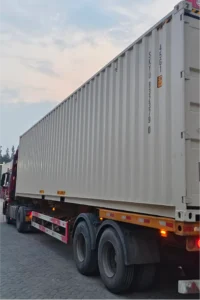
Introduction: Why Construction Sites Need Shipping Containers
Construction job sites are fast-moving, high-risk, and often exposed to weather, theft, material damage, and changing project schedules. For contractors, builders, project managers, and site supervisors, having a secure and flexible storage solution is not just convenient — it directly affects productivity, safety, and project cost control.
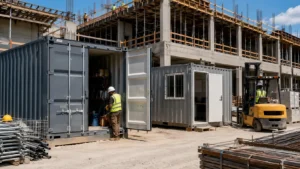
This is why shipping containers have become one of the most practical solutions for construction job sites. A steel shipping container can be used as a secure tool room, material storage unit, temporary warehouse, equipment shelter, or even a mobile site office. Compared with light-duty storage pods or temporary sheds, shipping containers are stronger, more secure, easier to relocate, and suitable for repeated use across multiple projects.
Whether you are managing a residential build, commercial construction site, infrastructure project, or remote work zone, choosing the right container size, condition, placement, and configuration can help your team work more efficiently and reduce unnecessary losses.
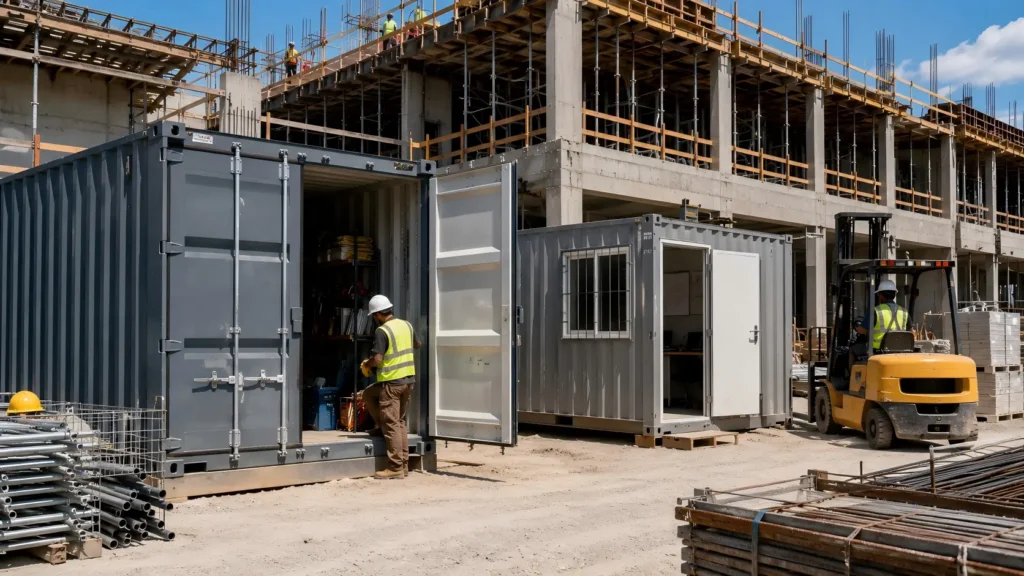
What Is a Construction Job Site Shipping Container?
A construction job site shipping container is a steel cargo container placed on a project site for temporary or semi-permanent use. It is commonly used to store tools, machinery, building materials, safety equipment, electrical supplies, plumbing parts, finishing materials, and project documents.
Standard shipping containers are made from durable corten steel and designed to withstand harsh transportation and outdoor conditions. This makes them ideal for job sites where weather, dust, mud, and frequent access are common.
For construction use, the most popular options include:
| Container Type | Common Use |
|---|---|
| 20ft Standard Container | Tool storage, small residential projects, single trade use |
| 40ft Standard Container | Multi-trade projects, large material storage, equipment staging |
| 40ft High Cube Container | Taller equipment, palletized materials, office conversion |
| Modified Container Office | Site office, project management room, plan review area |
| Used WWT Container | Cost-effective job site storage |
| New One-Trip Container | Clean appearance, long-term use, premium projects |
Why Contractors Use Shipping Containers on Job Sites
1. Secure Tool and Equipment Storage
Tool theft is one of the biggest problems on construction sites. Power tools, compressors, generators, copper materials, fixtures, and finishing products can be expensive and easy to steal if left unsecured.
A shipping container provides a lockable steel structure that is much harder to break into than a plastic storage pod, wooden shed, or open job box. With lock boxes, heavy-duty padlocks, crossbar locks, and security cameras, a container can become a strong on-site storage room.
2. Weather Protection for Materials
Construction materials are often damaged by rain, snow, humidity, dust, and direct sunlight. Drywall, insulation, flooring, cabinets, electrical components, paint, hardware, and finishing materials all need protection before installation.
A wind and water-tight shipping container helps keep materials dry, organized, and ready for use. This reduces waste, prevents delays, and protects project budgets.
3. Better Job Site Organization
A messy job site slows down workers and creates safety risks. When tools, fasteners, materials, and equipment are stored randomly, crews waste time searching for what they need.
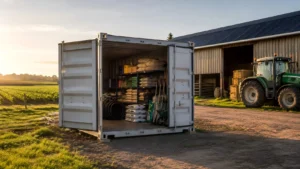
Using a container as a dedicated storage zone allows contractors to organize the site by trade, project phase, or material type. Shelving, racks, lighting, and labeled storage areas can make the container function like a small on-site warehouse.
4. Flexible Use Across Different Project Phases
The storage needs of a construction site change as the project moves forward. During excavation and foundation work, contractors may need space for safety equipment, compactors, and consumables. During framing and rough-in, tool volume increases. During finishing, small high-value items need extra protection.
Shipping containers can be added, removed, relocated, or repurposed depending on the project stage.
5. Reusable Asset for Contractors
For contractors with multiple projects each year, buying a container can be more cost-effective than renting temporary storage repeatedly. A purchased container can be moved from one job site to the next, used as long-term yard storage, or resold later.
Instead of paying monthly rental fees with no ownership value, contractors can turn a container into a long-term business asset.
How to Choose the Right Container Size for a Construction Site
Choosing the right size depends on crew size, number of trades, site access, storage volume, and whether the container will also be used as an office.
20ft Shipping Container for Construction Sites
A 20ft container is the most popular option for small and medium construction projects. It is compact enough for residential driveways, tight urban lots, and small commercial sites, while still offering strong storage capacity.
Best for:
- Residential construction
- Single trade contractors
- Small remodeling projects
- Tool storage
- Electrical and plumbing supplies
- Finishing material protection
- Shorter job sites with limited space
A 20ft container is usually easier to place than a 40ft unit because it requires less ground space and is more flexible on tight sites.
40ft Shipping Container for Construction Sites
A 40ft container provides roughly double the length of a 20ft unit, making it suitable for larger projects or multi-trade sites.
Best for:
- Commercial construction
- Large residential builds
- Multi-trade job sites
- Heavy equipment storage
- Palletized material storage
- Long-term projects
- Sites requiring staging space
If several trades are working at the same time, a 40ft container can help keep materials and tools separated more efficiently.
40ft High Cube Container for Construction Sites
A 40ft high cube container offers extra interior height compared with a standard container. This is useful for taller equipment, racking systems, stacked materials, or container office conversion.
Best for:
- Site office conversion
- Tall equipment storage
- Shelving and vertical storage
- Large commercial projects
- Contractors needing extra headroom
For mobile office use, high cube containers are often preferred because the extra height creates a more comfortable working environment.
Recommended Container Size by Project Type
| Project Type | Recommended Container |
| Small home renovation | 20ft used WWT container |
| Single-family house build | 20ft or 40ft container |
| Multi-family residential project | One 40ft or two 20ft containers |
| Commercial job site | 40ft container + office container |
| Urban construction site | 20ft container or stacked containers |
| Long-term contractor yard | 40ft or 40ft high cube container |
| Site office requirement | Modified 20ft or 40ft office container |
Buy or Rent: Which Is Better for Contractors?
One of the most important decisions is whether to buy or rent a job site storage container.
Renting May Work If:
- The project is very short
- You only need storage for a few weeks
- You do not have future projects planned
- You do not want to manage relocation
- You need temporary storage with minimal upfront cost
Buying Is Usually Better If:
- The project lasts several months or longer
- You manage multiple job sites every year
- You want long-term storage for your business
- You need to customize the container
- You want resale value
- You want to move the container from site to site
For many contractors, buying is more practical because the container can be reused across different projects. After the first project, the cost per use becomes lower, and the container remains a valuable asset.
Shipping Container vs Portable Storage Pod
Portable storage pods are common for residential moving or light storage, but they are not always ideal for harsh construction environments.
| Factor | Shipping Container | Portable Storage Pod |
| Structure | Heavy-duty steel | Lighter construction |
| Security | Strong lock options | Basic locking system |
| Weather Resistance | Designed for outdoor cargo use | Varies by model |
| Customization | Doors, vents, office, shelves, lighting | Limited |
| Long-Term Value | Can be owned and reused | Usually rental only |
| Job Site Durability | Excellent | Moderate |
| Stackability | Possible with proper equipment | Usually not stackable |
For contractors, shipping containers usually offer better durability, stronger security, and more long-term value.
Best Container Condition for Construction Use
Not every job site needs a brand-new container. In many cases, a used container is the most cost-effective choice.
Used WWT Container
WWT means wind and water-tight. This type of container is commonly used for construction storage because it is structurally solid, weather-resistant, and more affordable than a new container.
Best for:
- Tool storage
- Building material storage
- General job site use
- Contractor yards
- Temporary project storage
New One-Trip Container
A one-trip container is newer, cleaner, and usually in better cosmetic condition. It is suitable when appearance matters or when the container will be used for a long period.
Best for:
- Premium project sites
- Customer-facing locations
- Long-term contractor storage
- Office conversion
- Equipment storage requiring a cleaner environment
Modified Container
A modified container can include roll-up doors, personnel doors, windows, vents, insulation, electrical systems, lighting, HVAC, shelving, and office layouts.
Best for:
- Site offices
- Tool rooms
- Workshop containers
- Climate-controlled storage
- High-value material storage
How Contractors Use Containers During Each Construction Phase
1. Foundation and Excavation Phase
At the beginning of a project, contractors need storage for layout tools, safety equipment, temporary fencing materials, compactors, small machinery, and consumables.
A 20ft container is often enough for small projects, while a 40ft container may be better for larger sites with more equipment.
2. Framing Phase
During framing, tool volume increases quickly. Saws, ladders, compressors, nail guns, fasteners, and lumber-related materials need secure and organized storage.
This is often the stage when contractors may add a second container, especially if several crews are working on the site.
3. Mechanical, Electrical, and Plumbing Rough-In
Electrical, plumbing, HVAC, and fire system materials can be expensive and easy to lose. A separate container or dedicated interior section can help each trade keep materials organized.
Using shelving and labeled zones inside the container can prevent delays caused by missing parts.
4. Finishing Phase
Finishing materials are often high value and easily damaged. Fixtures, flooring, cabinets, doors, hardware, lighting, and paint should be stored in a clean, dry, and secure environment.
During this stage, security becomes even more important because finish materials are easier to steal and more sensitive to moisture or damage.
5. Final Punch-Out Phase
At the end of the project, the storage demand may decrease. Contractors can remove extra containers and keep one container for tools, replacement parts, and final installation materials.
After completion, the container can be moved to the next job site or returned to the contractor’s yard.
Job Site Container Security Tips
A shipping container is already more secure than many temporary storage options, but security can be improved with the right setup.
Recommended Security Features
- Lock box to protect the padlock
- Heavy-duty marine-grade padlock
- Crossbar lock across cargo doors
- Interior door bolts
- Motion-activated lights
- Security camera near the container door
- GPS tracker for high-value sites
- Container placement in a visible area
- Ground anchoring for exposed sites
Placement Matters
Place the container where it is easy for your team to access but difficult for thieves to approach unnoticed. Avoid isolated corners of the site. If possible, position the doors facing the main work area, site office, or security camera.
Delivery Requirements for Job Site Containers
Before ordering a container, make sure the site is ready for delivery. Most containers are delivered by tilt-bed truck or flatbed truck, so access conditions are important.
Basic Delivery Checklist
- Clear truck access to the drop location
- Firm and level ground
- No overhead wires or low tree branches
- Enough straight-line space for unloading
- No blocked entrance from machinery or materials
- Supervisor on site during delivery
- Confirmed placement direction before the truck arrives
For tight urban projects, it is important to measure the delivery area in advance. Narrow roads, parked vehicles, scaffolding, power lines, and uneven ground can all create problems during placement.
Can Shipping Containers Be Stacked on Construction Sites?
Yes, shipping containers can be stacked when the site has proper equipment, firm ground, and safe access. Stacking is especially useful on urban job sites where ground space is limited.
However, stacking should be planned carefully. Contractors should consider:
- Ground bearing capacity
- Container weight
- Forklift or crane availability
- Local safety requirements
- Wind exposure
- Twist lock or corner locking method
- Heavier containers placed on the bottom
- Engineering review when required
For most construction sites, stacking two containers can double storage space without increasing the ground footprint.
Do You Need a Permit for a Job Site Container?
Permit rules depend on the local city, county, project type, zoning rules, and how long the container will remain on site.
In many active construction projects, temporary storage containers may be covered under the main building permit. However, permanent placement after the project is complete may require a separate permit or zoning approval.
Before delivery, contractors should check with:
- Local building department
- Site owner or developer
- HOA or property management, if applicable
- Historic district authority, if applicable
- Project engineer or general contractor
This step is especially important for residential neighborhoods, public-facing sites, and long-term container placement.
How to Organize the Interior of a Construction Container
A container is most effective when the inside is organized like a small warehouse.
Useful Interior Add-Ons
- Heavy-duty shelving
- Tool racks
- Pallet space
- Workbench
- Interior lighting
- Ventilation
- Electrical outlets
- Security cage
- Parts bins
- Floor mats
- Wall hooks
- Labeling system
A well-organized container helps workers find tools faster, reduces damage, and improves job site efficiency.
Container Office for Construction Sites
A modified container office is a practical solution for project managers, site supervisors, engineers, and subcontractor coordination.
A container office can be used for:
- Plan review
- Daily meetings
- Safety briefings
- Document storage
- Site management
- Break space
- Temporary project headquarters
Common office modifications include insulation, windows, personnel doors, electrical wiring, lights, air conditioning, desks, and storage cabinets.
For larger projects, contractors often use one container for storage and a separate modified container for office work. This keeps tool traffic away from management space and improves security.
Why ONE BOX Is a Practical Choice for Construction Containers
ONE BOX provides practical container solutions for contractors, builders, project managers, and industrial users who need reliable storage or job site space.
Whether you need a 20ft container for tools, a 40ft container for materials, a high cube container for large equipment, or a modified container office, ONE BOX can help match the right unit to your project.
ONE BOX Container Solutions Include:
- 20ft standard shipping containers
- 40ft standard shipping containers
- 40ft high cube containers
- Used WWT storage containers
- New one-trip containers
- Modified container offices
- Custom doors and ventilation options
- Job site storage solutions
- Export-ready container supply
- Container loading and logistics support
How to Choose the Right Supplier
When buying a construction site container, price is important, but it should not be the only factor. A reliable supplier should help you choose the correct container condition, confirm delivery requirements, and provide clear information before purchase.
Supplier Checklist
- Clear container condition description
- Real container photos when available
- Transparent pricing
- Delivery support
- Modification options
- Knowledge of construction site use
- After-sales communication
- Ability to support future projects
A good supplier does not simply sell a container. They help contractors avoid costly mistakes in size, access, condition, and placement.
Conclusion: Shipping Containers Make Construction Sites Safer and More Efficient
Shipping containers are one of the most useful assets on modern construction sites. They protect tools, secure materials, improve organization, support project phases, and can even serve as mobile offices.
For small residential projects, a 20ft container may be enough. For larger or multi-trade projects, a 40ft or 40ft high cube container provides more storage and flexibility. For site management, a modified office container can create a professional workspace directly on the job site.
For contractors who manage multiple projects, buying a shipping container can be a smarter long-term investment than renting temporary storage again and again. With proper planning, placement, security, and interior organization, a shipping container can reduce risk, save time, and support every stage of construction.
FAQ: Shipping Containers for Construction Job Sites
What size shipping container is best for a construction site?
A 20ft container is suitable for small residential projects, tool storage, and single trade use. A 40ft container is better for larger projects, multi-trade sites, and material staging.
Is a used container good enough for construction storage?
Yes. A used wind and water-tight container is usually a cost-effective choice for job site storage because it protects tools and materials from weather while keeping costs lower than a new unit.
Can a shipping container be used as a construction site office?
Yes. A container can be modified with insulation, doors, windows, lighting, electrical outlets, air conditioning, desks, and storage cabinets to become a mobile site office.
Is it better to buy or rent a construction container?
For short projects, renting may be convenient. For longer projects or contractors with repeated job site needs, buying is often more cost-effective because the container can be reused or resold.
Can containers be moved from one job site to another?
Yes. A purchased container can be transported between job sites using suitable trucking equipment, making it a reusable asset for contractors.
Do construction containers need a permit?
Permit requirements depend on local regulations. Temporary containers on active job sites may be allowed under the main construction permit, but long-term or permanent placement may require separate approval.
How do you secure a construction site container?
Use a lock box, heavy-duty padlock, crossbar lock, security lighting, cameras, and proper placement. For high-risk sites, consider ground anchoring and additional monitoring.
Can shipping containers be stacked on job sites?
Yes, but stacking requires proper equipment, firm level ground, safe lifting methods, and sometimes engineering approval depending on local requirements.
What can be stored in a construction container?
Common items include tools, generators, compressors, building materials, electrical supplies, plumbing parts, fixtures, safety gear, documents, and finishing materials.
Why choose a shipping container instead of a temporary shed?
A shipping container is stronger, more secure, more weather-resistant, easier to relocate, and better suited for long-term construction use than most temporary sheds.